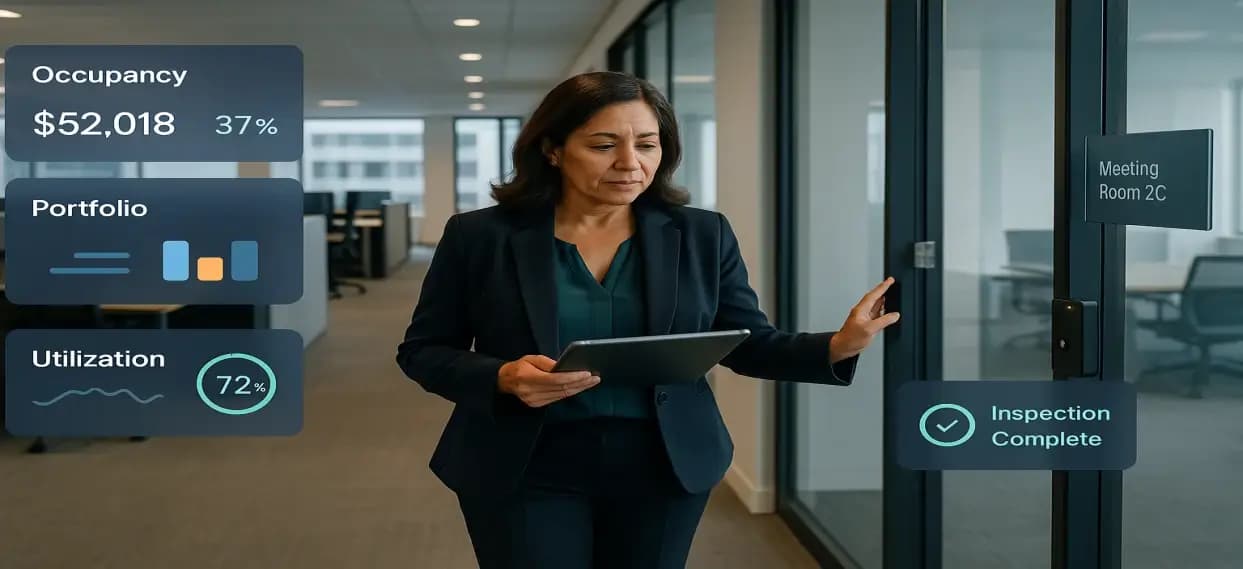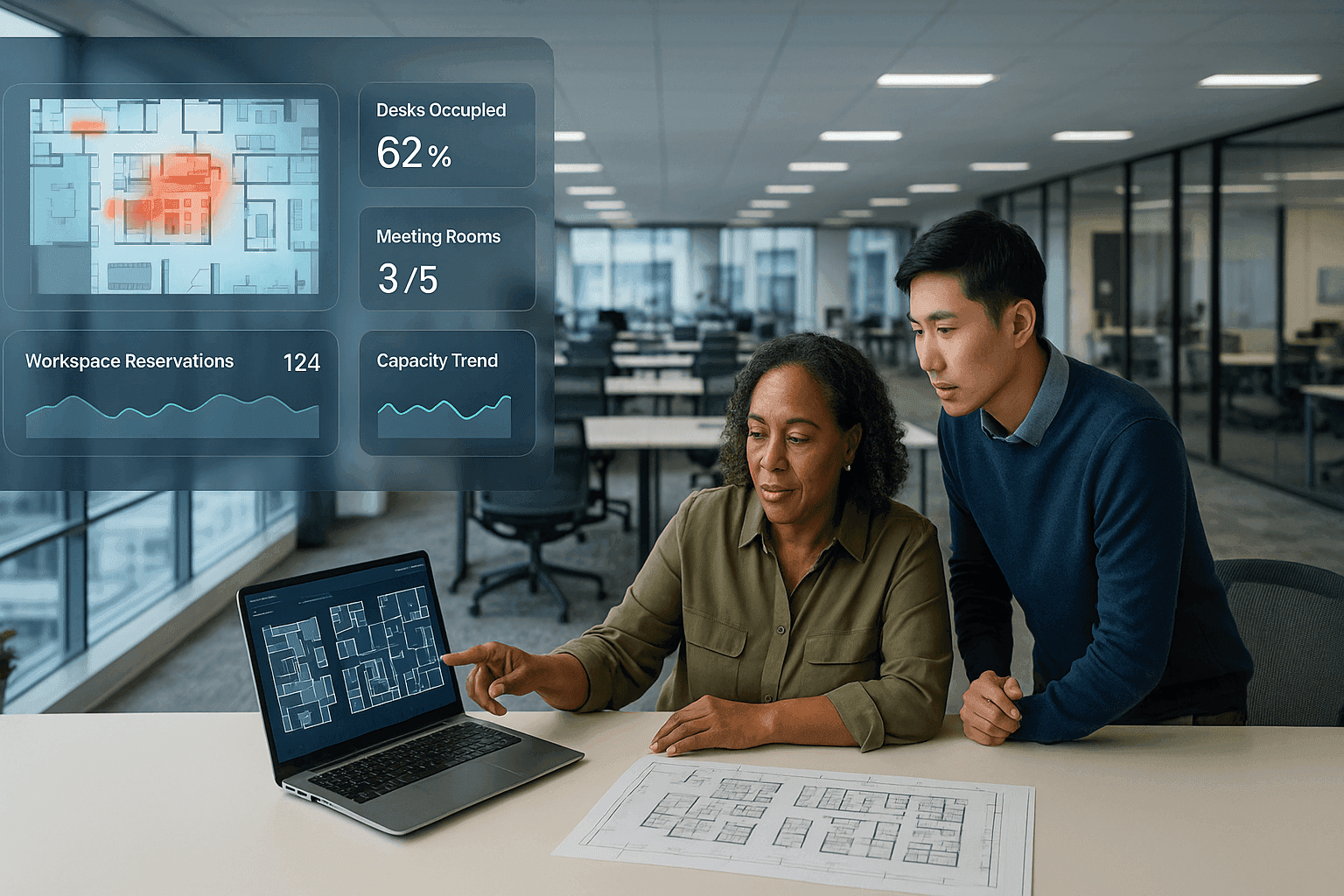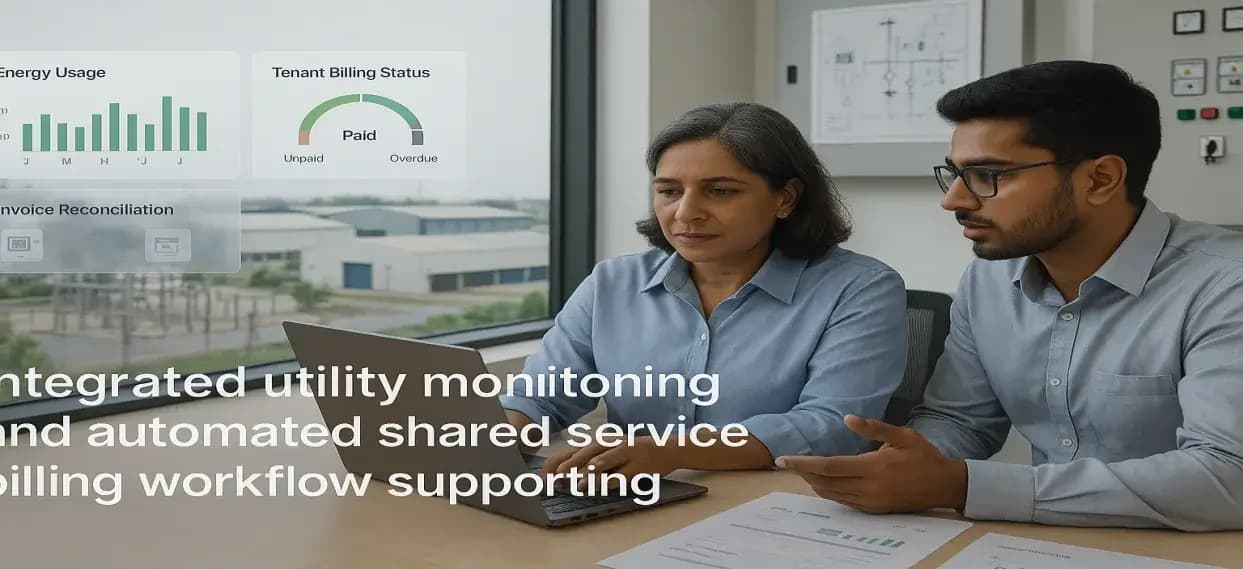
Industrial parks in India are becoming more complex to operate as they accommodate diverse manufacturers, logistics providers, warehouses, and service businesses within shared campuses. Operators must manage common infrastructure, multiple utility connections, lease agreements, and shared services while maintaining billing accuracy and operational transparency across tenants.
IWMS for industrial parks is an Integrated Workplace Management System that centralises utility monitoring, lease administration, shared service allocation, and billing processes, helping industrial park operators in India improve operational efficiency, financial accuracy, and tenant service.
Many industrial parks still depend on disconnected spreadsheets, manual meter readings, and separate billing tools. This can lead to delayed invoicing, billing disputes, inconsistent utility allocation, and limited visibility into operating costs. As parks expand, these challenges can affect cash flow, tenant satisfaction, and day-to-day industrial facility management. As a result, many operators are evaluating IWMS for industrial parks as a central platform for managing utilities, leases, maintenance, and billing.
How does IWMS for industrial parks improve utility and tenant billing?
IWMS for industrial parks brings together utility metering, lease data, and shared service costs in one platform. It automates billing and reporting, reduces manual errors, improves transparency, supports more efficient resource consumption, and gives operators in India clearer visibility across multiple facilities and tenants.
Why IWMS for Industrial Parks Supports Centralised Utility and Billing Management
Industrial parks commonly operate shared electricity distribution, water supply, diesel generators, gas systems, HVAC infrastructure, parking, waste management, and common area maintenance. Allocating these costs fairly across multiple tenants becomes increasingly difficult when operational data is spread across different systems or spreadsheets. Separate billing processes also increase administrative effort and create avoidable disputes over consumption and service charges.
Within an industrial facility management environment, a unified platform helps operations, facilities, and finance teams work from consistent records. Before automating billing processes, organisations should review applicable Indian utility requirements, contractual obligations, and local billing practices to ensure configuration aligns with operational and compliance needs.
Common challenges caused by fragmented information include:
- Delayed invoices affecting cash flow.
- Inconsistent meter readings across facilities.
- Limited visibility into tenant consumption trends.
- Weak audit trails during financial reconciliation.
Centralising these processes improves data quality, reduces duplicate work, and strengthens confidence in financial reporting.
How IWMS for Industrial Parks Centralises Utilities, Metering, and Billing
From energy meters to automated tenant invoices
A modern IWMS integrates with smart meters, building management systems, IoT devices, ERP platforms, and finance applications to automate the flow of operational data. Meter readings can be validated, matched with applicable tariffs, and converted into tenant invoices with minimal manual intervention.
This approach replaces disconnected workflows with integrated tenant billing software, utility billing capabilities, and lease billing processes. Instead of manually calculating utility charges each month, operators can automate billing while maintaining consistent financial records and transparent tenant communications.
Supporting property billing management across mixed-use industrial campuses
Industrial parks often combine manufacturing units, warehouses, office buildings, and shared amenities under different lease structures. Effective property billing management enables operators to allocate maintenance charges, utilities, parking, waste management, security services, and other shared costs using configurable business rules.
Flexible billing logic is particularly important because lease agreements may include different tariffs, cost-sharing models, minimum consumption thresholds, or service inclusions. A central IWMS accommodates these variations while reducing manual adjustments, improving billing accuracy, and providing tenants with clearer consumption records.
Implementation Considerations for IWMS for Industrial Parks
Successful implementation starts with assessing existing metering infrastructure, validating data quality, and identifying gaps in current billing processes. Standardising billing policies before automation helps ensure consistent allocation rules across the industrial park. Integrating finance, procurement, maintenance, and lease management workflows into a single platform further reduces duplicated effort and improves operational governance.
Operational dashboards for utility performance, billing reconciliation, exceptions, and maintenance activities allow teams to identify anomalies early and resolve issues before invoices are issued. This supports stronger financial control and a better tenant experience.
Beyond billing automation, integrated metering data also provides valuable insight into energy consumption. Operators can compare building performance, identify abnormal usage patterns, monitor common-area consumption, and support energy efficiency initiatives without relying on separate reporting systems. These insights help guide operational planning, maintenance priorities, and future infrastructure investments across expanding industrial parks in India.
Conclusion
As industrial parks in India continue to expand, managing utilities, leases, maintenance, and shared services through disconnected systems becomes increasingly difficult. IWMS for industrial parks provides a central platform that consolidates utility management, automates tenant billing, improves financial transparency, and supports scalable industrial facility management. Bringing energy, lease, maintenance, and billing information together enables operators to improve operational efficiency while delivering more transparent and consistent services to tenants.
Key Takeaways
- IWMS for industrial parks improves billing accuracy by integrating utility metering, lease information, and automated billing workflows.
- The platform strengthens industrial facility management through centralised operational visibility, energy monitoring, and reporting.
- This approach supports scalable operations by streamlining tenant billing, utility management, and property billing processes.
Ready to simplify utility billing, lease administration, and shared service management across your industrial park? Explore how eFACiLiTY supports integrated operations and Schedule a demo.
FAQ
Q1. What is IWMS for industrial parks?
IWMS for industrial parks is an Integrated Workplace Management System that combines facility operations, utility monitoring, lease administration, and billing within one platform. It helps industrial park operators in India automate tenant billing, improve operational visibility, manage shared infrastructure efficiently, and support consistent financial and operational processes across multiple facilities.
Q2. How does an IWMS improve utility billing for industrial parks?
An IWMS collects utility consumption data from integrated meters, applies configurable billing rules, validates readings, and automatically generates tenant invoices. This reduces manual calculations, improves billing accuracy, supports audit readiness, and provides transparent consumption records that help operators and tenants resolve billing queries more efficiently.
Q3. Can IWMS integrate with existing finance and energy management systems?
Yes. Many IWMS platforms integrate with ERP software, finance applications, building management systems, IoT meters, and related operational technologies. These integrations enable consistent data sharing, reduce duplicate data entry, streamline billing management, and provide more reliable reporting for facilities, finance, and operations teams.