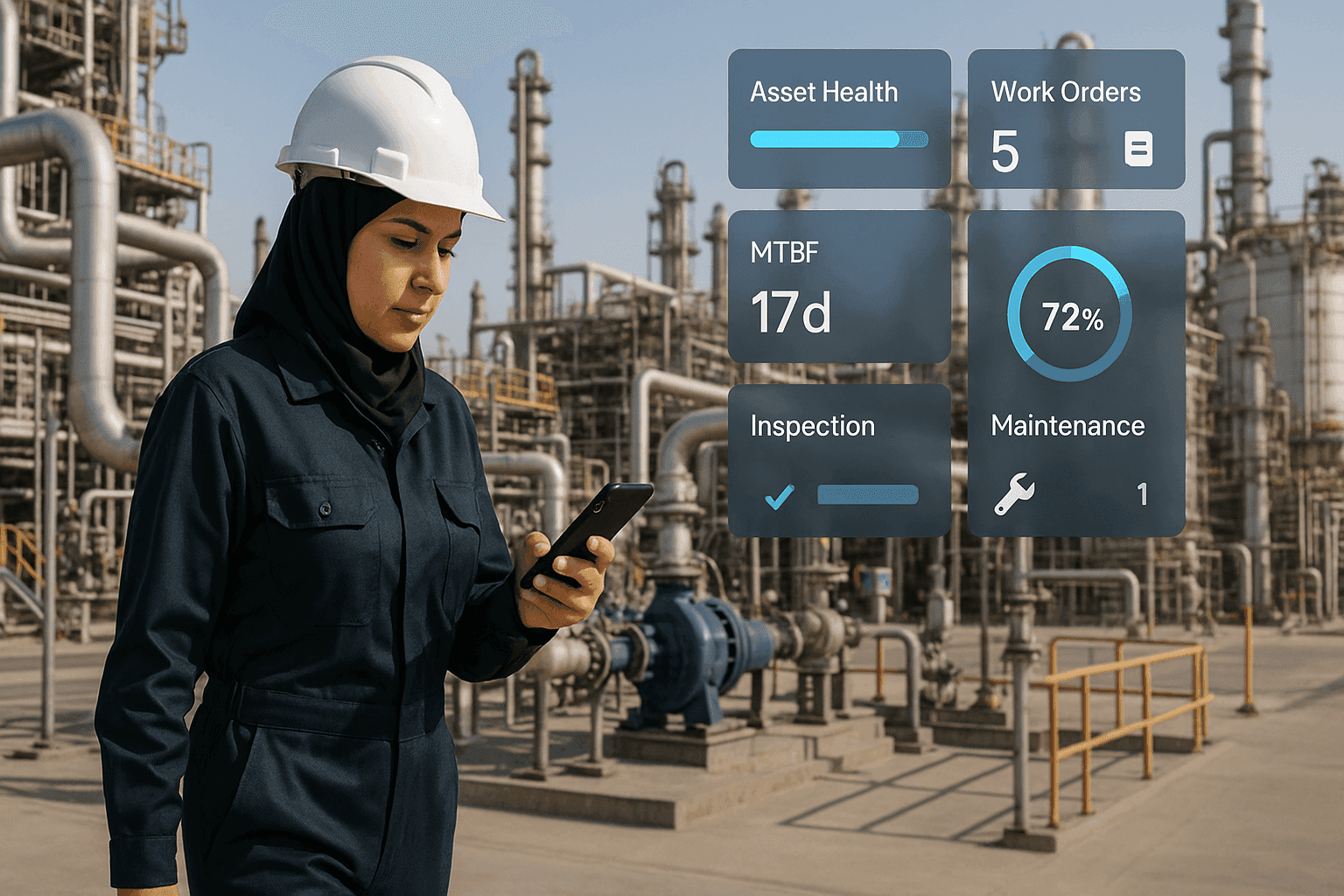
Across the UAE, BMS engineers and facility managers oversee commercial towers, mixed-use developments, hospitals, hotels, and large campuses where building systems generate a constant stream of alarms. Although these alerts help identify equipment issues, high alarm volumes can overwhelm operations teams, delay maintenance decisions, and increase the risk of asset downtime. Monitoring alarms alone is not enough when maintenance workflows remain manual.
CAFM BMS integration is the connection between a Computer-Aided Facility Management platform and a Building Management System, enabling BMS engineers and facility managers to automatically convert verified building alarms into actionable maintenance work orders, improving response times, asset reliability, and operational visibility.
How does CAFM BMS integration turn building alarms into work orders?
CAFM BMS integration links building automation systems with maintenance workflows so validated alarms automatically create work orders, assign technicians, and track completion. This reduces manual intervention, improves response times, strengthens asset reliability, and provides clearer operational visibility across complex facilities in the UAE.
Why Alarm Overload Limits Effective CAFM BMS Integration
In many UAE facilities, the challenge is not detecting alarms but deciding which ones require immediate maintenance. Repetitive notifications, sensor fluctuations, or temporary operating conditions can create alarm fatigue, making it harder for engineers to identify genuine faults. When maintenance requests are logged manually, technician dispatch may be delayed, service targets become more difficult to achieve, and recurring equipment failures can remain hidden in disconnected records.
This issue is particularly significant in commercial real estate, healthcare, hospitality, and large mixed-use developments where multiple buildings, contractors, and critical assets operate simultaneously. Effective building automation management depends on linking monitoring with maintenance execution instead of treating them as separate processes. Without integration, engineers often duplicate data entry, lose valuable operational history, and spend more time coordinating work than resolving faults.
How CAFM BMS Integration Automates Maintenance Workflows
A well-designed CAFM BMS integration creates a structured workflow from alarm detection to verified maintenance completion. Instead of relying on manual communication between teams, validated events move directly into the maintenance process, reducing delays and improving consistency across facilities.
A typical workflow includes:
- The BMS detects an abnormal operating condition.
- Alarm validation rules filter false or duplicate events.
- CAFM automatically generates and prioritises a work order.
- Technicians receive assignments based on asset type, location, or urgency, while mobile updates record progress until completion.
This automated process strengthens maintenance records by eliminating duplicate data entry and creating a consistent history of asset performance. Over time, recurring faults become easier to identify, helping organisations improve preventive maintenance planning, optimise asset lifecycles, and support informed capital replacement decisions.
Beyond the BMS, many organisations also connect CAFM with enterprise applications through API integrations, ERP systems for procurement and inventory management, and IoT sensors that provide additional operational data for condition-based maintenance. For organisations managing large UAE property portfolios, open integration capabilities help reduce information silos while allowing existing technology investments to continue delivering value.
Best Practices for CAFM BMS Integration Across UAE Facilities
Technology alone does not guarantee better maintenance outcomes. Successful implementations begin with clearly defined operational processes that ensure only meaningful alarms trigger work orders.
Key practices include:
- Prioritising critical assets and equipment.
- Mapping alarm priorities to maintenance categories.
- Defining escalation rules and service response expectations.
- Maintaining accurate and up-to-date asset registers.
Regularly reviewing key performance indicators, such as response times, repeat failures, work order completion rates, and recurring alarm patterns, helps organisations refine maintenance strategies over time.
Compliance expectations can vary between projects, building types, clients, and sectors across the UAE. Organisations should confirm applicable requirements with relevant authorities, contractual obligations, and project-specific standards rather than assuming a single approach applies to every facility. Where specialist systems such as OEM equipment software or contractor management platforms are already in use, integrating them into the wider CAFM environment can improve visibility, accountability, and coordination without creating isolated operational data.
Conclusion
Building alarms deliver value only when they result in timely maintenance action. For BMS engineers and facility managers across UAE commercial facilities, CAFM BMS integration bridges the gap between monitoring systems and maintenance execution by converting verified events into structured work orders with clear ownership and full traceability. Long-term success depends on well-planned integrations, defined workflows, accurate asset information, and continuous performance monitoring alongside the technology itself.
Key Takeaways
- CAFM BMS integration enables faster maintenance responses by automatically converting verified building alarms into structured work orders.
- The integrated platform improves operational efficiency by connecting BMS, API, ERP, and IoT integrations into a unified maintenance workflow.
- This approach strengthens asset reliability through accurate maintenance records, better prioritisation, and improved operational visibility across UAE facilities.
Ready to improve alarm-driven maintenance across your UAE facilities? See how eFACiLiTY supports connected facility operations, or Contact us to discuss your integration requirements.
FAQ
Q1. What is CAFM BMS integration?
CAFM BMS integration connects a Computer-Aided Facility Management platform with a Building Management System so validated building events automatically trigger maintenance workflows. It helps BMS engineers and facility managers improve response times, automate work order creation, maintain complete asset histories, and increase operational visibility across complex UAE facilities.
Q2. What systems can be integrated with a CAFM platform?
Modern CAFM platforms commonly integrate with Building Management Systems, ERP applications, IoT devices, and other enterprise software through APIs. These connections reduce manual data entry, improve reporting accuracy, streamline procurement and inventory processes, and create a single source of operational information for maintenance and asset management.
Q3. How does CAFM BMS integration improve maintenance performance?
By automatically creating work orders from validated alarms, CAFM BMS integration reduces response delays, prioritises critical maintenance, improves technician scheduling, captures complete maintenance histories, and provides measurable performance data. These capabilities help organisations improve asset reliability, reduce recurring faults, and support more informed maintenance planning.