Across the UAE, upstream, midstream, and downstream oil and gas facilities operate in environments where equipment reliability, production continuity, and workforce safety directly influence operational performance. From offshore platforms and onshore production assets to gas processing plants, refineries, and storage terminals, operators manage extensive infrastructure that requires disciplined maintenance, coordinated shutdowns, and consistent asset integrity practices.
An enterprise asset management solution is a digital platform that enables oil and gas organisations to centralise asset information, maintenance planning, inspections, and lifecycle management, helping improve reliability, asset integrity, compliance, and operational performance across complex facilities.
As facilities mature and maintenance requirements become more complex, relying on disconnected spreadsheets or isolated maintenance records can make planning less efficient and reduce visibility across critical assets. Digital transformation initiatives across the UAE energy sector are accelerating the adoption of predictive maintenance, enterprise-wide asset visibility, and integrated maintenance platforms that help engineering and operations teams make better-informed decisions throughout the asset lifecycle.
How does an enterprise asset management solution improve asset integrity and turnaround planning in UAE oil and gas facilities?
Enterprise asset management solution platforms centralise asset data, automate maintenance workflows, coordinate inspections, and optimise turnaround planning. They improve equipment reliability, strengthen asset integrity programmes, reduce unplanned downtime, and provide maintenance teams with accurate shared information for safer, more efficient operations across geographically distributed UAE production assets.
Reliable maintenance depends on more than scheduling. It requires accurate asset records, coordinated workflows, timely engineering information, inspection data, procurement visibility, and operational collaboration. By bringing these elements together within a single platform, organisations can make informed maintenance decisions before equipment issues affect production, safety, or operational continuity.
Why UAE oil and gas operators need an enterprise asset management solution
Asset integrity challenges across complex production environments
Oil and gas facilities throughout the UAE operate in demanding conditions where corrosion management, rotating equipment reliability, inspection scheduling, and shutdown coordination all influence operational continuity. Assets are often spread across multiple offshore and onshore locations, requiring maintenance teams to apply consistent processes despite geographical separation.
High temperatures, airborne dust, coastal humidity, and continuous operating cycles can accelerate equipment degradation and influence maintenance priorities. Asset integrity programmes therefore depend on regular inspections, accurate condition records, risk-based maintenance planning, and maintenance schedules that reflect actual operating conditions rather than fixed assumptions alone.
Many organisations continue to manage maintenance information across multiple business systems, making it difficult to maintain a complete equipment history. When inspection reports, maintenance logs, engineering documents, spare parts information, and work orders remain disconnected, maintenance planning becomes less predictable and operational risks may increase.
An enterprise asset management solution creates a consolidated asset record by bringing together equipment history, maintenance activities, inspection findings, warranties, technical documentation, and operational performance data. This provides maintenance planners with greater confidence when prioritising repairs, assessing asset criticality, and preparing shutdown work scopes.
Before implementing new maintenance technologies, organisations should verify applicable UAE operational requirements, internal operator policies, and recognised international asset management practices where appropriate.
Moving from reactive maintenance to lifecycle optimisation
An enterprise asset management solution supports preventive, predictive, and condition-based maintenance by connecting maintenance planning with inspection findings, equipment history, inventory management, and workforce scheduling. Instead of responding only after failures occur, maintenance teams can prioritise interventions using operational data, equipment condition, and asset criticality.
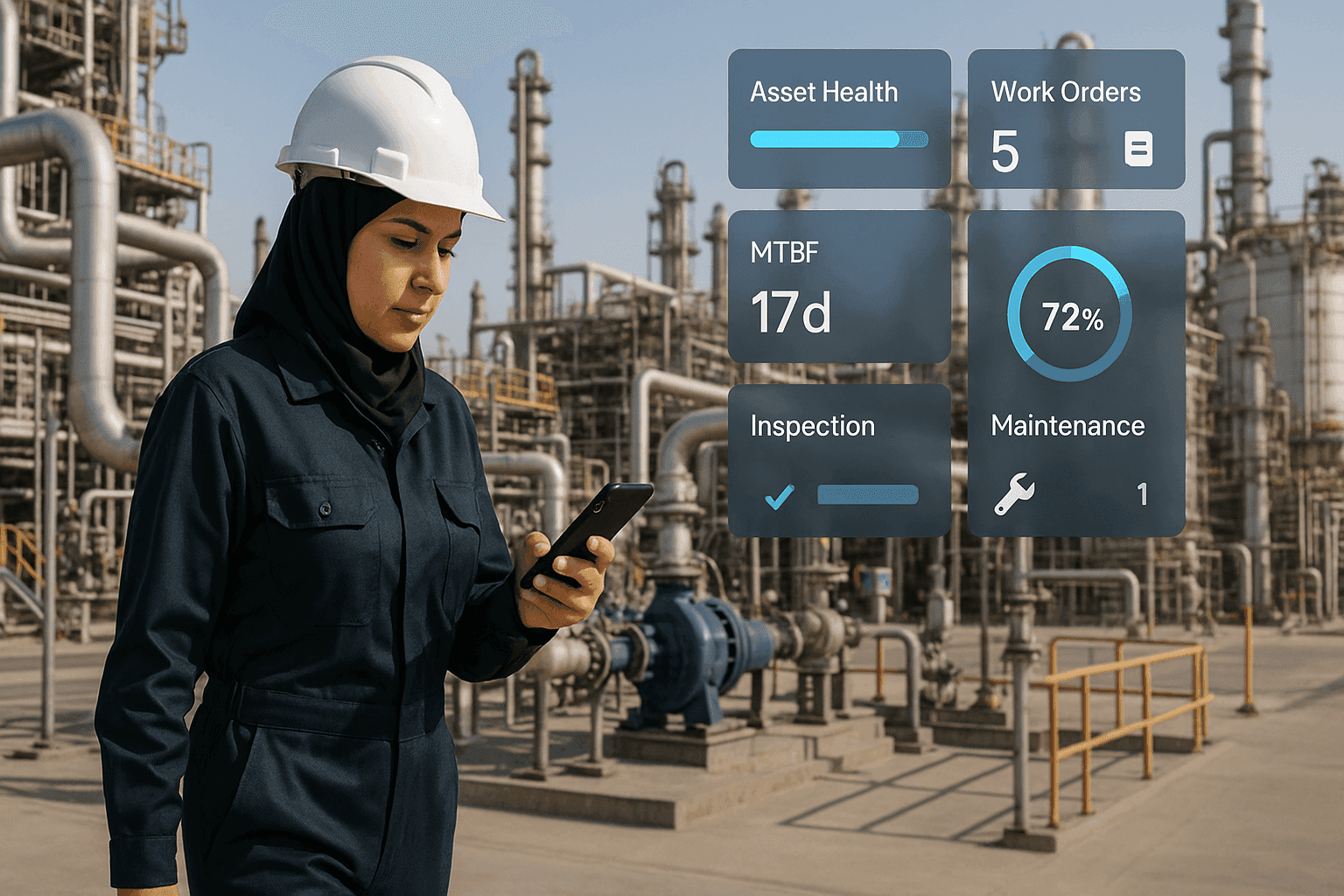
Digital work orders improve visibility throughout the maintenance process. Engineers can review historical failures, schedule inspections, coordinate spare parts, assign technicians through mobile applications, capture field observations, and document completed work consistently. This improves data quality while supporting continuous operational improvement.
For many organisations, a computerised maintenance management system (CMMS) provides the foundation for maintenance scheduling and work order management. Within large industrial environments, however, a CMMS delivers greater value when it forms part of a broader enterprise asset management strategy that includes lifecycle planning, procurement, inspections, capital investments, enterprise reporting, and performance analytics.
How an enterprise asset management solution standardises turnaround planning
Coordinating maintenance, inspections, contractors, and inventory
Planned shutdowns and turnarounds are among the most resource-intensive activities within oil and gas operations. Hundreds or even thousands of maintenance tasks, inspections, contractor activities, permits, engineering reviews, and material requirements must be completed within carefully controlled shutdown windows while maintaining safe working practices.
An enterprise asset management solution establishes a single source of operational information before, during, and after a turnaround. Maintenance planners can prepare work packages, sequence activities, coordinate contractors, verify permit readiness, allocate skilled resources, confirm spare parts availability, and identify potential scheduling conflicts before execution begins.
During execution, real-time work order updates improve schedule visibility across maintenance, operations, inspection, engineering, and procurement teams. This helps reduce duplicated work, minimise delays caused by missing materials, and improve communication when priorities change.
Better coordination contributes to measurable operational improvements, including:
- Reduced maintenance backlog.
- Improved schedule compliance.
- Lower turnaround duration.
- Increased equipment availability.
- Better audit readiness.
These outcomes are particularly valuable in UAE facilities where shutdown windows are planned carefully to minimise production interruptions while maintaining workforce safety and equipment integrity.
Integrating enterprise asset management with enterprise operations
Maintenance decisions become more effective when operational and business systems exchange information. Modern enterprise asset management software can integrate with enterprise resource planning (ERP) platforms, procurement systems, inventory management applications, document repositories, SCADA environments, IoT monitoring solutions, GIS platforms, and business intelligence tools.
This connected approach enables maintenance planners to evaluate equipment condition alongside operational performance, procurement status, inventory availability, financial information, and maintenance history. Instead of analysing isolated datasets, organisations gain a more complete understanding of asset health and maintenance priorities.
Integrated reporting also strengthens governance by giving engineering, operations, procurement, finance, and executive management access to consistent performance information. Common dashboards help organisations monitor maintenance compliance, asset reliability, inspection completion rates, and resource utilisation across multiple UAE production sites.
Best practices for implementing enterprise asset management software in UAE energy facilities
Building a scalable implementation roadmap
Successful implementation typically begins with an organisation’s most critical production assets before expanding across additional facilities. A phased deployment enables maintenance teams to validate workflows, improve master data quality, refine governance processes, and encourage workforce adoption before enterprise-wide implementation.
Developing a consistent asset hierarchy is one of the most important early activities. Accurate master data, preventive maintenance libraries, inspection templates, KPI selection, clearly defined maintenance responsibilities, and standard naming conventions all contribute to long-term success. Equally important is user adoption, ensuring technicians, planners, supervisors, and engineers understand new digital workflows and reporting expectations.
For organisations operating multiple production sites across the UAE, governance is essential. Standard maintenance procedures, common reporting structures, data quality reviews, and regular performance assessments help maintain consistency while allowing individual facilities to address local operational requirements.
Extending digital asset management beyond production assets
The same enterprise asset management software principles can support workshops, utility systems, warehouses, laboratories, administrative buildings, accommodation facilities, and other supporting infrastructure that contributes to operational continuity.
Many energy companies extend digital maintenance programmes to include enterprise facility management for non-production environments. This creates a more comprehensive view of infrastructure performance while enabling maintenance teams to coordinate work across both operational and support assets.
Some organisations also engage specialist facilities management providers to maintain offices, accommodation, and other support facilities while retaining integrated asset visibility within the wider enterprise asset management platform. This enables outsourced maintenance activities to remain aligned with enterprise reporting, asset lifecycle objectives, and operational governance.
Applying consistent asset management principles across production and support facilities also helps improve budgeting, capital planning, maintenance forecasting, and long-term infrastructure investment decisions.
Measuring business value from an enterprise asset management solution
Evaluating the return on an enterprise asset management solution extends beyond reducing maintenance expenditure. Long-term value is often realised through stronger operational resilience, improved planning accuracy, enhanced asset visibility, and better-informed investment decisions throughout the asset lifecycle.
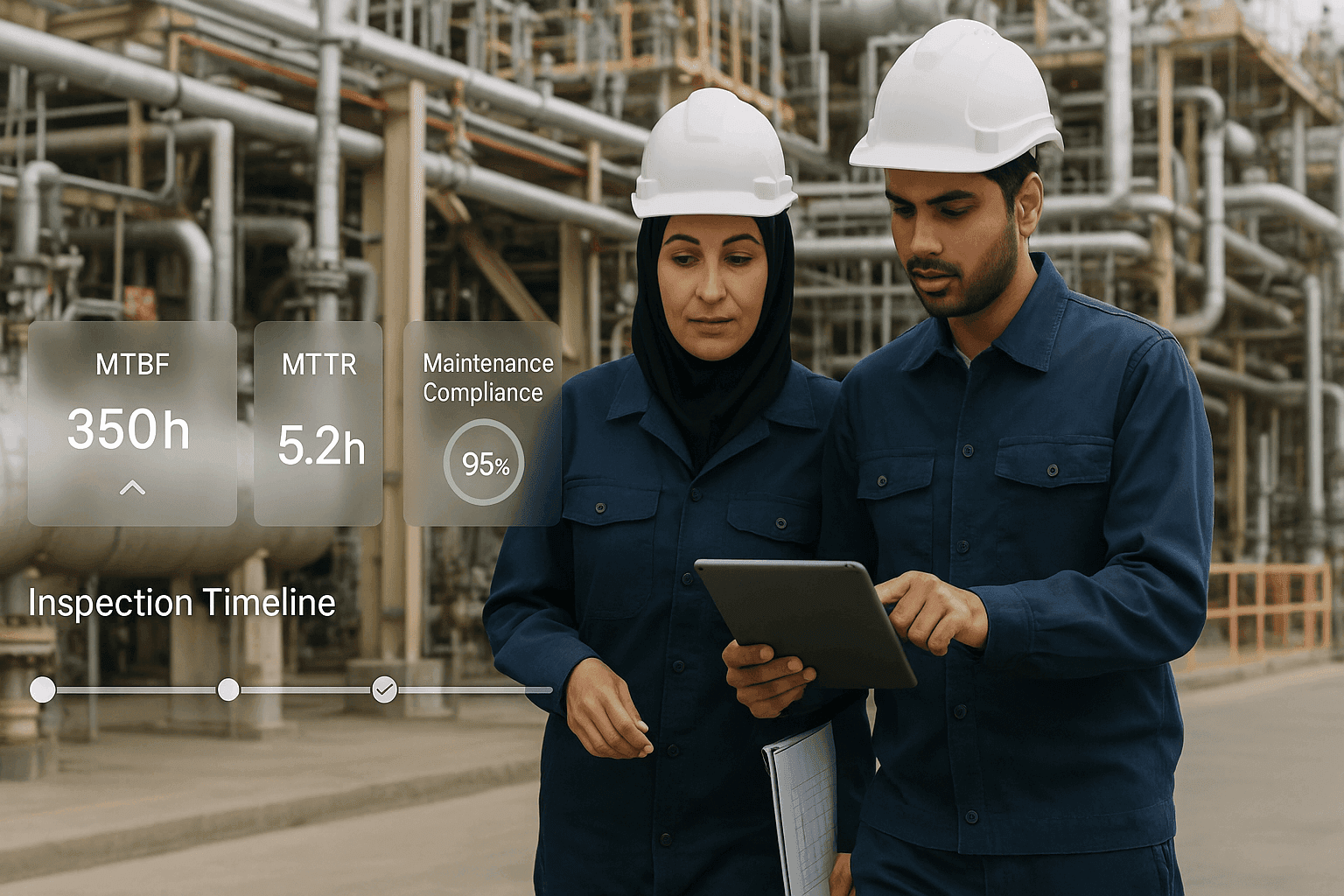
Organisations should monitor performance indicators such as Mean Time Between Failures (MTBF), Mean Time to Repair (MTTR), asset availability, maintenance compliance, work order completion rates, inventory optimisation, maintenance backlog, planned versus reactive maintenance, and turnaround schedule adherence. Monitoring these metrics together provides a balanced view of maintenance effectiveness and operational performance.
Enterprise asset management software also generates operational intelligence by consolidating maintenance history, inspection records, equipment performance, resource utilisation, and reliability trends into meaningful reports and dashboards. Maintenance teams can identify recurring failure patterns, refine preventive maintenance intervals, improve spare parts planning, and support capital investment decisions using consistent operational data.
Over time, organisations in the UAE can strengthen lifecycle management, improve workforce safety, reduce operational risk, increase equipment availability, and support more predictable production performance through better-informed maintenance planning.
Conclusion
An enterprise asset management solution helps UAE oil and gas organisations standardise maintenance processes, strengthen asset integrity programmes, and execute planned turnarounds with greater confidence. By connecting maintenance, engineering, procurement, inspections, and operations through a unified digital platform, organisations gain greater visibility across critical production assets while supporting more predictable maintenance outcomes.
As digital transformation continues across the UAE energy sector, enterprise asset management platforms provide the operational intelligence needed to support data-driven maintenance, improve long-term infrastructure performance, and align maintenance, operations, and engineering teams around shared reliability objectives.
Key Takeaways
- Enterprise asset management solutions centralise maintenance, inspection, and lifecycle information, strengthening asset integrity across UAE oil and gas facilities.
- The enterprise asset management platform improves turnaround planning by coordinating work packages, contractors, inventory, and maintenance execution through shared operational visibility.
- This enterprise asset management approach supports measurable improvements in equipment reliability, maintenance efficiency, governance, and long-term asset performance.
Ready to improve maintenance planning and asset performance across UAE oil and gas operations? Explore how eFACiLiTY supports enterprise maintenance strategies and Schedule a demo to discuss your operational requirements.
FAQ
Q1. What is an enterprise asset management solution?
An enterprise asset management solution is software that helps organisations manage physical assets throughout their lifecycle by centralising maintenance, inspections, work orders, inventory, engineering information, and performance data. It improves asset reliability, maintenance planning, operational visibility, and decision-making for asset-intensive industries such as oil and gas.
Q2. How is enterprise asset management software different from CMMS software?
A CMMS primarily supports maintenance scheduling, preventive maintenance, and work order management. Enterprise asset management software builds on these capabilities by integrating lifecycle management, inspections, procurement, analytics, capital planning, and enterprise-wide reporting, making it better suited to large and complex industrial operations.
Q3. What should UAE oil and gas companies consider before implementing an enterprise asset management system?
Successful implementation depends on accurate asset data, well-defined maintenance processes, phased deployment, workforce training, integration with existing enterprise systems, and effective governance. Organisations should also verify applicable operational requirements, internal asset integrity policies, and reporting needs before configuring workflows and performance measures.
Q4. How does a maintenance management system improve turnaround performance?
A maintenance management system improves turnaround performance by organising work packages, coordinating contractors, scheduling inspections, tracking materials, allocating resources, and providing real-time progress visibility. These capabilities help reduce delays, improve resource utilisation, support safer shutdown execution, and enable facilities to return to production more efficiently.