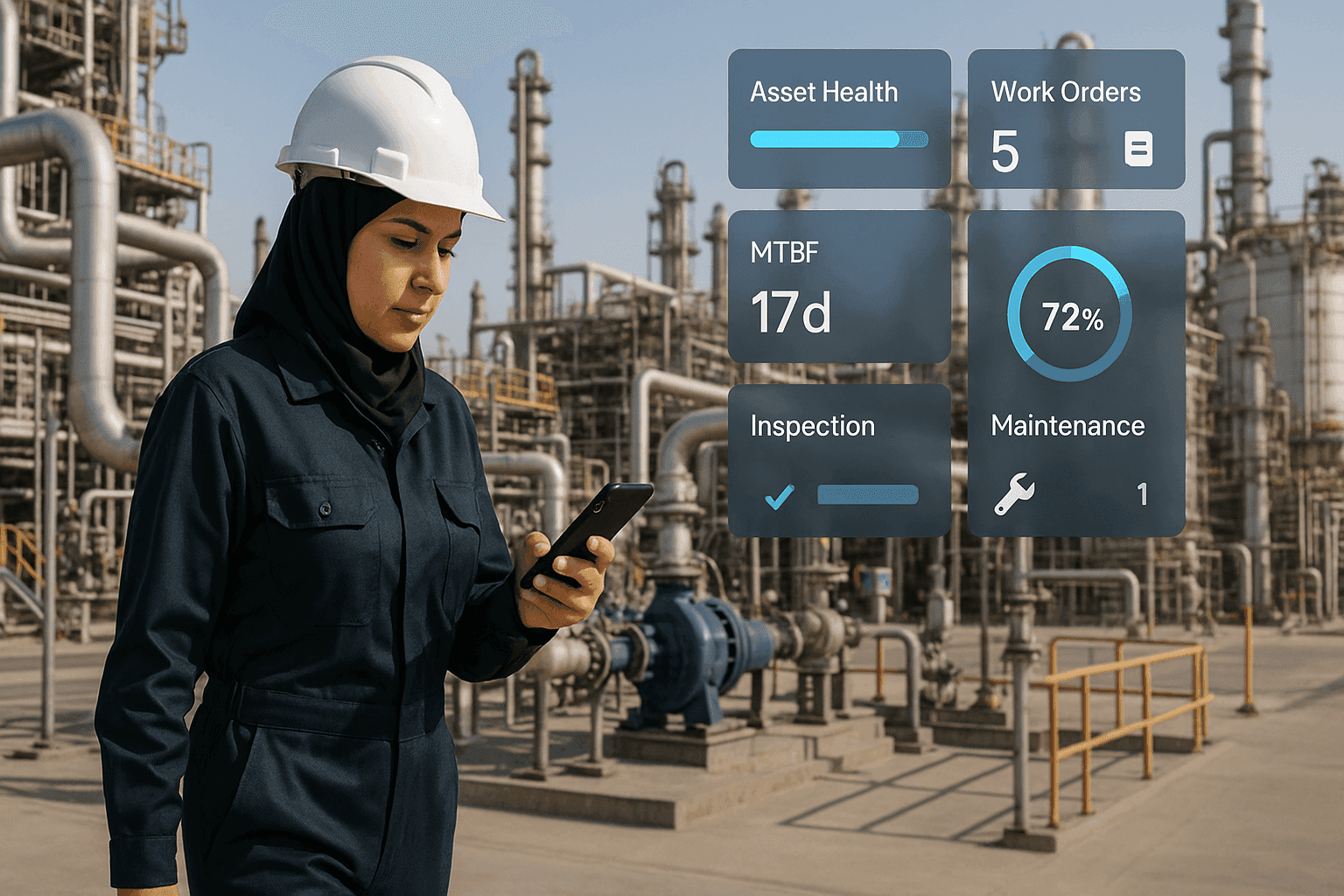
The UAE’s oil and gas sector operates some of the Middle East’s most complex industrial assets, including upstream production facilities, midstream pipeline networks, storage terminals, gas processing plants and downstream refineries. Maintaining production continuity while protecting asset integrity, executing planned shutdowns and reducing unplanned downtime requires consistent maintenance processes across geographically distributed operations. Every maintenance decision can influence safety, production performance, operating costs and long-term asset reliability.
An enterprise asset management solution is a digital platform that helps asset-intensive organisations manage equipment performance, maintenance planning, asset integrity and lifecycle data, enabling maintenance and operations teams to improve reliability, compliance and operational efficiency throughout the asset lifecycle.
How does an enterprise asset management solution improve asset integrity and turnaround planning?
An enterprise asset management solution centralises asset information, maintenance workflows, inspection records and turnaround planning to improve asset integrity, reduce downtime and support predictable shutdown execution. For UAE oil and gas operators, it strengthens risk-based maintenance, compliance reporting and operational visibility across complex industrial facilities.
As industrial organisations across the UAE continue their digital transformation initiatives, maintenance and operations leaders are adopting connected platforms that standardise asset lifecycle management. A modern enterprise asset management solution enables engineering, maintenance, inspection and operations teams to work from a shared source of asset information while improving planning, governance and operational visibility. Alongside enterprise asset management software, these platforms support more consistent maintenance execution and better-informed investment decisions.
An enterprise asset management solution centralises asset information, maintenance workflows, inspection records and turnaround planning within a single platform. For UAE oil and gas operators, it supports risk-based maintenance, improves asset reliability, reduces downtime, strengthens compliance reporting and enables more predictable shutdown execution across complex industrial facilities.
Why UAE oil and gas facilities need a standardised enterprise asset management solution
Asset integrity challenges across complex facilities
Oil and gas operators in the UAE manage extensive portfolios of critical assets exposed to demanding operating conditions, including high temperatures, corrosive environments, continuous production cycles and ageing infrastructure. Rotating equipment, pressure vessels, pipelines, storage tanks and process systems all require disciplined inspection and maintenance strategies to minimise operational risk while sustaining production targets.
Without standardised maintenance governance, different facilities may follow inconsistent inspection schedules, maintenance procedures or asset documentation practices. These differences make it harder to identify emerging equipment issues, compare performance across sites or coordinate engineering decisions across multiple operating locations.
An enterprise asset management system supports consistent operating procedures through a shared asset hierarchy, standard maintenance plans, inspection history and work management processes. Maintenance teams, operations personnel, inspection engineers and reliability specialists work from the same records, reducing information gaps and improving decision-making from inspection through execution.
Balancing production targets with maintenance performance
Oil and gas organisations continually balance production objectives against the need to preserve equipment health. Deferring maintenance may temporarily increase production availability, but it can also increase the likelihood of unexpected failures, higher repair costs and unplanned shutdowns.
Modern maintenance management capabilities provide greater visibility into equipment condition before failures become critical. Maintenance planners can prioritise work according to asset criticality, inspection findings, operational risk and historical performance instead of relying solely on fixed maintenance intervals.
Common maintenance performance indicators monitored through an enterprise asset management solution include:
- Mean Time Between Failures (MTBF)
- Mean Time To Repair (MTTR)
- Planned maintenance compliance
- Maintenance backlog
- Asset availability
Together, these metrics help maintenance leaders optimise maintenance schedules while supporting reliable production across multiple UAE facilities.
How enterprise asset management solution platforms support asset integrity and turnaround planning
Digital maintenance workflows from inspection to execution
Asset integrity depends on maintenance processes that are timely, traceable and consistently executed. Enterprise asset management software supports preventive, predictive and condition-based maintenance by connecting inspections, work orders, equipment history and maintenance strategies within one environment.
Inspection findings can trigger maintenance recommendations, digital approval workflows, technician assignments through mobile applications, spare parts reservations and contractor coordination. This integrated approach reduces administrative effort, improves execution quality and strengthens maintenance accountability.
Many organisations also use asset maintenance software to provide field technicians with digital checklists, equipment documentation and real-time work updates. Enterprise asset management extends these capabilities by linking maintenance execution with lifecycle costing, asset performance analysis and long-term planning.
A computerised maintenance management system (CMMS) remains highly valuable for preventive maintenance scheduling, work order management and maintenance tracking. Within larger industrial organisations, however, it is often complemented by broader enterprise asset management capabilities that integrate engineering, inspection, procurement, inventory and strategic asset planning.
Integrating reliability, inspection and turnaround planning
Major plant turnarounds require months of planning and coordination. Inspection teams, maintenance planners, engineering departments, procurement specialists, warehouse personnel, contractors and operations leaders all depend on accurate asset information and reliable schedules.
An enterprise asset management solution brings together inspection reports, risk assessments, historical maintenance records, equipment criticality and shutdown schedules in one planning environment. This helps identify scheduling conflicts before shutdown activities begin, improving resource utilisation and reducing the risk of costly delays.
Integration with ERP platforms, procurement systems, inventory management applications and document management solutions further improves planning accuracy. Spare parts availability, contractor mobilisation, engineering documentation and maintenance work packages can be coordinated more effectively, supporting safer and more efficient planned outages across UAE facilities.
Implementing an enterprise asset management solution across UAE industrial operations
Building a phased implementation roadmap
Successful implementation begins with reliable asset data rather than software configuration alone. Organisations should establish a structured asset hierarchy, validate equipment master data, complete asset criticality assessments, standardise maintenance strategies and define governance responsibilities before extending the platform across multiple facilities.
A phased rollout typically starts with a pilot site before expanding to additional plants. This allows maintenance processes to mature while users become familiar with new workflows and reporting requirements. Training should include maintenance planners, operations personnel, inspection engineers, reliability specialists, warehouse teams and contractors involved in maintenance execution.
Effective change management is equally important. Clearly documented maintenance procedures, defined approval workflows and consistent ownership of asset data help maintain information quality long after implementation.
Progress can be measured using practical operational indicators such as:
- Improved preventive maintenance completion
- Reduced maintenance backlog
- Higher-quality work orders
- Better data consistency
- Increased asset availability
- Fewer unexpected shutdowns
As organisations expand digital operations, enterprise facility management can also support broader infrastructure governance by connecting industrial maintenance with wider facilities and operational portfolios where appropriate.
Connecting maintenance intelligence with enterprise decision-making
Operational dashboards provide maintenance managers and executives with visibility into equipment reliability, maintenance performance, lifecycle costs, inspection trends and workforce productivity. Rather than relying on isolated reports, decision-makers gain a consolidated view of asset performance across the enterprise.
While CMMS software supports day-to-day maintenance scheduling and execution, enterprise asset management extends into lifecycle optimisation, investment planning, reliability improvement and long-term asset performance management. This broader perspective helps organisations prioritise maintenance investment according to operational risk and business objectives.
For large UAE oil and gas enterprises, cybersecurity, cloud deployment flexibility, scalability and secure integration with existing enterprise systems should all be considered during platform selection. These capabilities support future growth while helping protect operational technology and business-critical information.
Measuring business outcomes from enterprise asset management solution adoption
Organisations that improve maintenance maturity through digital asset management often achieve more predictable operations and stronger collaboration between maintenance, engineering, procurement and operations teams. Standardised processes improve planning quality while reducing unnecessary reactive maintenance and providing greater confidence in maintenance decisions.
Expected operational improvements may include:
- Reduced unplanned shutdowns
- Improved turnaround schedule adherence
- Better maintenance cost control
- Higher asset availability
- Improved readiness for regulatory audits and internal governance requirements
- Increased workforce productivity
Predictive analytics and digital maintenance planning enable maintenance teams to identify developing equipment issues earlier, allowing interventions to be scheduled before production is affected. Over time, this contributes to greater operational resilience, stronger asset lifecycle performance and more informed capital planning.
The principles of enterprise asset management also extend beyond heavy industry. For example, organisations evaluating CAFM for municipal facilities use similar lifecycle management concepts to support infrastructure investment decisions, although operational priorities differ significantly from those of the UAE oil and gas sector.
Conclusion
A modern enterprise asset management solution gives UAE oil and gas organisations the tools to standardise maintenance processes, strengthen asset integrity programmes and improve turnaround planning across complex industrial facilities. By connecting maintenance, inspections, engineering, procurement and asset performance data, organisations gain greater operational visibility and more consistent decision-making.
When enterprise asset management software is implemented alongside strong governance, accurate asset data and disciplined maintenance processes, it supports long-term operational resilience, improved reliability and measurable business value across the entire asset lifecycle.
Key Takeaways
- Enterprise asset management solutions improve asset integrity by standardising maintenance, inspection and lifecycle information across industrial assets.
- The platform enables more effective turnaround planning by integrating maintenance scheduling, work management and asset performance visibility.
- This approach supports measurable operational improvements through reduced downtime, greater maintenance efficiency and better-informed investment decisions.
Ready to standardise maintenance processes and strengthen turnaround planning across your UAE industrial operations? Explore how eFACiLiTY can support your asset management strategy and Schedule a demo.
FAQ
Q1. What is an enterprise asset management solution?
An enterprise asset management solution is software that helps asset-intensive organisations manage maintenance, inspections, asset performance and lifecycle information from one platform. It enables maintenance and operations teams to improve equipment reliability, optimise maintenance planning, reduce downtime and support long-term asset performance across complex facilities.
Q2. How does enterprise asset management software support oil and gas turnaround planning?
Enterprise asset management software consolidates maintenance history, inspection records, work orders, resource planning and shutdown schedules into one environment. This enables organisations to coordinate complex turnaround activities, minimise scheduling conflicts, improve contractor management and reduce production disruption during planned maintenance events.
Q3. What is the difference between CMMS software and an enterprise asset management system?
CMMS software primarily focuses on maintenance scheduling, work orders and preventive maintenance execution. An enterprise asset management system extends beyond maintenance by managing asset lifecycle information, inspections, reliability, inventory integration, reporting, capital planning and strategic asset performance across the organisation.
Q4. What should UAE organisations consider before implementing an enterprise asset management solution?
Successful implementation requires accurate asset data, a well-defined asset hierarchy, standardised maintenance processes, user training, integration with existing enterprise systems and strong governance. Organisations should also confirm applicable UAE regulatory and industry compliance requirements relevant to their facilities before deployment.