In Saudi Arabia, hospitals are under constant pressure to improve patient flow while maintaining high standards of safety, cleanliness, and operational performance. Delays in patient room turnover can slow admissions, increase waiting times, and place additional pressure on clinical and support teams. Coordinating housekeeping, maintenance, infection control and room inspections through phone calls, spreadsheets or paper records often limits visibility and slows decision-making.
Facility management software for hospitals is a digital platform that helps healthcare organisations coordinate maintenance, housekeeping, space management, compliance activities and patient room readiness, improving operational efficiency, service quality and visibility across hospital facilities.
As healthcare providers across Saudi Arabia continue to modernise their operations, facility management software for hospitals offers a more connected approach. Instead of treating maintenance and housekeeping as separate functions, hospitals can gain a shared operational view that supports faster room readiness, improved asset management and stronger compliance with internal policies and applicable national healthcare requirements.
How does facility management software for hospitals improve patient room turnover?
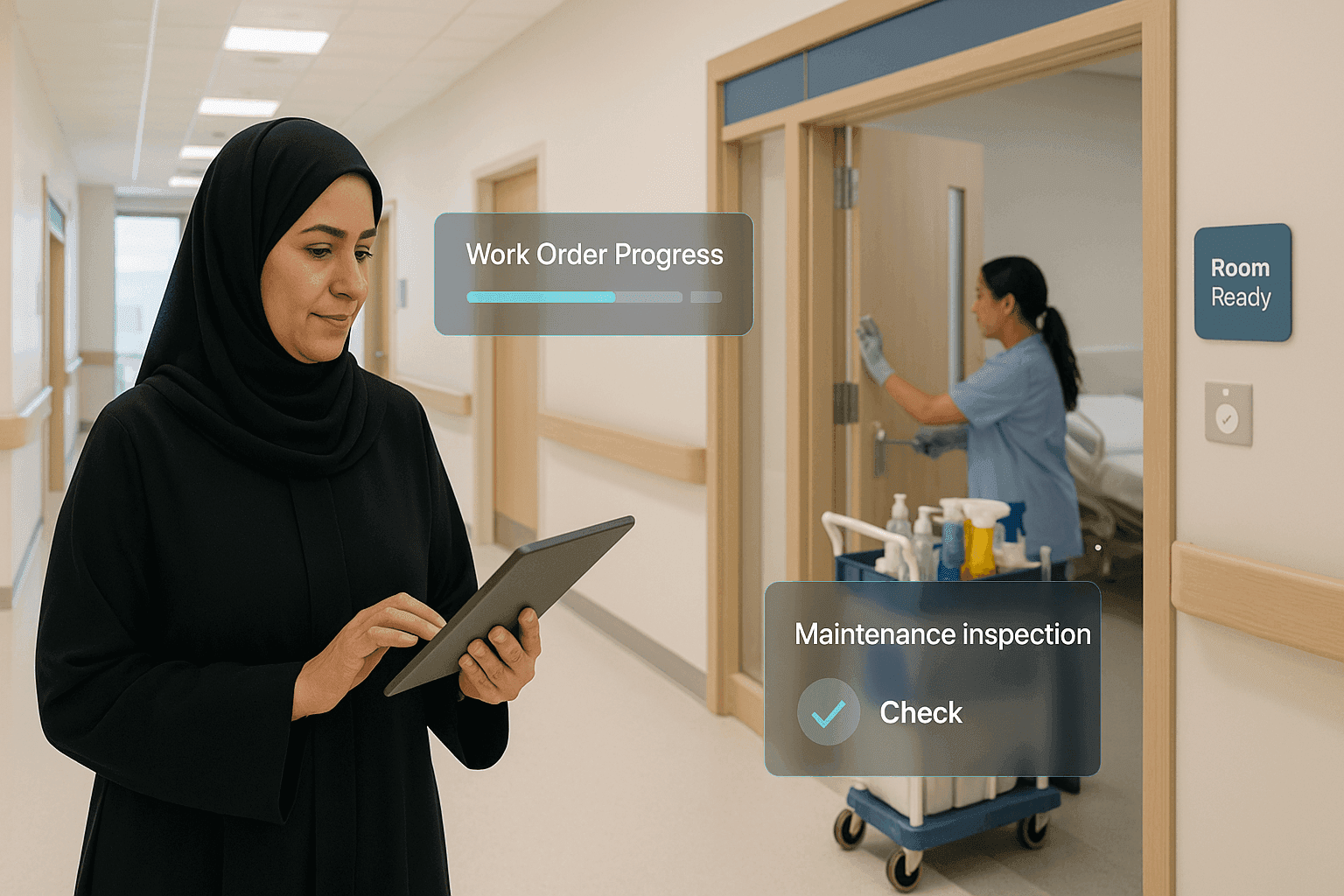
Facility management software for hospitals centralises housekeeping, maintenance, inspection and room-status workflows within a single platform. It automates task allocation, tracks room readiness in real time, improves communication between departments, reduces turnover delays, increases bed availability, strengthens compliance, and supports more efficient patient care operations across Saudi Arabian hospitals.
Why patient room turnover is a critical operational challenge in Saudi hospitals
Patient room turnover affects far more than housekeeping schedules. When rooms remain unavailable after discharge because cleaning, maintenance or inspections are delayed, emergency departments may experience congestion, elective admissions can be postponed and staff may spend valuable time chasing updates rather than supporting patient care.
In Saudi Arabian hospitals, effective coordination between nursing teams, environmental services, biomedical technicians and facilities teams is essential. Operational processes should align with applicable national healthcare requirements, accreditation expectations and internal quality standards. Without a central system, communication gaps can lead to duplicated work, delayed maintenance requests and uncertainty over whether a room is ready for the next patient.
Operational bottlenecks that facility management software for hospitals can eliminate
Digital workflows help hospitals reduce common operational challenges, including:
- Manual room status updates that delay communication between departments.
- Maintenance requests raised only after housekeeping has completed its work.
- Slow cleaning verification and inspection approvals.
- Limited visibility into room readiness across wards and facilities.
How healthcare facility management software standardises hospital operations
Healthcare facility management software creates consistent workflows across housekeeping, engineering, inspections and space management. Rather than responding to issues after they occur, hospitals can automate work orders, schedule preventive maintenance and verify room readiness before new admissions. This standardised approach supports predictable service delivery across large healthcare campuses in Saudi Arabia.
Many organisations achieve these outcomes through computer aided facility management software that connects maintenance teams, service requests, assets and occupancy information within a single environment. Such a solution can automate work orders, preventive maintenance schedules and room readiness approvals while improving operational reporting.
A computer aided facility management system can also integrate with broader workplace and facilities technologies where appropriate, improving asset visibility, occupancy management, maintenance planning and reporting without replacing specialised clinical applications. Within larger healthcare environments, integrated facility management software supports enterprise-wide coordination while allowing facilities, engineering and support services to work from shared operational data.
Implementing facility management software for hospitals for consistent operational performance
Successful implementation begins with improving workflows before automating them. Hospitals should establish consistent room turnover procedures, define responsibilities across departments and agree measurable service levels. A phased deployment allows teams to validate workflows, encourage staff adoption and refine reporting before expanding across multiple hospital sites.
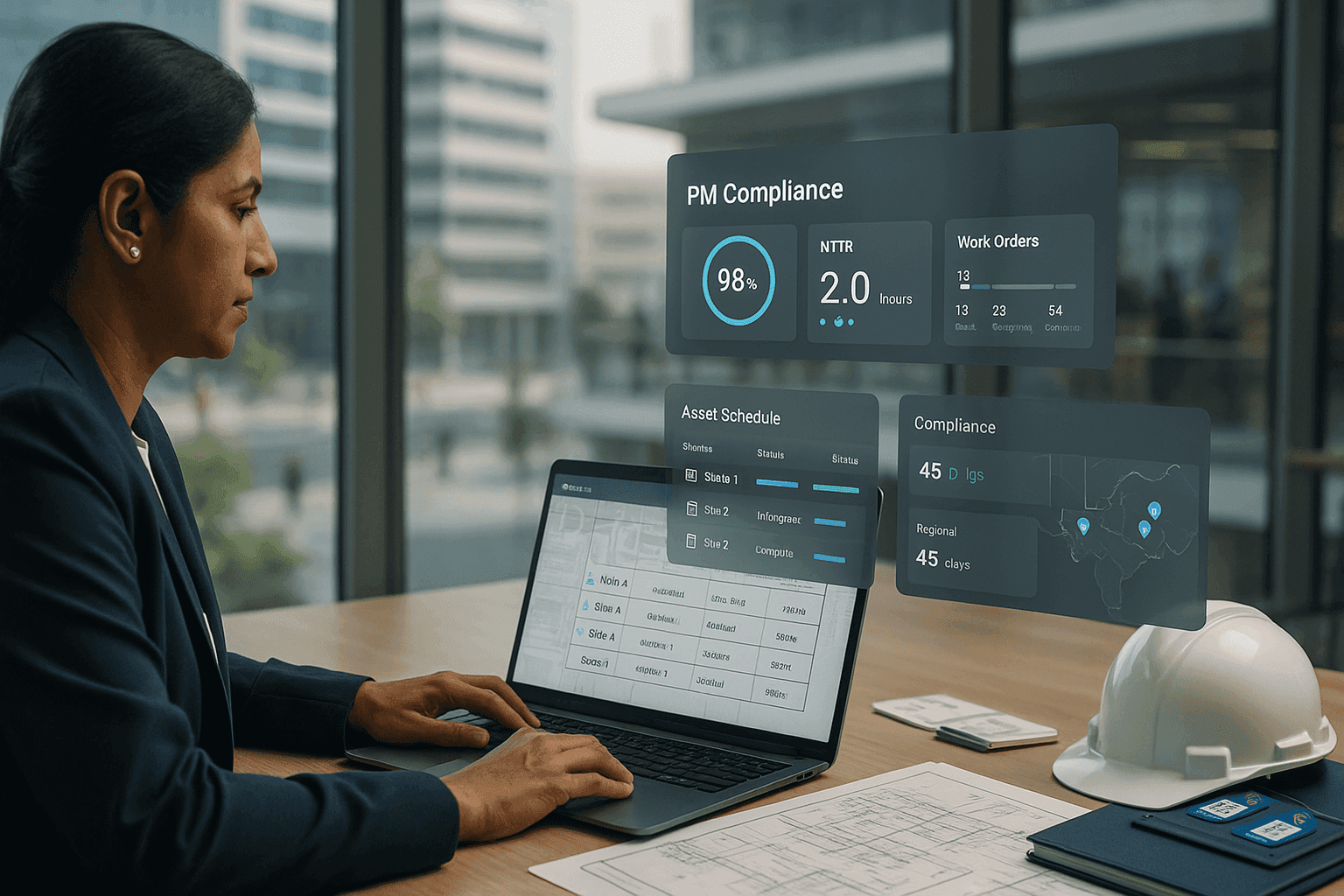
Operational dashboards provide leaders with clear visibility into performance, making it easier to identify recurring delays, monitor resource utilisation and improve planning. Common performance indicators include:
- Room turnaround time.
- Preventive maintenance completion rates.
- Work order closure times.
- Asset availability and utilisation.
Hospitals can also benefit from reviewing operational practices used in other compliance-driven sectors when strengthening governance and reporting. However, healthcare workflows should remain tailored to the specific operational requirements of Saudi hospital environments.
Conclusion
Facility management software for hospitals helps Saudi Arabian healthcare providers improve patient room turnover by connecting housekeeping, maintenance, inspections and compliance activities within a unified workflow. Standardised digital processes improve operational consistency, strengthen maintenance coordination and provide greater visibility into room readiness. As hospitals continue to expand and modernise, connected facility operations can support better patient experiences while improving long-term operational resilience and resource management.
Key Takeaways
- Facility management software for hospitals improves patient room turnover through automated housekeeping, maintenance and room readiness workflows.
- The platform provides greater operational visibility by integrating preventive maintenance, reporting and coordinated task management across hospital departments.
- This approach supports standardised healthcare operations by connecting facilities, assets and workplace management processes within Saudi hospital environments.
Evaluate how eFACiLiTY can help your healthcare teams improve room turnover, maintenance planning and compliance across Saudi hospital environments. Contact us.
FAQ
Q1. What is facility management software for hospitals?
Facility management software for hospitals is a digital solution that helps healthcare organisations manage maintenance, housekeeping, assets, compliance activities and operational workflows through a single platform. It improves room readiness, service coordination, reporting and operational visibility for facilities and hospital management teams.
Q2. How does facility management software reduce patient room turnaround times?
The software automates task assignments, tracks cleaning and maintenance progress in real time and provides shared visibility across departments. This reduces communication delays, improves coordination between teams and enables patient rooms to be prepared more efficiently for new admissions while supporting consistent operational performance.
Q3. Can facility management software integrate with existing hospital systems?
Many modern solutions integrate with enterprise technologies such as workplace management platforms, asset management applications and other hospital operational systems. Integration capabilities vary between vendors, so hospitals should evaluate compatibility with their existing infrastructure, workflows and operational requirements before implementation.