Introduction
Managing a nationwide banking estate in Nigeria means coordinating hundreds of branches with different building conditions, lease arrangements, maintenance histories and renovation priorities. As banks expand into new locations, modernise customer-facing spaces or consolidate underperforming sites, inconsistent project data and disconnected processes can increase costs, delay reopening and reduce visibility across the property portfolio.
An integrated workplace management system is a centralised platform that helps banking organisations manage facilities, real estate, maintenance, capital projects and workplace assets through a single source of operational data, improving consistency and decision-making across distributed branch networks.
How does an integrated workplace management system help banks standardise branch renovations?
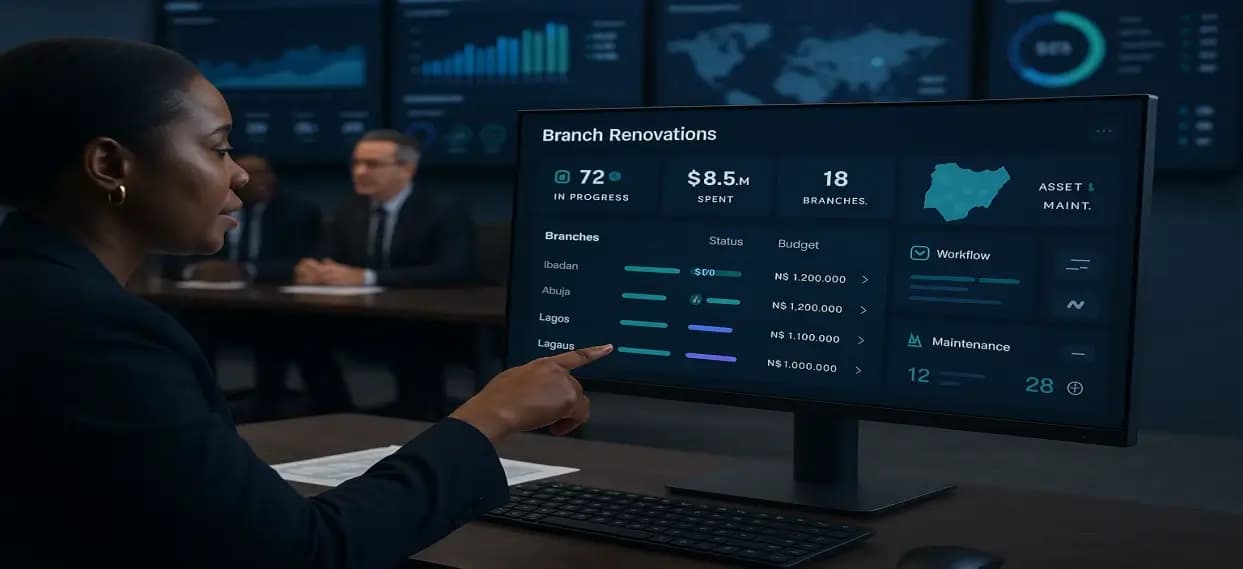
An integrated workplace management system standardises branch renovations by bringing project governance, maintenance records, asset data, budgets and portfolio reporting into one platform. It enables consistent workflows, stronger contractor coordination, improved progress tracking and more reliable investment decisions across a distributed banking estate.
Why Branch Portfolio Standardisation Has Become a Strategic Priority for Nigerian Banks
As Nigerian banks continue branch modernisation, relocations and portfolio optimisation, maintaining consistent information across every site has become increasingly important. When property records, maintenance histories, contractor documentation and renovation budgets are managed in separate systems, leadership teams can find it difficult to identify priority investments or monitor project performance accurately.
Common operational challenges include:
- Limited visibility into branch conditions and asset lifecycles.
- Budget overruns caused by inconsistent project controls.
- Difficulty prioritising renovations using reliable property information.
- Contractors working from different documentation and reporting standards.
Combining facilities management software with an integrated workplace management system establishes common data standards and repeatable renovation processes. Banks should also ensure property strategies and operational practices align with applicable Nigerian requirements and confirm specific obligations with the relevant authorities before implementation.
How an Integrated Workplace Management System Improves Branch Operations and Portfolio Visibility
Connecting Facilities, Projects and Real Estate Data
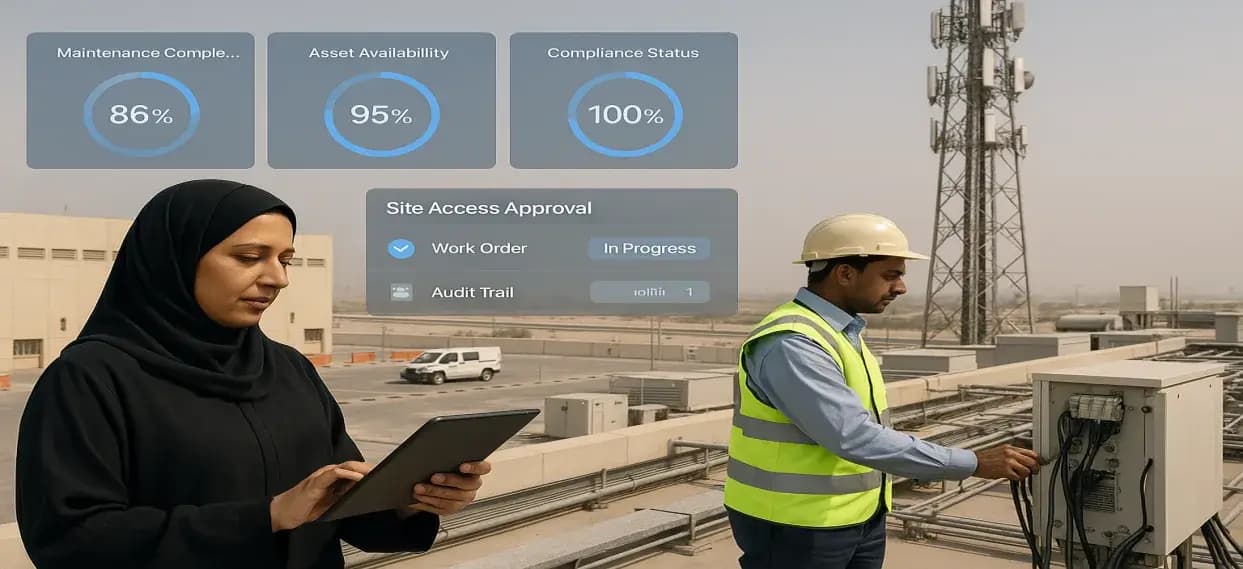
Modern integrated workplace management software connects maintenance activities, lease information, asset inventories, space records, project schedules and compliance documentation within a single environment. Instead of relying on multiple spreadsheets or disconnected reports, executives gain portfolio-wide visibility through consistent dashboards and reporting.
Many organisations also incorporate corporate facility management software and integrated facility management capabilities within a broader IWMS deployment. This approach allows facilities, finance and real estate teams to compare branch performance, forecast capital expenditure and support evidence-based decisions on refurbishment, relocation or consolidation.
Managing Renovations with Consistent Workflows
A structured renovation process typically begins with a branch condition assessment, followed by budget approval, contractor coordination, project delivery and post-renovation asset updates. Recording every stage within the same platform creates a complete audit trail, improves accountability and helps maintain accurate records throughout the branch lifecycle.
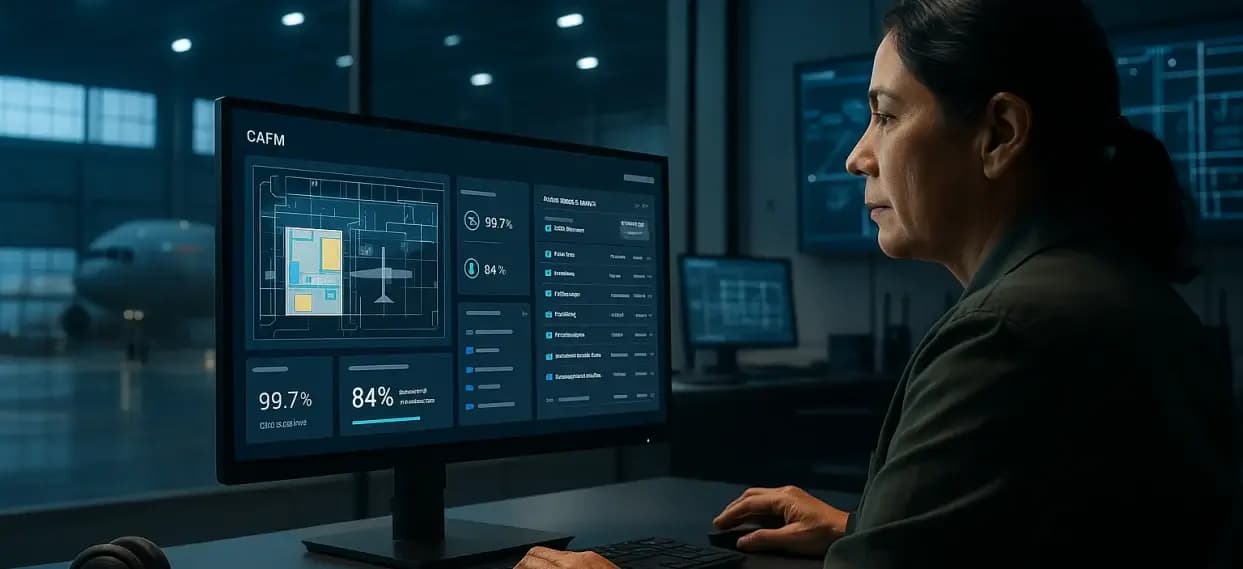
Computer-aided facility management capabilities remain valuable for maintenance scheduling, work orders and asset management. Within a wider integrated workplace management system, these functions complement enterprise capabilities such as lease administration, capital project management, workplace planning and portfolio analytics.
Implementing an Integrated Workplace Management System Across a Banking Estate
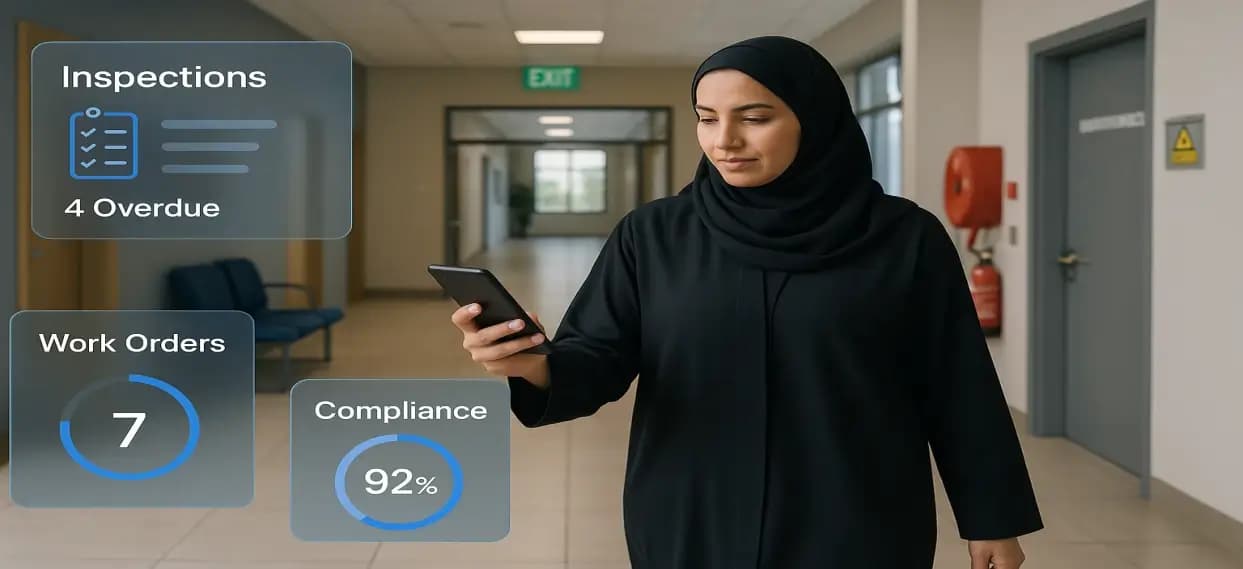
Banks often achieve stronger outcomes by starting with a group of high-priority branches before expanding across the wider estate. Early implementation should focus on cleansing property and asset data, defining governance processes, creating standard renovation templates and establishing KPI dashboards for executive oversight. Reliable information supports both day-to-day operations and long-term branch investment planning.
Successful implementation also depends on collaboration between facilities, finance, procurement, real estate and technology teams. Clearly defined responsibilities, consistent data ownership and user training improve adoption while reducing reporting inconsistencies. As the platform matures, banks can use portfolio insights to evaluate renovation programmes, monitor contractor performance and support future expansion or consolidation decisions across Nigeria.
Conclusion
For Nigerian banks managing extensive branch networks, renovation programmes become more predictable when facilities, projects, maintenance and real estate information are managed through a single integrated workplace management system. Standardised workflows, improved portfolio visibility and consistent operational data support better investment decisions while reducing complexity across the banking estate.
Key Takeaways
- An integrated workplace management system centralises facilities, project and asset information to improve branch renovation governance.
- The platform connects maintenance, workplace and real estate data, giving Nigerian banks greater visibility across distributed branch portfolios.
- This approach supports stronger capital planning through consistent reporting, standardised processes and enterprise-wide operational insight.
Ready to improve branch renovation planning and portfolio oversight across your banking network? Explore how eFACiLiTY can help, and schedule a demo through our contact page.
FAQ
Q1. What is an integrated workplace management system?
An integrated workplace management system is a software platform that brings together facilities, real estate, maintenance, capital projects, workplace operations and asset information in one place. It helps organisations, including banks, improve operational visibility, standardise processes and make more informed property and investment decisions.
Q2. How is an integrated workplace management system different from a computer aided facility management system?
A computer aided facility management system focuses primarily on maintenance, work orders and facilities operations. An integrated workplace management system includes those capabilities while also supporting lease management, capital projects, workplace planning, portfolio governance and enterprise reporting for organisations managing multiple locations.
Q3. How can Nigerian banks prepare for an integrated workplace management system implementation?
Nigerian banks should begin by validating property and asset information, standardising branch records, defining governance processes and involving facilities, finance, procurement, real estate and technology teams. A phased implementation improves data quality, reduces operational disruption and supports effective long-term portfolio management.