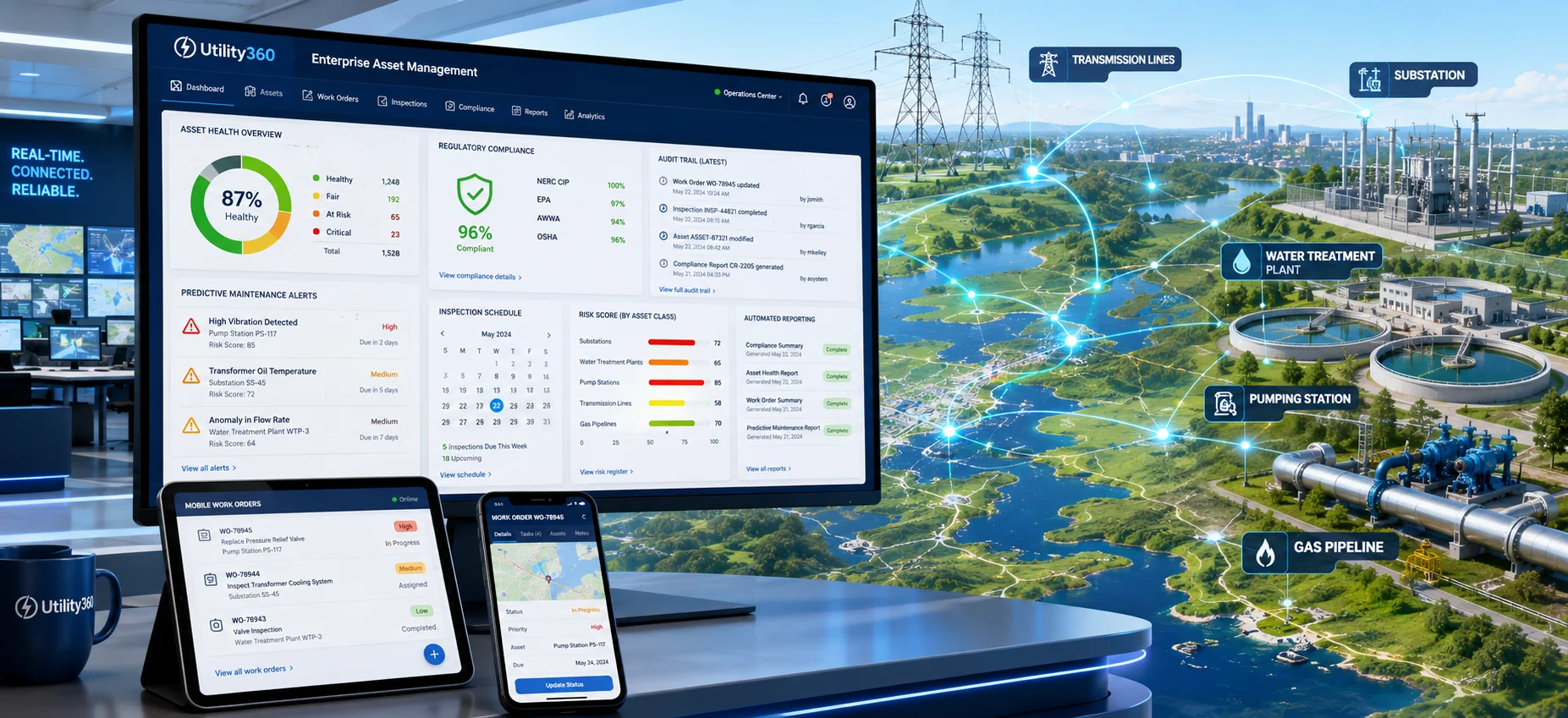
Utilities face considerable challenges when managing widespread infrastructure—balancing reliable service delivery with complex regulatory demands. As electric, water, and gas networks grow increasingly decentralised, the operational need for digital platforms that unify asset, maintenance, and compliance data only intensifies across the sector.
Enterprise asset management software is a digital platform that empowers utilities to maximise asset reliability and achieve regulatory compliance throughout distributed infrastructure, designed for asset managers and utility operations teams to optimise performance, risk, and reporting.
How does enterprise asset management software improve utility asset reliability and compliance?
Enterprise asset management software improves utility asset reliability by centralising data, enabling predictive maintenance, and automating workflows. It supports compliance through audit trails, advanced document management, and automated regulatory reporting. This empowers utilities to manage distributed assets proactively and consistently meet industry regulations, enhancing operational resilience.
Why Utilities Need Enterprise Asset Management Software to Manage Distributed Infrastructure
Operational Challenges Utilities Face with Distributed Assets
Utility networks often span large geographic regions, complicating asset monitoring, maintenance scheduling, and resource allocation. With ageing infrastructure, utilities are exposed to unexpected failures and costly downtime. Manual processes, disparate records, and incomplete asset histories hinder maintenance teams, making it harder to ensure operational visibility and accurate compliance documentation.
- Asset data fragmentation across spreadsheets or outdated systems impedes preventative maintenance.
- Incomplete inspection records increase risk of audit deficiencies and regulatory penalties.
- Field teams face delays and inefficiencies due to inaccessible asset histories and documentation.
Asset Reliability and Business Continuity
Reduced asset reliability can result in serious service interruptions, loss of public confidence, and escalation of costs. Unplanned outages and compliance failures endanger business continuity and sector reputation. Integrated asset management software provides utilities with unified risk strategies and real-time insights, helping maintain continuity across complex, distributed infrastructure.
- Integration connects maintenance, compliance oversight, and incident response for faster action.
- Enterprise reporting and analytics improve business continuity decision-making.
Core Capabilities of Enterprise Asset Management Software for Utility Operations
Utility Asset Reliability Tools: From Predictive Maintenance to Condition Monitoring
Enterprise asset management software enhances asset reliability through a suite of digitally-enabled features tuned for utility challenges:
- Real-time Asset Health Monitoring: IoT sensors and telemetry provide live data on substations, pumping stations, and grid assets.
- Predictive Analytics: Machine learning detects patterns, recommending interventions before failures occur.
- Automated Work Order Generation: Maintenance is scheduled based on asset needs, resource availability, and reliability standards.
- Mobile Workforce Enablement: Field teams access digital work instructions, safety documents, and asset histories remotely.
- Lifecycle Asset Management: Consolidated asset registers support proactive replacement and end-of-life planning.
Regulatory Compliance Asset Management Features
Compliance requirements for utilities are stringent. Enterprise asset management platforms embed key features to ensure readiness:
- Embedded Compliance Workflows: Align activities with frameworks such as NERC CIP and water management standards.
- Comprehensive Audit Trails: Every action is logged and linked to documentation for audit transparency.
- Secure Document Management: Centralised, access-controlled repositories retain permits, inspection certificates, and compliance evidence.
- Automated Regulatory Reporting: Customisable formats allow streamlined audit submissions, reducing manual effort and error.
- Integrated System Visibility: Two-way integration with SCADA, GIS, and ERP synchronises asset data and compliance activities.
Implementing Enterprise Asset Management Software in Utilities: A Practical Roadmap
Phased Approach: Pilot, Scale, and Enterprise Rollout
A phased implementation helps utilities minimise disruption and maximise EAM software adoption:
- Pilot Deployment: Start with one asset class or region to validate key workflows and refine configuration.
- Iterative Scaling: Incrementally expand to further asset classes, prioritising those with highest risk or regulatory significance.
- Enterprise Integration: Link EAM with ERP, GIS, SCADA, and mobile systems for unified processes and reporting.
- User Training and Change Management: Provide comprehensive training and support for all stakeholders.
- Continuous Improvement: Regularly analyse data, audit results, and user feedback to optimise workflows and adopt new features.
Success Factors and Common Pitfalls
- Executive sponsorship ensures cross-departmental alignment and resourcing.
- Reliable, validated asset data is foundational to any EAM system.
- Active engagement from maintenance, compliance, and IT teams drives adoption and relevance.
- Integration with adjacent systems prevents siloing and ensures accurate operational insights.
- Continuous governance and review maintain process discipline post-implementation.
Conclusion
Enterprise asset management software is integral for utilities seeking to increase asset reliability and streamline regulatory compliance across distributed infrastructure. By centralising data, supporting predictive maintenance, and automating compliance, EAM software empowers utilities to minimise risk, reduce downtime, and ensure uninterrupted essential services to communities and businesses.
Key Takeaways
- Enterprise asset management software centralises predictive maintenance and asset health data to improve reliability across distributed utility infrastructure.
- Enterprise asset management software delivers enhanced regulatory compliance by automating compliance workflows and providing audit-ready reporting tailored to industry authorities.
- Enterprise asset management software offers scalable, integrated solutions for operational efficiency and risk mitigation in complex utility networks.
Discover how eFACiLiTY’s enterprise asset management software can optimise your utility operations, streamline compliance, and drive reliability. Schedule a demo today.
FAQ
What is enterprise asset management software?
Enterprise asset management software is a centralised digital platform that enables utilities to optimise maintenance, maximise asset reliability, and manage assets across their full lifecycle. It offers tools for document management, compliance, reporting, and integration, supporting efficient operations across distributed infrastructure.
How does enterprise asset management software compare to traditional maintenance software?
Unlike traditional CMMS, enterprise asset management software delivers full lifecycle control, predictive analytics, IoT integration, and sophisticated compliance management. It is designed for distributed utility environments, supporting scalability, robust integration, and automation not typically possible with basic maintenance systems.
How should asset managers implement enterprise asset management software in distributed infrastructure?
Asset managers should deploy the software in phases, beginning with pilot projects, followed by data verification, user training, and integration with operational systems. Continuous feedback and process improvement are essential for successful adoption in complex, distributed utility networks.