For many corporate headquarters in Ghana, workplace services are delivered by multiple departments, including Facilities, HR, IT, Administration, Security, and Finance. While each team has distinct responsibilities, employees often encounter inconsistent service request processes. Some requests arrive by email, others through phone calls, spreadsheets, messaging applications, or paper forms, making it difficult to track progress, measure performance, or maintain accountability.
A workplace management system is a digital platform that standardises workplace operations, automates service requests, and improves collaboration for corporate real estate, facilities, and workplace management teams, enabling more consistent service delivery and stronger operational oversight.
As organisations expand across Accra and other commercial centres such as Kumasi and Takoradi, fragmented processes can create delays, duplicate work, inconsistent approvals, and limited visibility into service performance. These challenges affect employee experience, operational efficiency, and management reporting. A workplace management system helps organisations replace disconnected workflows with standardised, transparent processes that support stronger governance and collaboration. References to workplace regulations, health and safety obligations, or building requirements should always be verified against applicable Ghanaian legal and organisational requirements before implementation.
What is a workplace management system?
A workplace management system centralises workplace services by providing employees with a single platform to submit requests, while automating routing, approvals, work tracking, and reporting. It enables workplace managers, corporate real estate teams, and support departments to deliver consistent services, improve operational efficiency, and increase accountability across corporate headquarters.
Rather than simply replacing email, the system creates structured workflows where requests are submitted through standard forms, assigned according to predefined business rules, monitored against service level agreements (SLAs), and recorded in a complete audit trail. This gives employees greater transparency while providing management with reliable operational data for decision-making.
Why workplace management system standardisation matters for corporate headquarters in Ghana
Common operational challenges across departments
In many Ghanaian organisations, workplace requests are handled differently by each department. Facilities may rely on maintenance logs, IT may operate a dedicated helpdesk, HR may manage onboarding through email, while Administration coordinates office services manually. Employees are often uncertain about where requests should be submitted or how progress can be monitored.
These disconnected processes can lead to:
- Delayed maintenance responses.
- Workspace move requests being overlooked.
- Duplicate cleaning or housekeeping requests.
- Visitor coordination delays.
- Inconsistent approval processes.
- Limited reporting across departments.
Management also faces difficulties identifying recurring operational issues because information is distributed across multiple systems rather than consolidated into a single source of truth. Without standard reporting, comparing departmental performance or allocating resources effectively becomes considerably more challenging.
Creating a single digital workflow
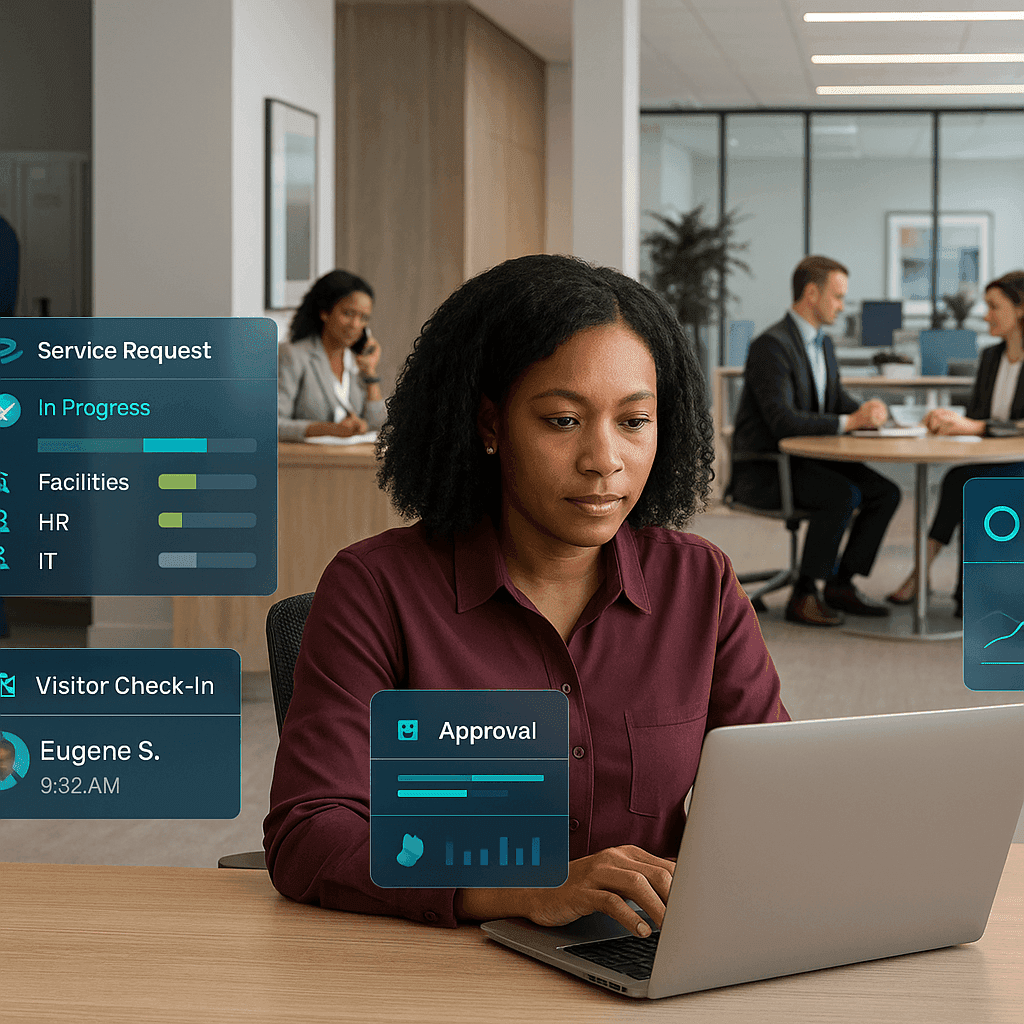
A workplace management system establishes one consistent process for workplace services across the organisation. Employees submit requests using standard forms, while automated workflows route requests to the correct department based on predefined business rules. Approvals, prioritisation, SLA monitoring, notifications, and status updates all occur within the same platform.
For organisations seeking broader operational coordination, integrated workplace management software can connect workplace services with space management, asset information, maintenance planning, occupancy data, and enterprise reporting. Combined with facilities management software or a modern facility management platform, leadership gains greater visibility into workplace performance instead of relying on isolated departmental reports.
Employees also benefit from improved transparency because they can monitor request status, receive automated updates, and understand expected completion times without repeatedly contacting support teams.
How a workplace management system improves cross-functional workplace operations
Integrating Facilities, HR, IT, Administration and Security
Corporate headquarters function more efficiently when support departments share information instead of operating independently. A workplace management system enables Facilities, HR, IT, Administration, Security, and other workplace teams to coordinate activities using connected workflows.
For example, onboarding a new employee in a Ghanaian corporate office may require multiple coordinated activities, including allocating workspace, preparing IT equipment, issuing access credentials, updating seating plans, arranging parking access where applicable, and scheduling cleaning before occupancy. Instead of relying on separate manual requests, a workplace management system can automatically trigger each task, assign responsibility, and monitor completion.
Similarly, office relocation projects can involve facilities teams, finance departments, procurement staff, and security personnel. Standardised workflows reduce the likelihood of missed activities while improving communication throughout the project.
An integrated workplace management system supports this collaboration by connecting workplace services with asset records, maintenance history, occupancy information, and space allocation data. Organisations already using facility management software can often extend existing capabilities through integration rather than replacing established business systems.
Role-based permissions ensure that departments access only the information relevant to their responsibilities while automated notifications keep stakeholders informed throughout each request lifecycle.
Supporting enterprise workplace visibility
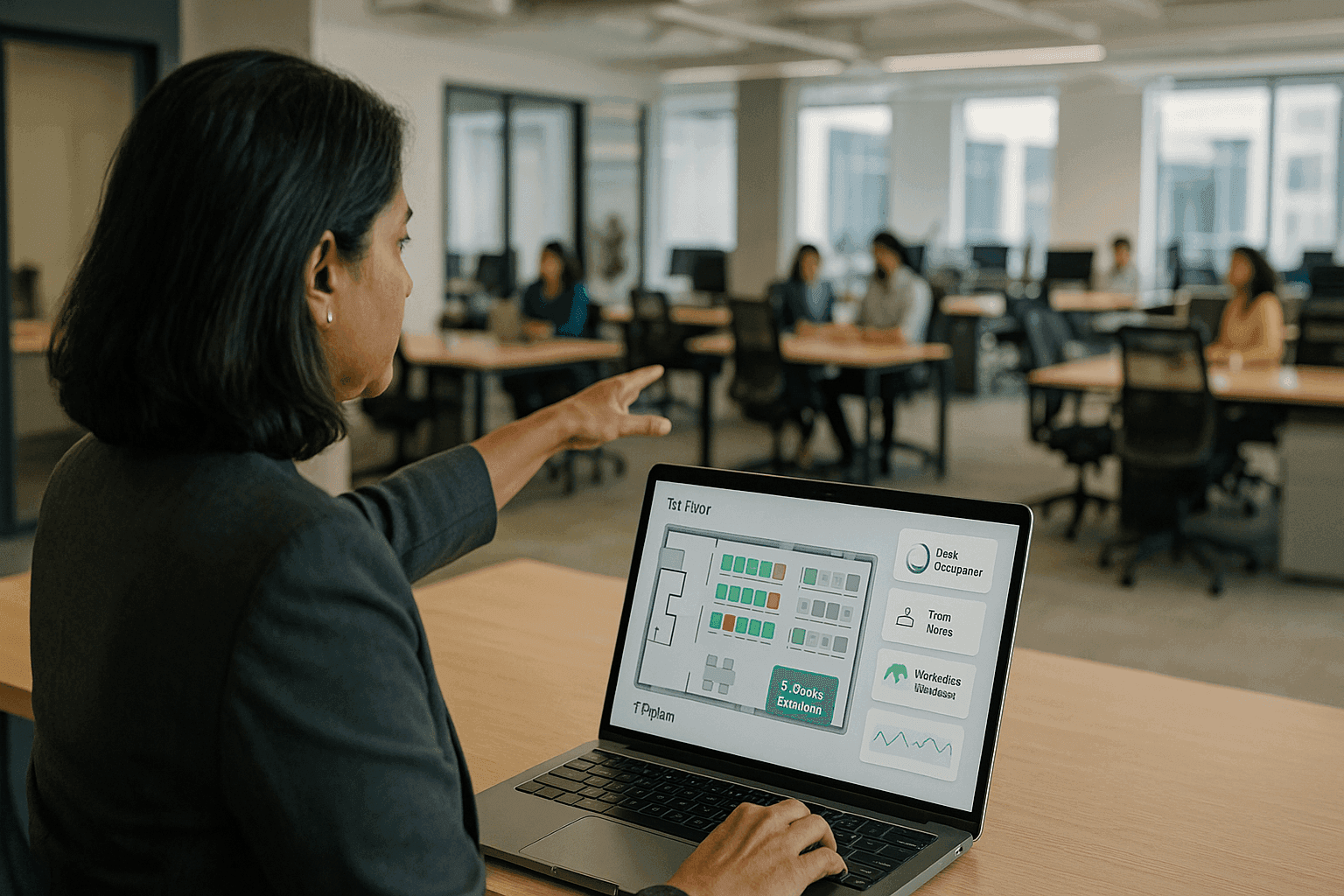
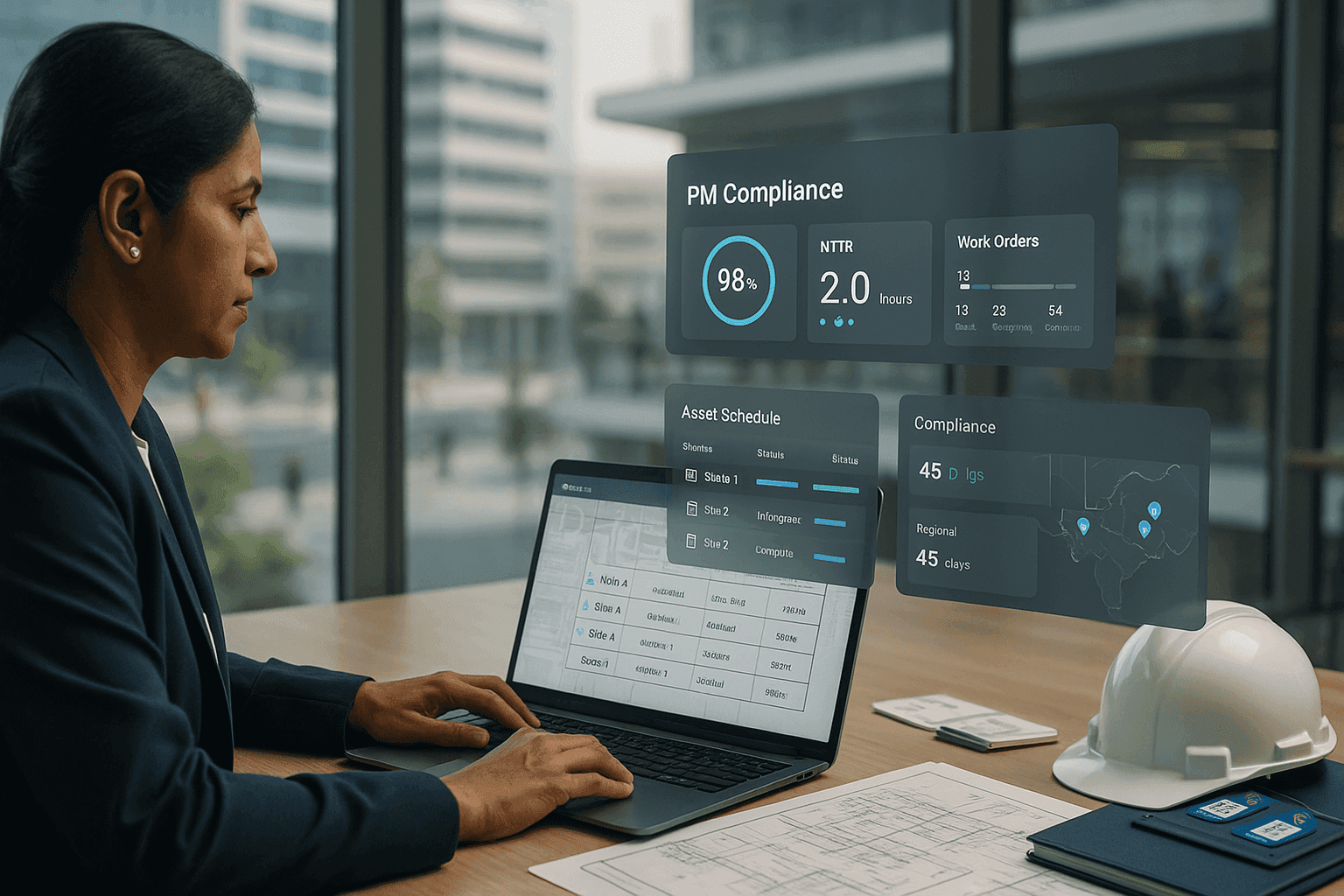
One of the greatest benefits of standardisation is improved operational visibility. Dashboards provide workplace managers with live information on request volumes, outstanding work orders, technician workloads, SLA performance, recurring service issues, and departmental trends.
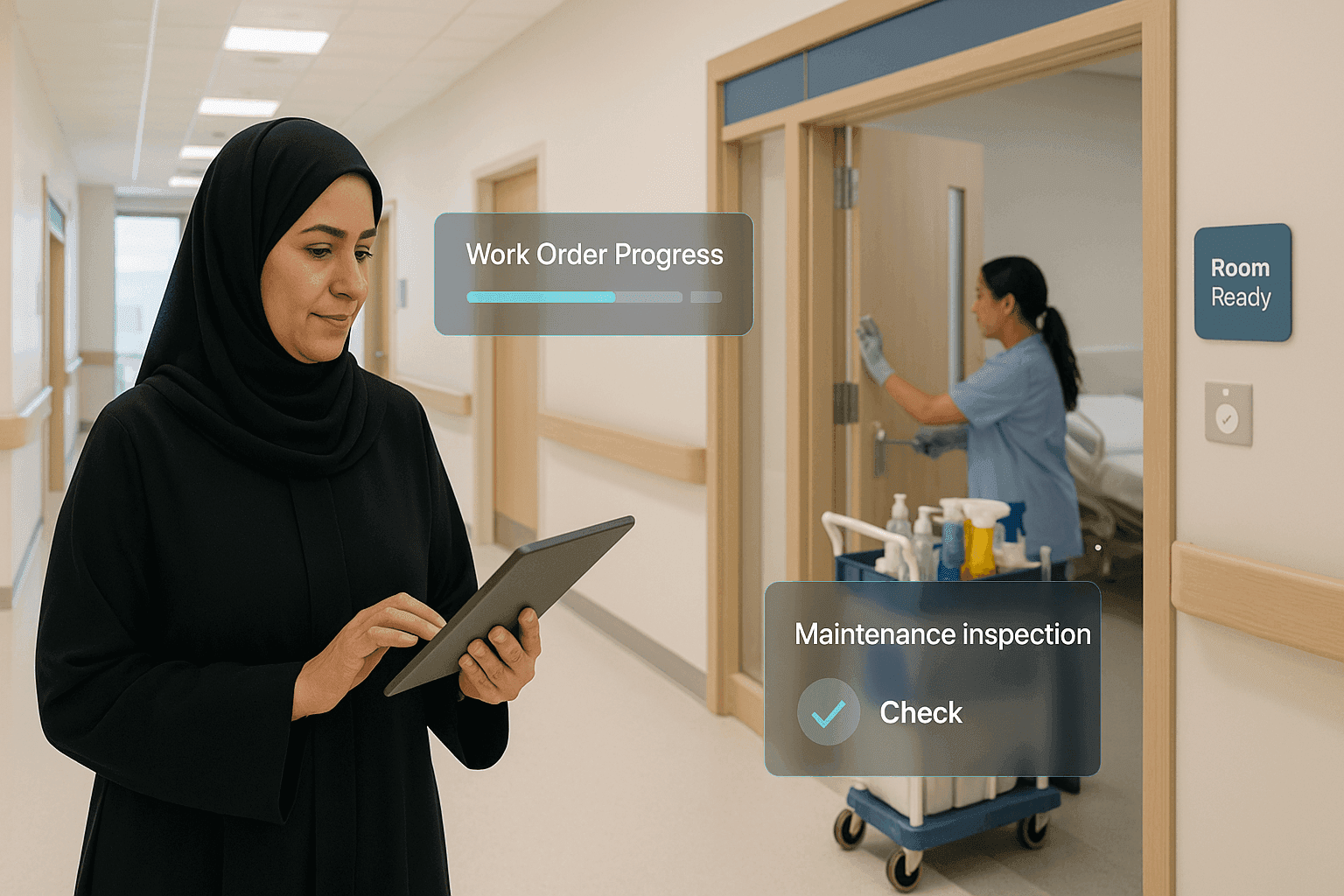
Mobile functionality enables maintenance technicians and workplace teams to receive assignments, update work status, upload photographs, capture completion notes, and close jobs directly from the field. This reduces administrative effort while improving reporting accuracy and response times.
Comprehensive audit trails strengthen governance by recording approvals, workflow changes, completion times, and communication history. For organisations operating multiple offices across Ghana, consistent reporting supports more informed planning, better resource allocation, and improved service consistency between locations.
Implementing a workplace management system successfully in Ghanaian corporate offices
Building a phased implementation roadmap
Successful implementation begins by understanding existing business processes rather than simply automating inefficient ones. Organisations should document workflows across Facilities, HR, IT, Finance, Administration, Security, and executive leadership to identify bottlenecks, duplicated approvals, unnecessary manual tasks, and inconsistent practices.
A phased implementation generally encourages stronger user adoption than attempting an organisation-wide transformation simultaneously. Many organisations in Ghana begin with maintenance requests and workplace services before extending automation to visitor management, space management, asset tracking, workplace reservations, or occupancy planning.
Effective implementation should include:
- Stakeholder engagement across business functions.
- Data preparation and validation.
- User training for employees, managers, and service teams.
- Governance for workflow ownership and continuous improvement.
- Integration with HR, ERP, finance, identity management, or building systems where appropriate.
Change management is equally important. Employees should understand both how to use the platform and why standardised digital processes improve service quality, reporting, and accountability. Early communication, user feedback sessions, and measurable success indicators can significantly improve long-term adoption.
Choosing technology for long-term workplace management
Technology selection should support future operational goals rather than only current requirements. Important evaluation criteria include workflow flexibility, reporting capabilities, scalability, mobile functionality, integration options, user experience, information security, and vendor support.
Many organisations begin with a computer-aided facility management system to improve maintenance operations before expanding into broader workplace management capabilities. Computer-aided facility management software can provide a practical foundation for organisations intending to mature workplace operations over time while protecting previous technology investments.
As operational maturity increases, workplace management capabilities can support strategic planning, space utilisation analysis, asset lifecycle management, preventative maintenance programmes, and enterprise reporting without requiring multiple disconnected software platforms.
Measuring business outcomes and developing a long-term workplace strategy
Operational KPIs that demonstrate value
Measuring workplace performance enables organisations to move beyond anecdotal feedback and make evidence-based operational decisions. Useful indicators include:
- Request response times.
- SLA compliance.
- First-time completion rates.
- Workplace service satisfaction.
- Maintenance backlog trends.
These metrics help managers identify recurring service issues, evaluate workforce capacity, and determine whether workflow improvements are delivering measurable business benefits.
Executive dashboards provide leadership with consistent performance reporting, allowing resources to be allocated where demand is highest. As organisations accumulate operational data, they can identify recurring equipment failures, seasonal demand patterns, departments requiring additional support, or opportunities to improve preventative maintenance planning. These insights contribute to better budgeting, stronger governance, and more informed workplace investment decisions.
Expanding beyond service requests
Standardising service requests is often the first stage of broader workplace transformation. As organisations mature, they can extend workflows to integrate facilities, people, assets, spaces, maintenance activities, and operational reporting within a unified workplace management environment.
The same governance principles can also support organisations delivering professional facilities management services across multiple client sites, where consistency, transparency, and performance reporting are essential for maintaining service quality.
Although implementation priorities differ between sectors, structured workflow management demonstrates how digital processes improve visibility, accountability, and operational coordination across both private and public organisations in Ghana.
Conclusion
For corporate headquarters in Ghana, inconsistent service request processes can reduce productivity, limit operational visibility, and create unnecessary administrative complexity. A workplace management system enables organisations to standardise workflows, improve accountability, strengthen governance, and provide employees with a more consistent workplace experience.
Before selecting technology, organisations should evaluate how requests currently move between departments, identify opportunities for standardisation, and determine how automation aligns with long-term business objectives. A carefully planned implementation creates a scalable foundation for data-driven workplace management that supports sustainable organisational growth.
Key Takeaways
- Workplace management systems provide consistent workplace service delivery by standardising request workflows across multiple departments.
- The workplace management platform improves operational efficiency by automating approvals, routing, tracking, and performance reporting while increasing visibility for managers and employees.
- This workplace management approach strengthens workplace governance by connecting facilities, people, assets, and workplace services within coordinated digital workflows.
See how eFACiLiTY can help your corporate headquarters standardise workplace operations and improve service visibility across departments. Contact us to discuss your workplace management goals.
FAQ
Q1. What is a workplace management system?
A workplace management system is software that centralises workplace operations, automates service requests, manages facilities activities, and provides operational reporting. It enables workplace managers, facilities teams, and corporate real estate professionals to deliver consistent workplace services while improving efficiency, transparency, governance, and employee experience across an organisation.
Q2. How does a workplace management system improve service request management?
A workplace management system replaces emails, spreadsheets, paper forms, and disconnected processes with standardised digital workflows. Requests are automatically routed, prioritised, approved, tracked, and reported, helping organisations improve response times, SLA compliance, accountability, communication, and visibility while giving employees a consistent way to request workplace services.
Q3. How is a workplace management system implemented in a corporate headquarters?
Implementation typically begins by mapping current business processes, defining standard workflows, configuring approvals, preparing data, integrating existing business systems, training users, and measuring performance. A phased rollout reduces disruption, encourages user adoption, allows continuous refinement, and supports sustainable workplace transformation across corporate headquarters.
Q4. Can a workplace management system integrate with existing facility management software?
Yes. Many workplace management systems integrate with facility management software, HR systems, ERP platforms, finance applications, identity management solutions, and selected building technologies. These integrations reduce duplicate data entry, improve reporting accuracy, strengthen operational visibility, and create a more connected workplace management environment across corporate headquarters.