In US business parks, inefficient management of shared workspaces and meeting rooms has become a significant operational pain point. Manual processes often lead to double-bookings, underutilised spaces, and tenant frustration, directly impacting both tenant satisfaction and bottom-line profitability. For property and workplace managers in commercial real estate, unmanaged shared environments result in lost productivity, increased vacancy days, and missed revenue opportunities.
A workspace reservation system is a digital platform that streamlines workspace and meeting room booking for business parks, enabling efficient management of shared resources for tenants and owners.
What is a workspace reservation system and how does it work in business parks?
A workspace reservation system is a cloud-based solution enabling real-time booking of desks, meeting rooms, and shared spaces in US business parks. It centralises reservations, enforces usage policies, and delivers analytics to optimise space utilisation. Users benefit from instant bookings, real-time availability, and automated notifications to maximise occupancy and coordination.
The Operational Challenges of Managing Shared Workspaces in US Business Parks
Common Issues with Manual Booking and Ad Hoc Scheduling
US business parks relying on manual booking processes encounter several operational challenges:
- Double-bookings and scheduling conflicts that disrupt tenant workflows
- No-shows and last-minute cancellations leading to wasted space
- Lack of real-time visibility into workspace and meeting room usage
- Difficulty tracking occupant identity for compliance and security needs
- Underutilisation of premium spaces, reducing revenue and ROI
- Inability to collect data for proactive decision making or marketing
Manual methods hinder property managers from identifying usage patterns, allocating resources efficiently, or responding rapidly to tenant requirements. Such inefficiencies can extend vacancy periods and impact revenue, especially in dynamic commercial real estate settings. Implementing a CAFM software system can minimise vacancy days by streamlining bookings and enhancing operational transparency—critical for US business park competitiveness.
Key Capabilities of Workspace Reservation Systems for Shared Environments
Integrating Meeting Room Management and Real-Time Workspace Booking
Modern workspace reservation systems in US business parks provide advanced functionalities beyond simple scheduling:
- Meeting room management: Seamless booking of conference rooms and shared spaces, with integration to platforms like Outlook and Google Workspace.
- Mobile and on-the-go booking: Enables tenants and staff to reserve spaces via mobile apps or web portals, supporting flexible work arrangements.
- Real-time availability and automated check-in/out: Minimises booking conflicts and no-shows through live updates and user confirmation requirements.
- IoT sensor integration: Monitors actual occupancy and usage, offering accurate utilisation data for decision making.
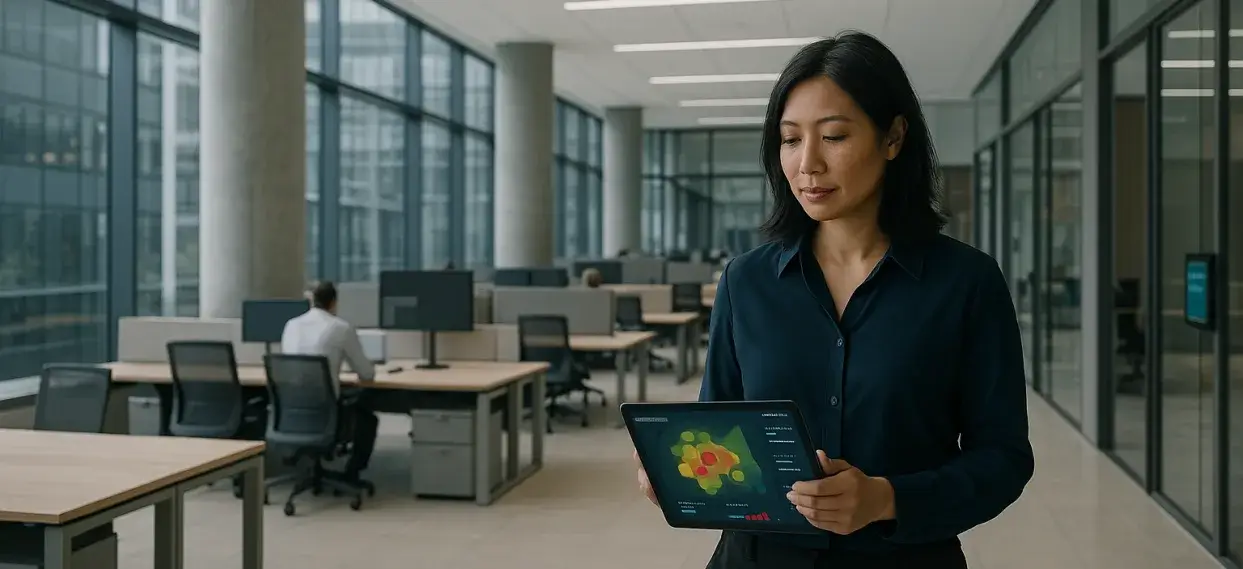
Integration with business park management platforms and access control systems is particularly valuable in the US, supporting authorised access, health and safety compliance, and automated permissions. Advanced analytics dashboards allow property managers to track trends, refine allocation strategies, and enhance tenant satisfaction through data-driven improvements.
Implementation Roadmap: Deploying a Workspace Reservation System in US Business Parks
Steps for System Selection, Rollout, and User Adoption
A well-executed deployment of a workspace reservation system in a US business park involves a structured approach:
- Initial assessment and stakeholder alignment: Gather input from property managers, tenants, and facility teams to define priorities and metrics.
- Pilot rollout: Test the system in a specific area or building to gather feedback and ensure compatibility with existing platforms such as maintenance and visitor management.
- System integration: Connect the reservation platform to other property management systems for seamless data flow and consolidated reporting.
- Tenant onboarding and training: Offer clear communication, intuitive training, and responsive support to encourage adoption and minimise disruption.
- Change management: Involve key stakeholders, set measurable goals, and use analytics to monitor and refine processes.
- Scalability planning: Ensure the platform accommodates future growth, supporting more users, buildings, or services as needed.
By following these steps, US property managers can ensure a smooth transition, drive user engagement, and quickly realise the benefits of their investment.
Conclusion
Workspace reservation systems are revolutionising how US business parks manage shared workspaces and meeting rooms. By digitising and centralising bookings, these platforms empower property managers and tenants to reduce administrative workload, optimise space usage, and deliver exceptional experiences. Embracing workspace reservation technology positions business parks to succeed as flexible, on-demand work environments become standard in US commercial real estate.
Key Takeaways
- Workspace reservation systems streamline booking and management of shared spaces, reducing vacancy and enhancing tenant satisfaction in US business parks.
- Integrated meeting room management features provide real-time utilisation data and automate scheduling, driving operational efficiency for property managers.
- Business park management platforms with reservation capabilities improve visibility, support compliance, and deliver stronger returns for property owners.
Curious how a workspace reservation system can help your business park maximise shared space efficiency and boost tenant satisfaction? Schedule a demo with eFACiLiTY to see the benefits in action.
FAQ
Q1. What is a workspace reservation system?
A workspace reservation system is a digital platform designed for booking shared workspaces and meeting rooms in business parks. It enables tenants and property managers to streamline scheduling, maximise space utilisation, and reduce administrative workload, ultimately improving operational efficiency and tenant satisfaction.
Q2. How does a workspace reservation system improve meeting room booking and shared workspace management?
Workspace reservation systems automate the booking process, prevent scheduling conflicts, and offer real-time visibility into space availability. Property managers can leverage analytics, automated notifications, and system integrations to manage shared spaces more effectively and respond quickly to tenant needs.
Q3. What should US property managers consider when implementing a workspace reservation system?
US property managers should evaluate integration with existing facility management systems, ensure the solution meets security and privacy requirements, and develop user adoption strategies. Selecting a scalable, user-friendly system tailored to the business park’s operational needs is essential for long-term success.