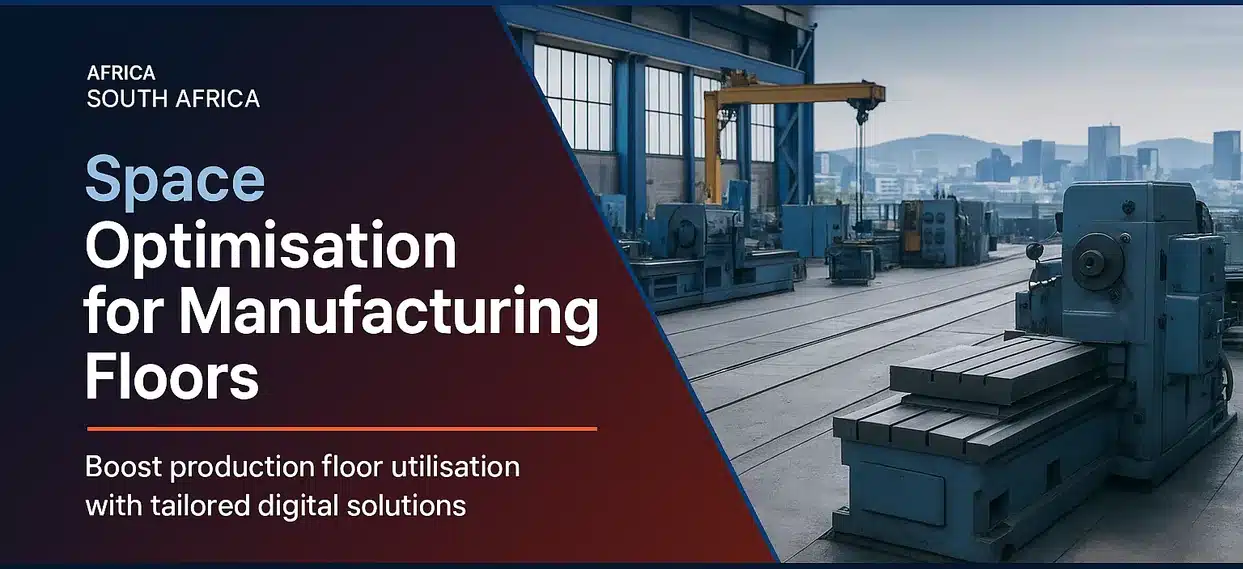
Manufacturing plants in South Africa face mounting pressure to maximise production floor space as operational costs escalate, compliance demands grow, and market conditions shift unpredictably. Inefficient layouts and underutilised areas not only erode productivity but also increase the total cost of ownership for facility assets. For plant managers and facility planners, the challenge extends beyond expanding capacity—it is about extracting maximum value from every square metre already available. This article explores how space optimisation software empowers South African manufacturers to tackle these operational challenges and enhance their facility performance.
Space optimisation software is a digital solution that analyses, models, and improves production floor layouts to maximise manufacturing space utilisation and operational efficiency for plant managers and facility teams.
What is space optimisation software for manufacturing?
Space optimisation software for manufacturing is a digital tool designed to analyse facility layouts, identify inefficiencies, and recommend changes that improve production floor utilisation. It enables manufacturers to make data-driven layout planning decisions, reducing wasted space and increasing throughput while supporting compliance and operational goals.
Why South African Manufacturers Struggle with Production Floor Utilisation
Key Operational Challenges in Local Manufacturing Facilities
Many South African manufacturing facilities contend with legacy layouts, unpredictable production volumes, and compliance-driven space restrictions. Historical floor plans, incremental machinery upgrades, and evolving safety zones create complex environments where bottlenecks can form and valuable space often goes unused. Expanding physical footprint is costly and rarely the first option, so optimising existing assets is essential.
- Legacy layouts and evolving equipment complicate efficient space use
- Compliance requirements restrict available floor area and workflow design
- Underutilised work cells or shared zones reduce agility and increase safety risks
- Innovative multi-use and flexible planning unlocks hidden production capacity
In numerous plants, underutilised work cells, storage areas, or shared resource zones directly impact production agility and worker safety. South Africa’s regulatory landscape regarding workplace safety and environmental compliance imposes further constraints, making flexible and efficient layouts invaluable. Notably, principles from coworking space management—such as dynamic allocation and multi-use area planning—are increasingly adapted to manufacturing, offering innovative ways to unlock underutilised production space.
Core Capabilities of Space Optimisation Software in Manufacturing Environments
From Layout Planning to Real-Time Space Utilisation Analytics
Modern space optimisation software leverages a suite of digital technologies—digital twins, IoT-enabled sensors, and AI-driven analytics—to provide plant managers with ongoing visibility into space utilisation. Dynamic layout modelling allows teams to simulate workflow changes before making physical adjustments, while scenario planning helps anticipate the impact of new equipment or line changes.
- Real-time mapping of equipment, workstations, and storage zones
- Workflow simulation to predict bottlenecks and optimise material flow
- Integration with manufacturing facility management software for unified oversight
- Scenario analysis to evaluate the impact of layout changes before implementation
When used alongside enterprise asset management software for manufacturing, space optimisation platforms can coordinate both equipment placement and facility footprint. This holistic approach ensures that both space and assets are managed efficiently, supporting smooth production, improved throughput, and compliance with South African safety requirements.
Implementing Space Optimisation Software: A Practical Roadmap for South Africa
Steps to Assess, Deploy, and Scale Optimisation Initiatives
Implementing space optimisation software in a South African manufacturing context starts with a thorough audit of current space usage patterns, workflow inefficiencies, and recurring bottlenecks. Collecting accurate floor data requires collaboration between operations, maintenance, and planning teams to ensure a comprehensive understanding of daily activity.
- Assessment: Map current layouts, track equipment movement, and identify underutilised zones.
- Collaboration: Engage cross-functional teams to validate data and prioritise areas for improvement.
- Pilot: Deploy the software in a targeted, high-impact area to test recommendations and measure results.
- Scale: Expand implementation based on demonstrated return on investment, integrating insights into broader facility planning.
Critically, integrating space optimisation initiatives with solutions focused on improving production reliability through maintenance software delivers compounded benefits. Aligning layout improvements with preventive maintenance schedules and asset management minimises downtime and ensures critical production assets remain accessible, safe, and effective at all times.
Conclusion
For manufacturing leaders in South Africa, inefficient use of production floor space is no longer viable in a market shaped by rising costs and operational complexity. Adopting space optimisation software enables facility teams to unlock hidden capacity, increase agility, and enhance profitability without major capital expenditure. By embracing digital tools, South African manufacturers can transform space from a static constraint into a dynamic, strategic asset—establishing the foundation for sustainable growth and competitiveness in the country’s evolving industrial landscape.
Key Takeaways
- Space optimisation software empowers manufacturers to maximise production floor utilisation by modelling and refining facility layouts for greater operational efficiency.
- The integration of layout planning with manufacturing facility management software delivers measurable efficiency gains tailored to South African plant requirements.
- Combining space optimisation with maintenance and asset management platforms enhances reliability and reduces operational bottlenecks in manufacturing environments.
Looking to boost your facility’s productivity and resilience? Discover how space optimisation software can transform your South African manufacturing plant—schedule a demo with our experts today.
FAQ
Q1. What is space optimisation software?
Space optimisation software is a digital tool that analyses and improves facility layouts to maximise production floor utilisation in manufacturing. It enables plant managers and facility planners to identify wasted space, streamline workflows, and enhance operational efficiency, supporting better business outcomes for manufacturers.
Q2. How does space optimisation software support layout planning in South African manufacturing?
The software uses data analytics and modelling to visualise current layouts, simulate changes, and recommend adjustments tailored to South African manufacturing environments. This approach addresses legacy floor plans, regulatory constraints, and dynamic production needs specific to South African facilities.
Q3. Can space optimisation software integrate with other manufacturing management platforms?
Yes, leading space optimisation software integrates with manufacturing facility management software, asset management solutions, and maintenance platforms. These integrations provide a comprehensive view of space, assets, and processes, enabling facility-wide optimisation and improved production reliability.