Retail facility managers in Qatar are under growing pressure to control energy consumption across dozens—or even hundreds—of geographically dispersed stores. With utility costs rising, regulatory expectations tightening, and sustainability targets moving to the forefront, operational leaders in the country’s retail and restaurant chains can no longer rely on manual reporting or siloed systems. Instead, they need a comprehensive, technology-driven approach that provides real-time visibility and control at scale.
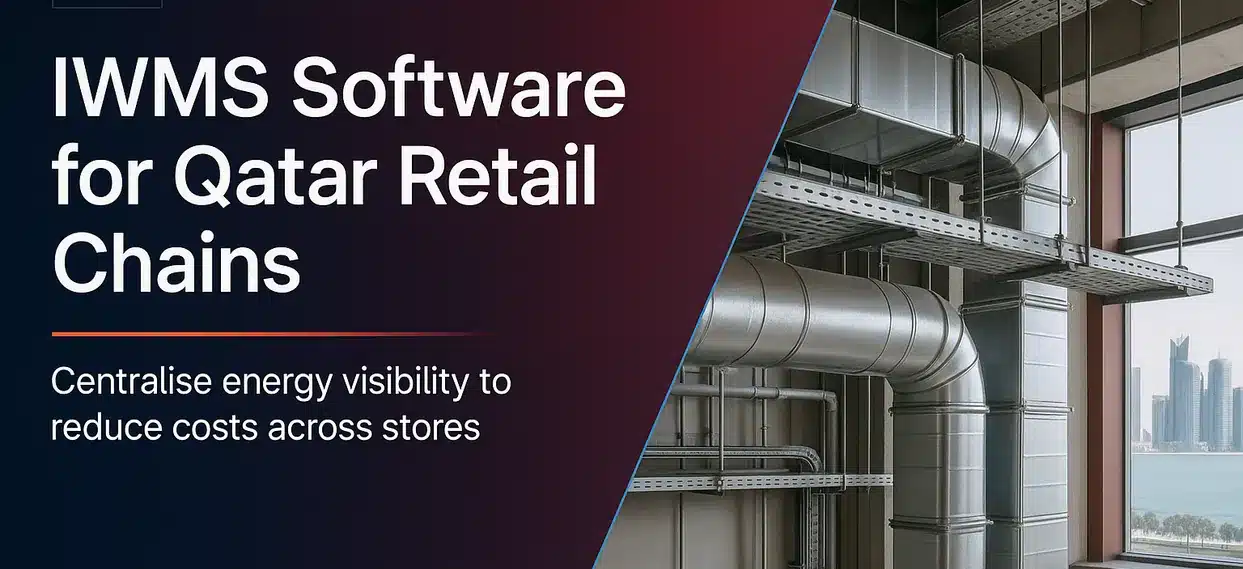
IWMS software is an integrated platform that centralises facility, asset, and energy management for multi-store retail operations, helping Qatar chains reduce costs and improve energy efficiency.
How does IWMS software help retail chains manage energy across multiple stores?
IWMS software gives retail facility managers in Qatar central visibility into energy usage across all locations. Through unified dashboards and analytics, teams can benchmark, monitor, and control consumption in real time, identify inefficiencies, and automate reporting. This approach enables proactive management, cost reduction, and improved energy performance at scale.
Why Energy Management Is a Priority for Multi-Store Retailers in Qatar
Key Drivers for Enhanced Retail Energy Management
Qatar’s retail sector faces distinctive energy management challenges. The hot, arid climate leads to relentless cooling demands, driving up utility costs for multi-store operators. When energy management is not unified, costs can escalate rapidly. Retailers and restaurant chain facility management teams must handle highly variable usage patterns, from extended shopping hours to peak kitchen loads. Energy inefficiency in even a few stores can impact group profitability, and with rising sustainability expectations in Qatar, data-driven energy management is now a board-level priority.
- Qatar’s climate increases energy demand, especially for cooling systems across retail locations.
- Uncoordinated energy management leads to higher costs and lost efficiency opportunities for multi-site operators.
- Stakeholders expect transparent, sustainable operations, making energy management critical for reputation and compliance.
IWMS Core Capabilities for Retail Energy Monitoring
Energy Management Dashboard and Analytics
Modern IWMS software for Qatar retail chains offers a centralised energy management dashboard that consolidates real-time consumption data from every store. This enables facility and energy managers to:
- Track and analyse energy trends, comparing performance across all locations.
- Monitor benchmarks tailored to store and restaurant chain requirements.
- Receive automated alerts for unexpected consumption patterns, enabling fast action.
- Identify underperforming assets or locations and prioritise remedial investments.
- Integrate with building automation systems for granular data and automated energy-saving workflows.
By transforming passive reporting into active management, the dashboard helps Qatar’s multi-site retailers maintain control and address inefficiencies before costs escalate.
Implementing IWMS Software Across Multi-Store Retail Operations
Best Practices for Rollout and User Adoption
Deploying IWMS software in Qatar’s retail sector requires a phased and strategic approach:
- Start with high-impact sites such as flagship stores or energy-intensive restaurant outlets to showcase quick wins.
- Engage facility, energy, and store management teams early to secure alignment and support.
- Customise dashboards to highlight relevant metrics for each store type, including restaurant chain facility management needs.
- Provide training and ongoing communication for user confidence and sustained adoption.
- Monitor performance post-implementation, refining dashboards and workflows to fit business and regulatory changes.
These steps help retail groups maximise ROI, reduce change resistance, and foster a data-driven energy management culture across all stores.
Conclusion
For Qatar’s multi-store retailers, IWMS software is a catalyst for energy efficiency, cost control, and sustainability. With centralised data, actionable analytics, and unified management, retail and restaurant chains can outperform competitors and meet stakeholder expectations in a changing energy landscape. The result is smarter operations, measurable savings, and sustainable leadership in Qatar’s retail sector.
Key Takeaways
- IWMS software enables Qatar retail chains to achieve centralised energy monitoring and cost savings by unifying real-time data across all stores.
- An integrated energy management dashboard delivers actionable insights, empowering facility managers to optimise usage and advance sustainability.
- The platform provides restaurant chain facility management teams with improved visibility, reducing inefficiencies and strengthening operational resilience.
Interested in elevating your retail energy management? See how eFACiLiTY’s IWMS software empowers Qatar retailers to reduce costs and drive sustainability. Schedule a demo with our team today.
FAQ
Q1. What is IWMS software?
IWMS software is an integrated workplace management system that centralises facility and energy management functions. It enables retail chains to monitor and optimise operations, improve energy efficiency, and reduce costs across multiple locations.
Q2. How does IWMS software improve energy management for retail chains in Qatar?
IWMS software provides a unified energy management dashboard with real-time monitoring and analytics for every store. This allows facility and energy managers to detect inefficiencies, track savings, and comply with Qatar’s energy requirements across distributed retail portfolios.
Q3. What are key considerations when deploying IWMS software for multi-store facilities?
Retailers should assess integration with existing systems, train staff on dashboard usage, prioritise high-impact sites, and ensure the IWMS supports local energy monitoring needs. Ongoing support and phased rollouts help maximise return on investment.