Introduction
Operations Directors in Oman often manage asset registers, maintenance requests, contractor records, space information and reporting across spreadsheets and disconnected systems. High cooling demand, extreme heat, dust exposure, coastal salinity where relevant, distributed sites and outsourced services can make fragmented information particularly difficult to manage across facility portfolios.
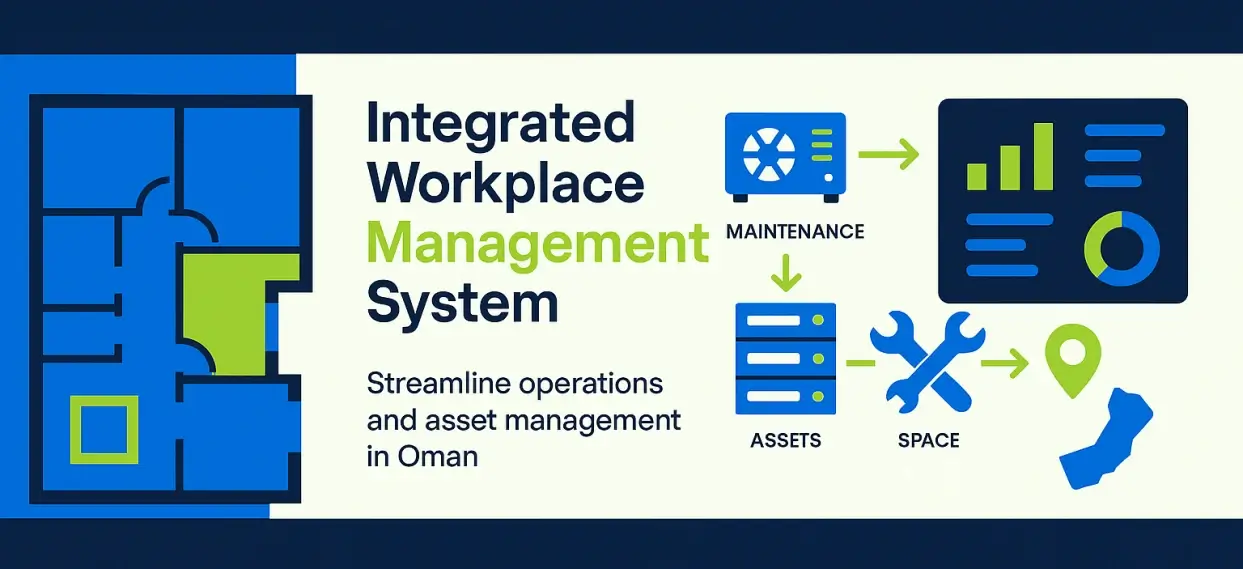
An integrated workplace management system is a centralised facility and workplace platform that connects assets, maintenance, space, service workflows, contractors and operational data, helping Operations Directors manage complex property portfolios with greater visibility and control.
How can an integrated workplace management system improve facility operations in Oman?
An integrated workplace management system improves facility operations in Oman by connecting asset data, preventive maintenance, work orders, space information, contractors and performance reporting in one platform. Operations Directors gain a consistent operational view that can reduce fragmented processes, improve equipment uptime, prioritise resources and support portfolio decisions using reliable data across sites.
Why Operations Directors in Oman Need an Integrated Workplace Management System
Fragmented facilities management software, spreadsheets, email approvals and contractor portals can produce duplicate asset records, inconsistent workflows and conflicting performance reports. At management level, this can mean slower decisions, uncertain service-level performance, limited lifecycle visibility and technology costs that are difficult to justify across multiple properties.
HVAC and associated building-services assets warrant particular attention in Oman. Sustained cooling requirements, high ambient temperatures, dust and, in coastal locations, saline conditions can increase the operational importance of inspection and maintenance. Connecting preventive-maintenance schedules with condition information, failure history, parts and labour data helps teams identify recurring problems and make better repair, replacement and resource decisions.
From Fragmented Systems to a Reliable Operational Record
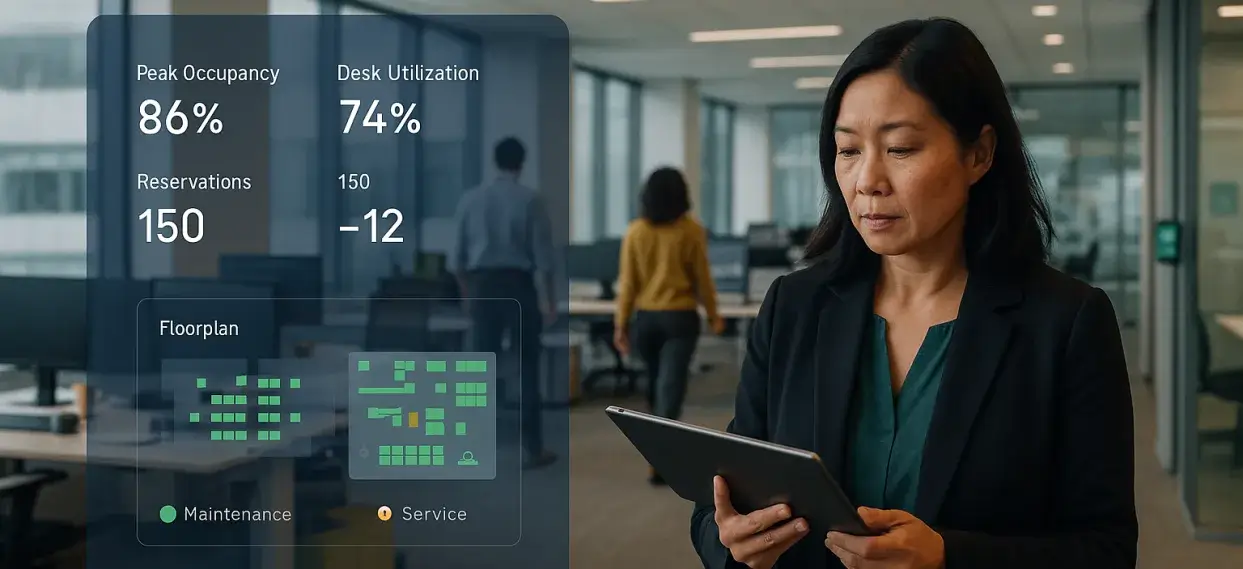
Integrated workplace management software can establish a common operational record spanning asset hierarchies, work orders, service requests, maintenance schedules, documents, contractors and KPIs. The purpose of reducing application sprawl is not simply to eliminate software. Operations Directors can consolidate systems where duplicated data and workflows create unnecessary cost while retaining effective specialist applications where integration is preferable to replacement.
A well-designed facility management software strategy also clarifies which system owns each type of information. This reduces the risk of different teams maintaining competing versions of asset, contractor or maintenance records.
How an Integrated Workplace Management System Connects Assets, Maintenance and Workplace Data
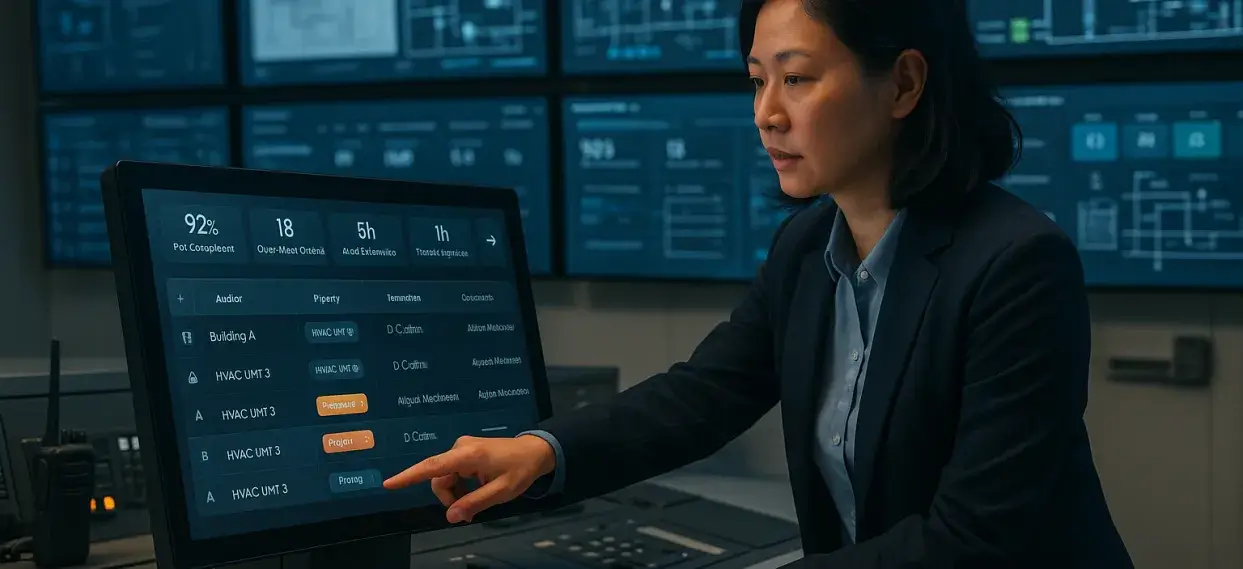
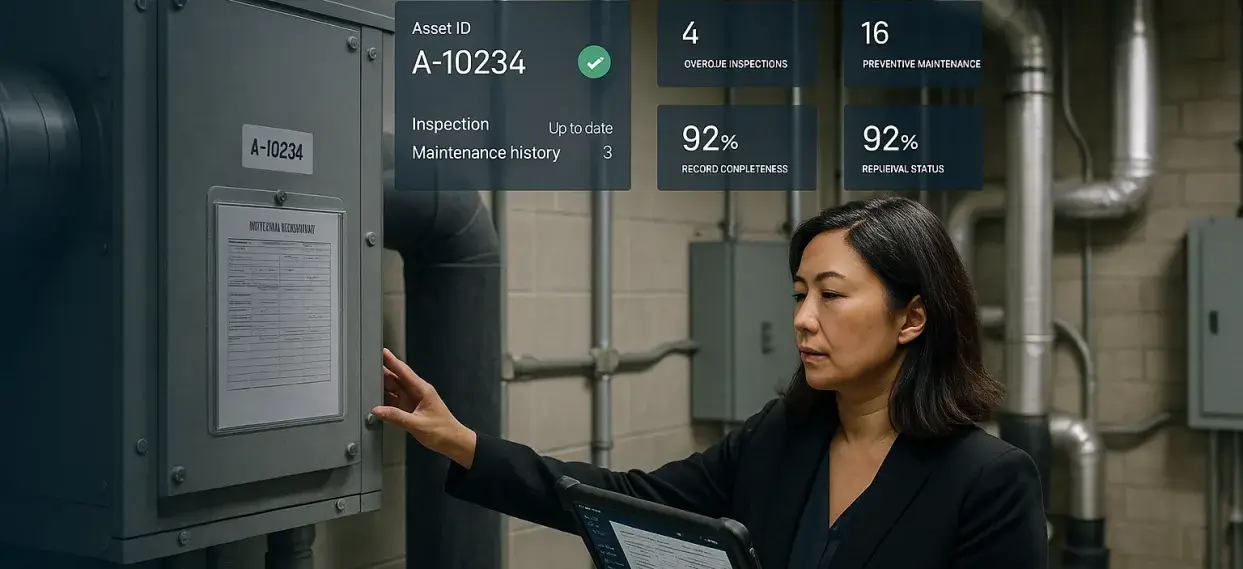
The value of an IWMS becomes clearer when information follows the work. A verified asset record can trigger planned maintenance; a technician receives the task through a mobile workflow; and labour, parts, failure codes, photographs and completion evidence return to the same record. Dashboards can then expose downtime, repeat failures, backlog and service performance without managers reconstructing information manually.
An IWMS can combine CAFM and CMMS capabilities with asset lifecycle management, space information, service-level monitoring, contractor management, audit trails and reporting. APIs and integrations with IoT devices or building systems can add operational signals where appropriate. Existing computer aided facility management software may contain valuable records that require cleansing, integration or migration rather than straightforward replacement.
Turning IWMS Operational Data into Management Decisions
Centralisation only creates value when the underlying data is dependable. Inconsistent asset names, incomplete histories and conflicting KPI definitions can make an impressive dashboard operationally misleading.
Governance should therefore establish authoritative records, asset taxonomies, ownership and consistent measures. Operations Directors in Oman can then use the resulting information to evaluate questions such as whether failures are concentrated around particular HVAC assets, whether response and resolution times are deteriorating, and which locations have rising maintenance costs or persistent backlogs.
Implementing an Integrated Workplace Management System Across an Oman Facility Portfolio
IWMS implementation should begin with operating outcomes rather than a catalogue of software modules. Operations Directors can identify critical assets and priority facilities, establish authoritative data sources, map workflows that most affect uptime or service delivery, and record baseline performance before deployment.
For multi-site Oman portfolios, a phased approach can also expose differences between facilities before processes are standardised at scale. Asset-data cleansing is often a substantial part of this work. Teams need consistent naming and taxonomy standards, practical mobile workflows, role-based access, contractor participation and clear ownership of integrations and data quality.
Training should reflect how internal technicians, managers and outsourced service providers actually complete tasks. Applicable Oman requirements concerning data handling, HSE, property operations and sector-specific obligations should be checked against current local requirements before implementation.
Building the Facility Management Software Business Case
ROI should be tied to measurable operating changes rather than feature adoption. Useful baselines include the proportion of planned versus reactive maintenance, preventive-maintenance compliance, equipment downtime, technician productivity, work-order resolution times, service-level achievement, contractor performance, asset lifecycle expenditure and duplicated software costs.
These measures also help separate software implementation from operational improvement. For example, a reduction in HVAC failures is more meaningful when the organisation can compare failure frequency, maintenance compliance and downtime before and after deployment. The commercial real estate facility management case-study resource can provide additional context for evaluating integrated workflows and portfolio visibility.
Conclusion
An integrated workplace management system creates value when reliable facility data feeds repeatable workflows and measurable management decisions. Feature count alone is a poor substitute for operational fit, integration quality and user adoption.
For Oman portfolios facing intensive cooling requirements, heat, dust, multiple sites and outsourced services, strong asset data and governance should precede large-scale automation. Operations Directors can then evaluate IWMS performance through uptime, cost, lifecycle information, service visibility and integration outcomes.
Key Takeaways
- An integrated workplace management system connects asset, maintenance, workplace, contractor and performance data to strengthen portfolio-wide operational visibility.
- The facility management platform reduces fragmented workflows when reliable asset standards, system ownership, integrations and operational KPIs support its deployment.
- A phased IWMS implementation produces a more defensible business case by measuring maintenance, downtime, SLA, resource and technology-cost performance against established baselines.
Explore how a unified platform could support your Oman facilities, existing assets, workflows, integrations and reporting requirements. Schedule a demo to assess the operational fit.
FAQ
Q1. What is an integrated workplace management system?
An integrated workplace management system is software that centralises asset, maintenance, space, workplace and related operational information. It gives Operations Directors a shared environment for managing workflows, resources, contractors and performance, improving visibility and data consistency across individual facilities or complex multi-site property portfolios.
Q2. What should Operations Directors in Oman prioritise when implementing IWMS?
Operations Directors in Oman should prioritise accurate asset data, critical maintenance workflows, measurable KPIs, system integrations, mobile adoption, user responsibilities and contractor processes. Implementation planning should also reflect local operating conditions and verify applicable data handling, HSE, property and sector-specific requirements before the platform is deployed across facilities.
Q3. How can Operations Directors measure the ROI of facility management software?
Operations Directors should measure ROI against an agreed pre-implementation baseline. Relevant indicators include planned versus reactive maintenance, equipment downtime, technician productivity, work-order resolution, SLA achievement, contractor performance, duplicated software costs and asset lifecycle expenditure. Financial analysis can then connect verified operational changes with cost, productivity or risk outcomes.