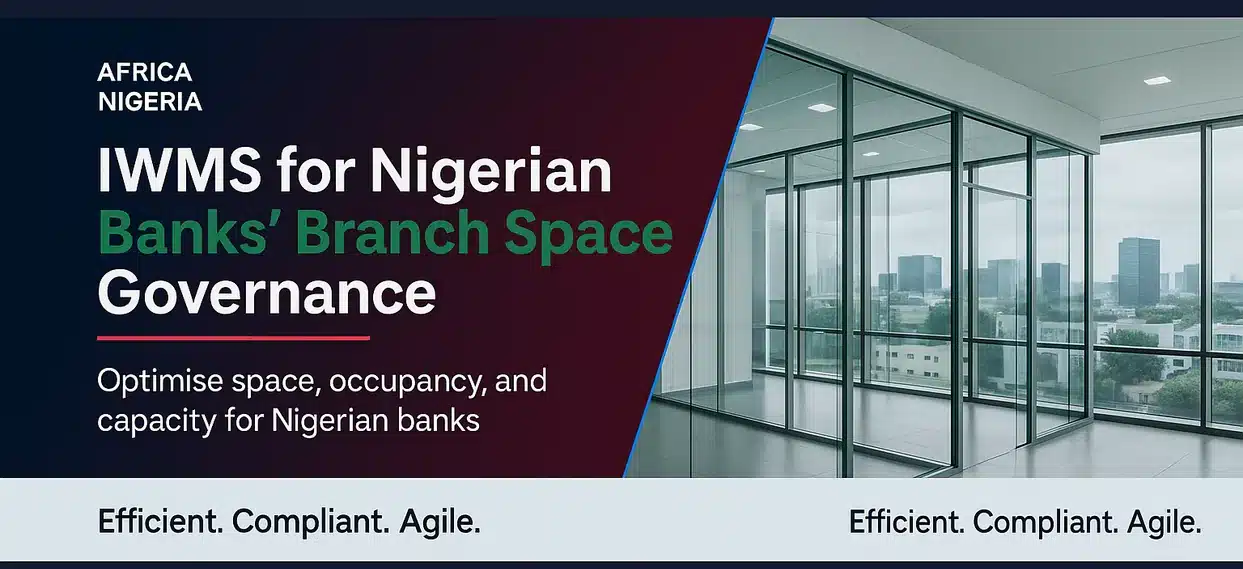
Nigerian banks are facing unprecedented demands to maximise the efficiency of their branch footprints, rein in escalating real estate costs, and adapt quickly to evolving workplace expectations. With digital transformation accelerating, corporate real estate teams and workplace managers in Nigeria need robust tools to govern sprawling branch portfolios, balance occupancy, and sustain regulatory compliance in a dynamic market.
IWMS is an integrated workplace management system that helps Nigerian banks optimise branch space, manage occupancy planning, and ensure efficient workplace capacity for improved operational performance.
How does IWMS help Nigerian banks manage branch space and workplace capacity?
IWMS enables Nigerian banks to centrally manage branch space allocation, monitor real-time occupancy, and plan workplace capacity, supporting compliance and operational agility. By providing analytics and automation, IWMS improves decision-making for real estate teams and workplace managers seeking to optimise costs and productivity.
Why Branch Space Management Is Critical for Nigerian Banking Operations
Challenges in Nigerian Bank Branch Networks
Efficient management of branch space has become a top priority for Nigerian banks, driven by shifting customer preferences, digital banking adoption, and ongoing cost pressures. Many banks operate large, diverse branch networks, often with legacy layouts that may not align with modern banking behaviours. As digital channels grow in popularity, underutilisation of valuable real estate is increasingly common, yet without precise data, identifying inefficiencies is challenging.
- Branch networks often suffer from legacy space layouts and inconsistent usage patterns
- Insufficient data makes it difficult to identify and address underutilised real estate
- Regulatory compliance requires rapid adaptation to evolving safety and health standards
Operational Complexities and Regulatory Pressures in Nigeria
Additional complexities stem from fragmented information about workspace usage, inconsistent occupancy reporting, and unpredictable customer traffic patterns. Nigerian banks must also respond rapidly to regional regulatory pressures, including those related to customer safety, physical distancing, and health protocols. These challenges amplify the need for advanced branch space management tools that can deliver accurate data, adapt to evolving directives, and improve operational decision-making.
Core Capabilities of IWMS for Branch Space and Occupancy Planning
Space Utilisation Analytics and Scenario Planning
Modern IWMS platforms provide Nigerian banks with detailed visibility into how every square metre of branch space is used. Advanced analytics illuminate inefficiencies, highlight opportunities for consolidation or repurposing, and support evidence-based decision-making. Scenario planning capabilities allow workplace managers to model the effects of occupancy changes—such as shifting customer flows or reconfiguring layouts to comply with local safety requirements.
- IWMS delivers granular space utilisation analytics across all branch locations
- Scenario planning enables banks to test layout changes and occupancy adjustments
- Flexible workspace management features—like coworking space integration—support new workspace models for branches
Occupancy Monitoring and Compliance Management
IWMS solutions for Nigerian banks offer real-time occupancy monitoring, ensuring that branch environments remain compliant with local regulations and internal policies. Automated alerts can notify teams when occupancy thresholds are approached or exceeded, helping to maintain safe and efficient operations. Digital floor plans, occupancy sensors, and space booking modules further streamline compliance efforts and provide actionable insights for ongoing capacity management.
Implementing IWMS in Nigerian Banks: Roadmap and Best Practices
Data Integration, Change Management, and Stakeholder Engagement
Successful IWMS implementation in Nigeria’s banking sector begins with comprehensive data consolidation. Real estate, occupancy, and asset information from all branches should be unified, often requiring integration with legacy asset management or maintenance systems already in use. This approach creates a single, reliable source of truth to inform strategic decisions.
- Consolidate all real estate, occupancy, and asset data across branches
- Integrate IWMS with existing asset management and maintenance systems
- Engage branch managers, IT, HR, and stakeholders throughout the project
- Develop a phased rollout plan with ongoing user training and communication
- Configure IWMS to align with Nigerian regulatory and operational requirements
Optimising Workplace Capacity: Strategic Approaches for Nigerian Banks
Balancing Flexibility, Compliance, and Cost
IWMS empowers Nigerian banks to dynamically adjust workplace capacity, enabling support for hybrid work models, resilience in business operations, and rapid response to regulatory changes. Advanced capacity planning features allow banks to align space investments with long-term branch strategies and compliance mandates.
- Strategic occupancy planning reduces underutilised space and operational costs
- Capacity planning aligns physical resources with changing business and regulatory needs
- Workspace flexibility supports both employee satisfaction and customer service excellence
Conclusion
For Nigerian banks, IWMS represents more than just a facility management tool—it is a strategic platform that transforms branch governance, optimises space utilisation, and enables agile workplace capacity planning. With integrated analytics, automation, and best practice workflows, real estate and workplace teams can strengthen operational efficiency, ensure compliance, and build resilience across Nigeria’s evolving financial landscape.
Key Takeaways
- IWMS enables Nigerian banks to optimise branch space utilisation, reducing costs through evidence-based decision-making.
- The system delivers real-time occupancy planning, improving workplace capacity and supporting regulatory compliance across varied branch portfolios.
- IWMS supports the integration of flexible workspace models, allowing Nigerian banks to enhance operational efficiency and adapt to changing sector demands.
Discover how IWMS can transform branch management and workplace strategy for your Nigerian bank. Schedule a demo with eFACiLiTY to unlock greater efficiency and resilience.
FAQ
Q1. What is IWMS for Nigerian banks?
IWMS, or integrated workplace management system, is a software platform that helps Nigerian banks manage real estate, space, occupancy, and workplace capacity. It streamlines operations, supports regulatory compliance, and enhances efficiency across branch networks.
Q2. How does IWMS support branch space management for Nigerian banks?
IWMS centralises branch space data, enables scenario planning, and provides analytics for real estate teams. This allows banks to optimise space allocation, reduce underutilisation, and support flexible workplace strategies across their branch network.
Q3. What are the key benefits of using IWMS for workplace capacity planning in Nigerian banking?
IWMS enhances workplace capacity planning by delivering real-time data, supporting hybrid work models, ensuring regulatory compliance, and reducing operational costs—helping banks align branch resources with evolving business needs.