Introduction
Kuwait’s corporate property portfolios can span multiple sites, cooling-intensive buildings, asset-heavy operations and complex contractor networks. For procurement directors, this makes software selection a lifecycle decision rather than a licence-price exercise. Facility Management software connects asset, maintenance, workplace, supplier and performance data, enabling procurement teams to assess operational fit, interoperability, supplier capability, governance and whole-life cost.
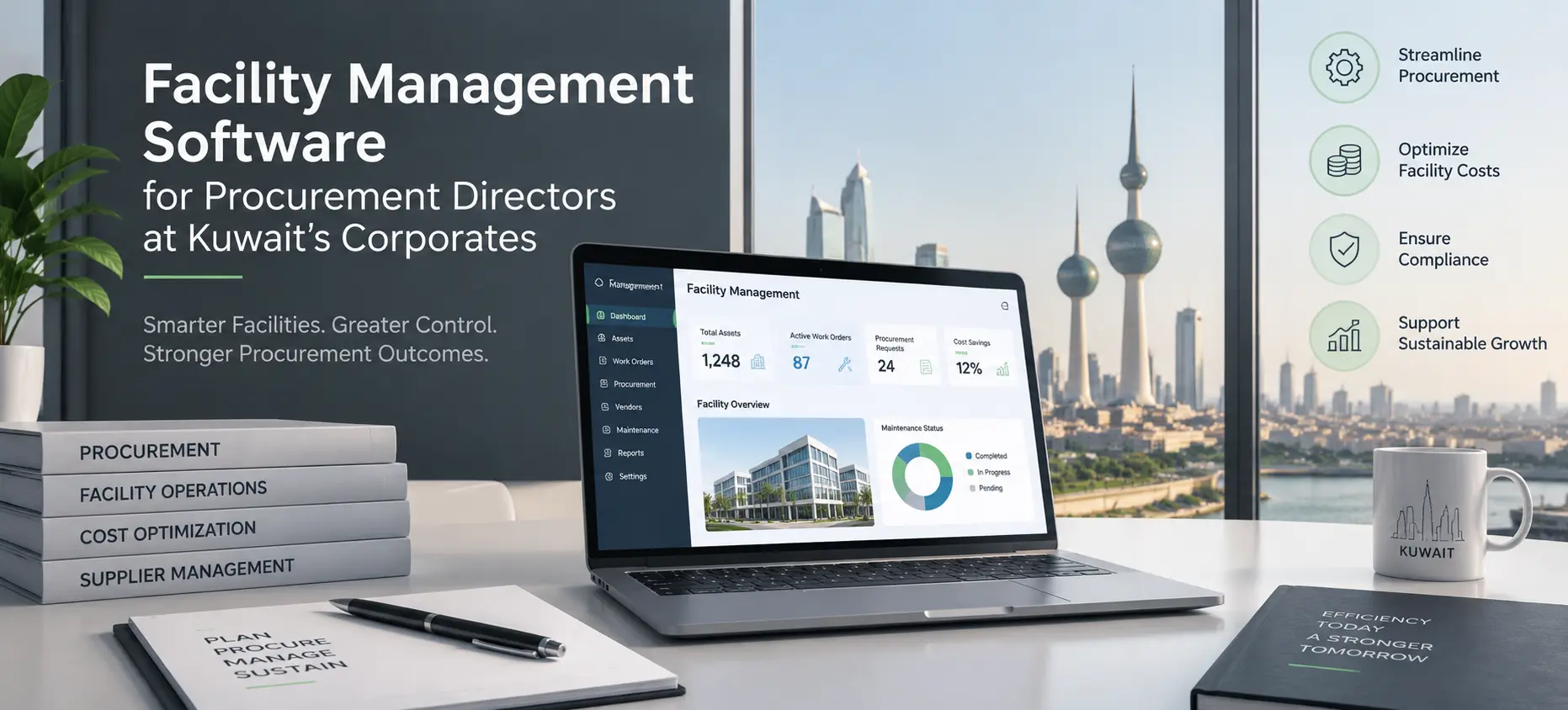
Facility Management software is a digital platform that helps procurement and facilities teams manage buildings, assets, maintenance, contractors, workplace services, costs and performance through connected, auditable workflows and data.
What Should Procurement Directors in Kuwait Look for in Facility Management Software?
Procurement directors in Kuwait should assess Facility Management software for asset and maintenance coverage, workflow automation, mobile access, supplier and SLA oversight, reporting, integrations, scalability, cybersecurity and total cost of ownership. The platform should connect facilities operations with procurement governance while supporting Kuwait’s cooling-intensive buildings, asset-heavy operations and multi-site corporate portfolios.
Why Facility Management Software Procurement in Kuwait Requires More Than a Feature Checklist
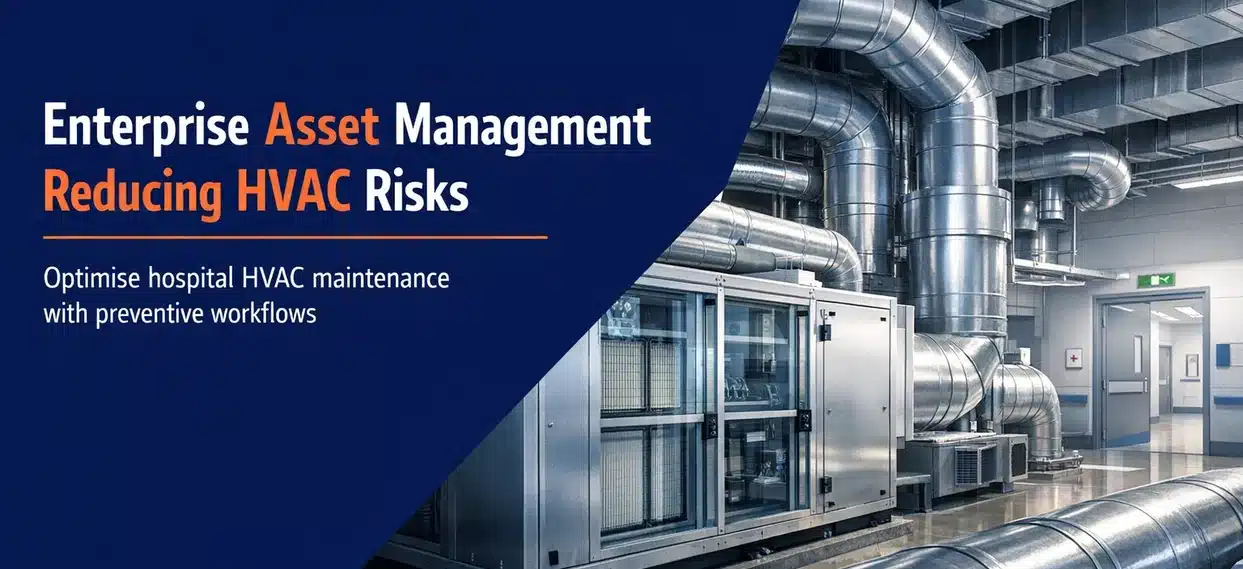
Kuwait’s hot climate and prolonged cooling requirements can make HVAC availability, preventive maintenance, energy monitoring, spare-parts readiness and contractor response important evaluation criteria. Procurement teams should therefore test whether a platform can turn an accurate asset register into maintenance schedules, mobile work orders, escalations and SLA/KPI reporting. This establishes a traceable path from an equipment issue through labour, inventory and contractor activity to downtime and cost.
Whole-life economics should include subscriptions or licences, implementation, data migration, integrations, configuration, training, support, upgrades and future expansion. A lower initial software price can prove expensive if integration work, customisation or unreliable source data significantly increases implementation effort.
Due diligence should also cover cybersecurity, applicable data-location requirements, user access controls, audit trails, data ownership and exportability, supplier references and implementation capacity. Kuwait-specific statutory, safety, building, data and procurement obligations should be checked against current authoritative requirements before an RFP is issued rather than inferred from the functions available in the software.
Which Facility Management Software Capabilities Should Procurement Teams Prioritise?
A dependable asset register provides the operational basis for preventive maintenance, CMMS workflows and lifecycle costing. Computer-aided facility management software becomes relevant when space, assets, maintenance and building information need to work together. An IWMS, or integrated workplace management system, can extend this scope into occupancy, leases, workplace services, sustainability and portfolio planning. Procurement should assess actual workflow coverage rather than rely on product category labels.
Interoperability is equally important. A facility management platform may need to exchange data with ERP and procurement systems, finance applications, BMS, IoT devices, identity platforms and HR systems while supporting mobile workforce management. Shortlisted suppliers should demonstrate these integrations using realistic Kuwait operating scenarios, including how failures, synchronisation issues and integration ownership are managed.
Validate Facility Management Software Against Specialist Operating Environments
Technology company facility management can test capabilities around uptime, critical assets, access controls, workplace services and rapid service execution. Healthcare facility management places additional emphasis on asset criticality, escalation paths, preventive maintenance, documented compliance workflows and audit trails. Testing demanding use cases can reveal workflow or governance limitations that remain hidden in a generic feature checklist.
Procurement teams should use scripted demonstrations based on actual processes. For example, suppliers could be asked to show how an HVAC fault becomes a prioritised work order, triggers an SLA clock, checks spare-parts availability, records contractor activity and feeds performance and cost reporting. This tests end-to-end execution rather than isolated features.
How to Build the Business Case and Implement Facility Management Software
A defensible business case begins with measured conditions before purchase. Useful baselines include maintenance expenditure, planned versus reactive work, asset downtime, SLA failures, technician productivity, contractor spend, inventory consumption, administrative effort and measurable cooling or energy performance. Procurement can then connect improvements to total cost of ownership, cost avoidance, asset-life extension and contract-performance visibility.
Each benefit should have an accountable owner, data source, measurement period and calculation method. This reduces the risk of approving a project using projected savings that cannot subsequently be verified.
Implementation should be governed as an operational change rather than solely an IT installation. Teams should validate asset and location data, assign process owners, configure priority workflows, integrate essential systems, test with representative users and phase deployment where appropriate. Poor source data, excessive customisation and too many first-phase integrations can increase implementation risk.
Govern Facility Management Software and Suppliers After Go-Live
RFP scoring and acceptance criteria should cover functional fit, integration effort, cybersecurity, scalability, implementation resources, configurable workflows, reporting, support and data ownership. Acceptance testing should focus on whether priority operational processes work correctly, not simply whether software modules have been installed.
After go-live, procurement and FM teams should monitor adoption, work-order completion, preventive-maintenance execution, SLA performance, system availability, support response and data quality. Governance should also address change control, releases, access management, auditability, integration ownership and business continuity. Shared facilities management data then provides stronger evidence for supplier reviews and contracted-outcome verification.
Conclusion: Facility Management Software Procurement in Kuwait
For procurement directors in Kuwait, Facility Management software should be selected on operational fit, integration readiness, supplier accountability, lifecycle economics and measurable outcomes rather than feature volume. The strongest procurement process establishes requirements, acceptance criteria and performance baselines before the RFP, then uses the resulting data to verify operational and commercial value after deployment.
Key Takeaways for Facility Management Software Procurement
- Facility Management software strengthens procurement governance by connecting asset, maintenance, supplier, SLA and cost information through auditable workflows.
- The facility management platform reduces purchasing risk when total cost, interoperability, cybersecurity, scalability, implementation capability and supplier support are assessed together.
- A procurement-led implementation creates measurable value by establishing operational baselines, acceptance criteria, accountable benefit owners and post-go-live KPIs before contract award.
See how eFACiLiTY can support Kuwait procurement teams with operational workflows, enterprise integrations, supplier governance and multi-site facility strategy. Schedule a demo to explore your requirements.
FAQ
Q1. What is Facility Management software?
Facility Management software is a digital system for managing buildings, physical assets, maintenance, work orders, spaces, contractors and operational performance. Procurement directors can use it to strengthen facility-service governance, improve cost visibility, monitor contracted outcomes and give facilities teams consistent workflows and reliable information across corporate property portfolios.
Q2. What should be included in a Facility Management software RFP in Kuwait?
A Kuwait corporate RFP should define asset and site scope, operational workflows, integrations, reporting, SLAs, mobile capabilities, cybersecurity expectations, data requirements, migration, implementation responsibilities, training, support, scalability and commercial terms. Procurement teams should also establish measurable acceptance criteria and verify applicable Kuwait regulatory requirements against current authoritative sources before contract award.
Q3. How should procurement directors evaluate the cost and ROI of integrated workplace management software?
Procurement directors should calculate total cost across subscriptions, implementation, migration, integrations, training, support, upgrades and planned expansion. That investment should be compared with baselined improvements in maintenance efficiency, downtime, contractor performance, asset life and administrative effort. Each projected benefit should have an accountable owner, evidence source, measurement period and agreed calculation method.