Managing the sprawling, multi-building campuses of Indian universities is becoming increasingly complex. Emergency risks—ranging from fire and earthquakes to medical incidents and student protests—are ever-present, while expectations for safety, compliance, and operational continuity continue to rise. Facility managers and campus operations teams are under growing pressure to move beyond manual processes, which often result in slow responses, fragmented communications, and heightened regulatory scrutiny. In India’s education sector, where resilience and operational excellence are top priorities, the need for robust digital infrastructure is undeniable.
Facilities management software is a digital platform that streamlines campus facility operations, enabling Indian universities to proactively manage assets, emergencies, and compliance for safer, more resilient environments.
How does facilities management software enhance emergency preparedness for Indian universities?
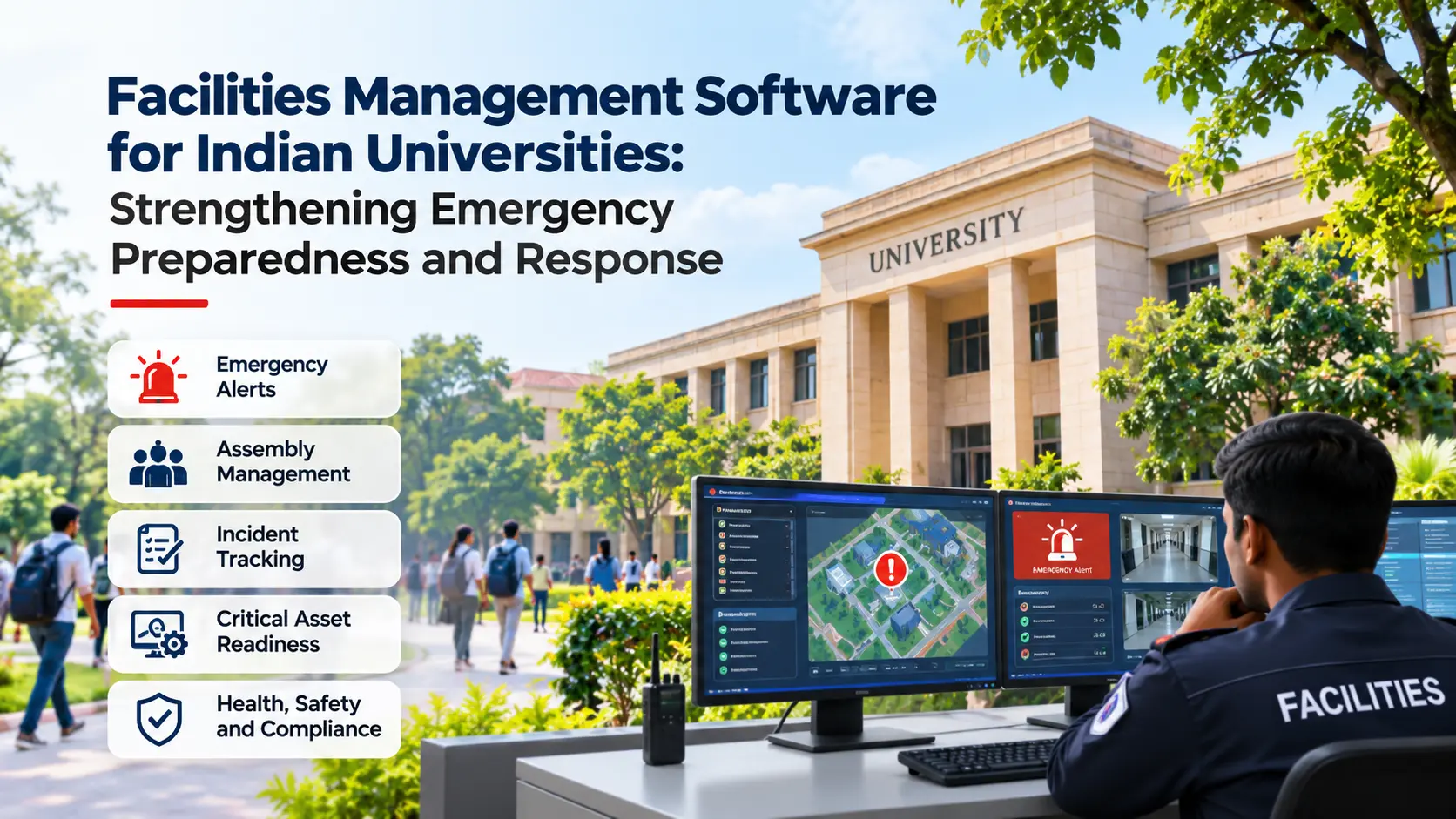
Facilities management software for Indian universities digitises emergency plans, centralises asset data, and automates incident response workflows. This enables faster decision-making, optimises resource allocation, and ensures compliance with Indian safety regulations, empowering campus teams to coordinate and respond effectively to emergencies.
The Role of Facilities Management Software in Campus Emergency Preparedness
Key Emergency Scenarios Faced by Indian Universities
Indian universities routinely face a diverse range of emergency scenarios influenced by regional factors. Fires—often resulting from outdated wiring or kitchen mishaps—are a constant risk, while earthquakes and floods threaten institutions situated in seismically active or monsoon-prone areas. Medical emergencies, whether individual health incidents or widespread outbreaks, require immediate coordination and rapid response. Student protests, which can escalate quickly, demand real-time situational awareness and efficient crowd management. Natural disasters such as cyclones and heatwaves further increase the challenge of preparedness.
- Fire incidents from electrical faults or kitchen mishaps
- Earthquakes and floods affecting campus infrastructure
- Medical emergencies and outbreak responses
- Student protests requiring rapid crowd management
- Natural disasters such as cyclones and heatwaves
Manual processes and siloed information systems restrict the ability to respond swiftly and effectively. Essential data—such as asset locations, evacuation routes, and emergency contacts—may be dispersed across spreadsheets, paper files, or isolated teams, causing critical delays when every second matters. Computer aided facility management software addresses these challenges by providing a unified digital platform that centralises emergency documentation, maps asset locations, and standardises communication workflows. This digital foundation supports quicker, more coordinated responses to any campus emergency.
Digitising Emergency Response Protocols with Educational Facility Management Software
Integrating Emergency Planning with Daily Campus Facility Operations
Educational facility management software allows Indian universities to digitise and continually update emergency protocols, evacuation plans, and contact hierarchies. Facility managers can map and revise evacuation routes based on real-time changes to campus infrastructure, ensuring all stakeholders have access to the latest guidance.
- Digitisation and real-time updates of emergency plans
- Integration with alarms, fire sensors, and access control
- Automated alerts and incident escalation workflows
- Space utilisation software identifies safe assembly points
- Compliance support with occupancy and local safety regulations
Integration with building management systems—including alarms, fire sensors, and access control—enables the software to automatically trigger alerts, escalate incidents, and coordinate response actions. For instance, a triggered fire alarm can instantly notify designated response teams, lock down affected buildings, and initiate predefined evacuation procedures.
Space utilisation software for colleges and universities adds another operational dimension. By monitoring occupancy and usage patterns, it helps identify safe assembly points, optimise resource deployment during drills or emergencies, and support compliance with local occupancy regulations. This ensures that emergency planning becomes a dynamic, data-driven process—fully embedded into daily campus operations rather than a static, one-off exercise.
Best Practices for Implementing Facilities Management Software in Indian Universities
Steps for Effective Rollout and Adoption
A successful implementation of facilities management software in Indian universities begins with a comprehensive needs assessment—identifying unique risks, regulatory obligations, and specific campus priorities. This assessment should guide vendor selection, ensuring the chosen solution aligns with Indian university compliance requirements, such as those set by the University Grants Commission (UGC), All India Council for Technical Education (AICTE), and relevant local safety frameworks.
- Conduct a detailed needs assessment focused on campus-specific risks and compliance
- Select a software solution aligned with Indian university regulations
- Pilot the platform in selected departments or buildings
- Stage campus-wide rollout with clear onboarding and integration milestones
- Provide comprehensive staff training for facility, IT, and security teams
- Establish regular system reviews and updates to adapt to evolving threats
Piloting the software in a selected building or department allows teams to validate workflows, resolve integration challenges, and gather essential user feedback. The campus-wide rollout should then proceed in phases, with clear milestones for onboarding, data migration, and system integration.
Ongoing staff training is vital—facility, IT, and security teams must collaborate to ensure everyone understands the platform’s features and emergency protocols. Regular review and improvement cycles help adapt to evolving threats and changing regulatory requirements, supporting long-term resilience and operational sustainability for Indian universities.
Conclusion
Facilities management software enables Indian universities to strengthen emergency preparedness through digital transformation, real-time automation, and seamless cross-team collaboration. By modernising campus facility operations, university leaders can better protect students, staff, and assets—while ensuring compliance with stringent Indian regulations. Investing in integrated digital solutions is a strategic imperative for building sustainable, resilient campus environments across India.
Key Takeaways
- Facilities management software enables Indian universities to centralise emergency planning and asset data, leading to faster and more coordinated incident response.
- Computer aided facility management software digitises emergency protocols, automates alerts, and improves alignment with Indian safety standards and regulatory requirements.
- Educational facility management software seamlessly integrates daily campus operations with emergency preparedness, supporting campus-wide resilience and compliance.
Ready to see how facilities management software can transform your university’s emergency response? Explore tailored solutions for Indian campuses. Schedule a demo today.
FAQ
Q1. What is facilities management software for Indian universities?
Facilities management software is a digital platform that streamlines campus operations, asset tracking, and emergency planning. For Indian universities, it drives compliance, enhances safety, and enables facility managers to coordinate rapid response efforts across large, diverse campuses.
Q2. How does facilities management software support emergency response in Indian universities?
It digitises emergency protocols, centralises critical data, and automates alerts. Facility managers gain real-time visibility into assets and spaces, accelerating incident response and ensuring compliance with Indian education sector safety standards and regulatory obligations.
Q3. What are key steps for implementing facilities management software in Indian universities?
Begin with a campus needs assessment, select a platform that matches university requirements, conduct a pilot, and then roll out campus-wide. Prioritise thorough staff training and verify compliance with Indian safety and educational regulations to ensure effective long-term adoption.