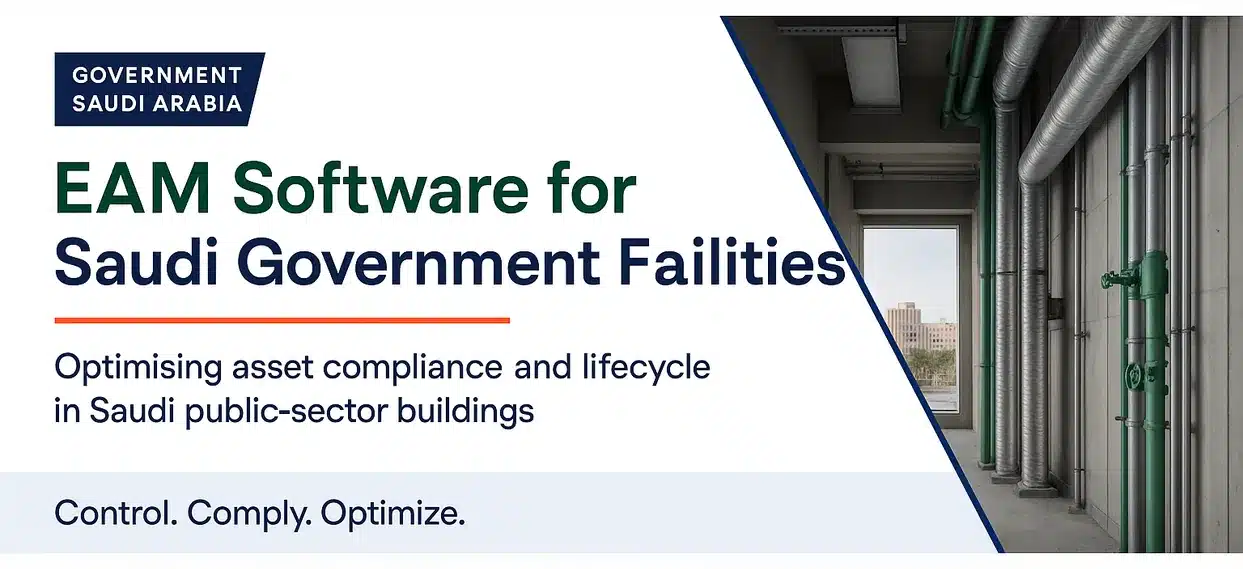
Asset managers within Saudi Arabian government facilities increasingly face the dual challenge of maintaining regulatory compliance and maximising the lifecycle value of public assets. The stakes are high: with multi-site portfolios spanning ministries and public entities, even minor lapses in maintenance or documentation can result in costly audit failures or unexpected downtime. As infrastructure investments accelerate under Vision 2030, the need for robust digital tools is more urgent than ever.
EAM software is an enterprise-level platform that helps government facility managers in Saudi Arabia track, maintain, and optimise the entire lifecycle of public assets while ensuring compliance with local regulations.
What is EAM software and why is it critical for government asset compliance in Saudi Arabia?
EAM software, or Enterprise Asset Management software, enables Saudi government facility managers to centralise asset data, automate compliance checks, and manage maintenance workflows. It is essential for meeting regulatory standards, supporting audit readiness, and improving asset lifecycle performance across public sector portfolios.
Government Facility Management Challenges: Compliance and Lifecycle Risks
Key Operational Challenges in Saudi Arabian Public Sector Facilities
Public sector facility management in Saudi Arabia operates under strict compliance frameworks, encompassing local safety, sustainability, and reporting mandates. The Kingdom’s harsh climate speeds up asset wear and degradation, making proactive maintenance and timely replacement essential. Facility leaders also face heightened scrutiny from auditors and oversight bodies, increasing the risk of penalties for incomplete records or missed inspections.
- Incomplete or inconsistent maintenance documentation
- Missed or delayed inspections and preventive tasks
- Fragmented asset data across ministries or departments
- Difficulty demonstrating audit readiness on demand
The drive for modernisation under Vision 2030 places additional emphasis on transparent reporting and asset stewardship. Without a robust EAM platform or a comprehensive computerised maintenance management system, government entities struggle to achieve the visibility and control required for effective public sector facility management in Saudi Arabia.
EAM Software Capabilities for Asset Compliance and Lifecycle Management
Centralised Asset Registers and Automated Compliance Tracking
EAM software provides a unified source of truth for all government-owned assets, from critical infrastructure to specialised equipment. A centralised asset register enables:
- Digitised inventory of assets, locations, and specifications
- Automated scheduling of preventive maintenance and inspections
- Real-time dashboards displaying compliance status and overdue tasks
Automated compliance tracking sets EAM software apart. Facility managers in Saudi Arabia can:
- Generate audit-ready documentation quickly and accurately
- Track local regulatory requirements, ensuring all tasks align with Saudi mandates
- Receive proactive alerts for upcoming inspections or expiring certifications
Integration with other government facility management software, such as CAFM platforms or procurement systems, streamlines data flows and reporting. This holistic approach ensures compliance and operational data are always current, reducing the risk of audit failures and regulatory breaches.
Enhanced Lifecycle Control and Reporting
Beyond compliance, EAM software supports the entire asset lifecycle—from acquisition and deployment to maintenance, upgrades, and disposal. Key benefits for Saudi public sector organisations include:
- Lifecycle cost analysis to inform replacement and investment decisions
- Automated alerts for end-of-life assets and warranty expirations
- Historical maintenance records to support budgeting and capital planning
Advanced reporting tools allow facility managers to generate detailed insights for internal and external stakeholders, supporting both operational transparency and strategic decision-making.
Implementing EAM Software in Saudi Arabian Government Facilities: Roadmap and Best Practices
Change Management, Training, and Localisation Considerations
A successful EAM implementation in the Saudi Arabian public sector relies on careful planning and alignment with organisational objectives. Essential best practices include:
- Piloting EAM software in high-risk or high-value asset categories to demonstrate early benefits and refine workflows
- Engaging stakeholders from IT, operations, and compliance to build cross-functional buy-in and clarify system requirements
- Customising the platform for Arabic language support, right-to-left interfaces, and region-specific compliance fields
Change management plays a vital role: facility teams must be trained not only in system navigation but also in new digital workflows for inspections, reporting, and documentation. Continued optimisation is achieved by:
- Monitoring system adoption and gathering user feedback to address challenges
- Regularly updating the platform to accommodate evolving local regulations and audit expectations
- Aligning EAM adoption with broader government digital transformation strategies in line with Vision 2030
By embedding these practices, Saudi government entities can maximise the return on EAM investments and ensure ongoing audit readiness and compliance.
Conclusion
For Saudi Arabian government facility managers, EAM software is a strategic enabler for asset compliance and lifecycle management. By centralising asset data, automating maintenance and inspections, and integrating with government facility management software, public sector organisations can demonstrate audit readiness and optimise infrastructure investments. As Vision 2030 drives higher standards for transparency and operational excellence, EAM software forms the foundation for modern, accountable public sector facility management in Saudi Arabia.
Key Takeaways
- EAM software enables Saudi public sector facility managers to centralise asset data, ensuring robust compliance with local regulations and mandates.
- EAM software reduces lifecycle management risks by automating maintenance activities, inspections, and audit documentation for government assets.
- EAM software delivers operational transparency and enhanced control, supporting Saudi government entities as they modernise infrastructure in alignment with Vision 2030.
Strengthen asset compliance and lifecycle control in your Saudi government facility—schedule a demo with eFACiLiTY to see how EAM software can transform your asset management approach.
FAQ
Q1. What is EAM software?
EAM software, or Enterprise Asset Management software, is a digital platform used by government facility managers to track, maintain, and optimise assets throughout their lifecycle while ensuring regulatory compliance and audit readiness.
Q2. How does EAM software support asset compliance and audit readiness for Saudi Arabian government facilities?
EAM software automates maintenance schedules, records inspections, and generates compliance reports. These features ensure Saudi government assets meet regulatory standards and are always audit-ready, supporting effective governance and risk reduction.
Q3. What’s the difference between EAM software and a computerised maintenance management system (CMMS) for government asset management?
While both manage maintenance activities, EAM software provides broader functionality, covering the full asset lifecycle, compliance, and strategic planning. A CMMS is focused primarily on scheduling and tracking maintenance tasks, whereas EAM is better suited for comprehensive government asset management needs.