Introduction
For coworking CEOs in Saudi Arabia, growth can quickly make operations more complex. Bookings, private offices, meeting rooms, access, member demand and occupancy data can become fragmented across systems. Adding locations or workspace capacity does not automatically improve economics; leaders need visibility into how inventory is reserved, actually used and monetised.
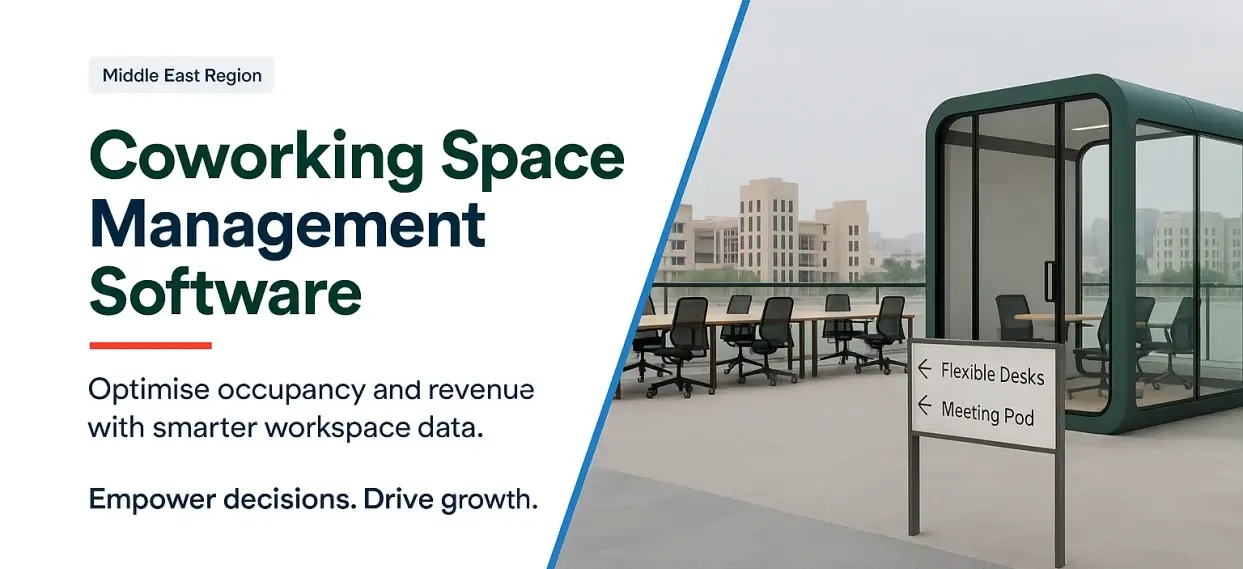
Coworking space management software is a digital platform that helps coworking operators in Saudi Arabia manage reservations, occupancy, members, space inventory and performance data, enabling leaders to improve utilisation, service delivery and revenue decisions.
How can coworking space management software improve occupancy and revenue?
Coworking space management software can improve occupancy and revenue by connecting workspace reservations, real-time availability, utilisation data and member demand. CEOs can identify underused inventory, improve booking experiences and use occupancy trends to inform pricing, space configuration, operating decisions and portfolio expansion across Saudi coworking locations.
The important distinction is between having capacity and monetising the right capacity. A site can appear busy while particular meeting rooms, desks or private offices remain underused. Equally, high booking volumes can overstate demand when recurring reservations, cancellations or no-shows are common.
Connecting reservation data with evidence of actual use gives operators a stronger basis for deciding whether to change booking policies, reconfigure workspace, adjust membership inventory or add capacity. Revenue metrics can then be considered alongside utilisation rather than in isolation, helping CEOs distinguish genuinely productive space from inventory that is simply frequently reserved.
Why Saudi coworking CEOs need coworking space management software for profitable growth
Flexible workspace creates a dynamic inventory challenge. Private offices, dedicated desks, hot desks, meeting rooms and shared amenities can experience very different demand by Saudi location, day and time. For multi-site operators, particularly those in business districts, commercial campuses or mixed-use developments, portfolio averages can hide important differences between individual sites and space types.
Booked capacity also differs from actual occupancy. Occupancy analytics tools and space utilisation software can combine reservation, cancellation, check-in, access and other appropriate occupancy signals to provide metrics such as observed utilisation, peak demand, no-show rates, room usage and revenue performance by space type.
For CEOs, this distinction can support decisions in several areas:
- Inventory mix: identify whether demand favours private offices, desks or meeting spaces.
- Capacity planning: distinguish sustained demand from temporary booking peaks before expanding.
- Commercial performance: assess utilisation alongside revenue per bookable space or location.
- Operations: align cleaning, cooling and maintenance more closely with actual patterns of use.
Saudi Arabia’s climate also makes the relationship between occupancy and building operations relevant. Better visibility into when and where members use a facility can inform operational scheduling without compromising member experience. These insights become more valuable as operators add locations because consistent metrics allow sites to be evaluated on comparable definitions rather than local assumptions.
How coworking space management software connects reservations, utilisation and revenue data
A workspace reservation system establishes available inventory and records intended demand. Check-ins, access events or appropriately deployed occupancy sensors can then provide evidence of actual use. Space utilisation software brings these signals together by site, zone, space type, capacity and time period, allowing management reporting to connect workspace behaviour with commercial performance.
Data quality determines whether those reports deserve executive confidence. Operators should establish consistent space naming, capacity definitions, recurring-booking rules, cancellation logic and no-show definitions before comparing locations. Sensor data also requires context: a detected presence does not necessarily indicate how many members used a space or whether the booking generated revenue.
Linking coworking occupancy intelligence with facility performance
Office space management software becomes more useful when member records, access control, billing, visitor management and relevant facility workflows exchange reliable information rather than creating isolated records. For example, repeated high utilisation in a meeting-room zone may justify different cleaning schedules, while persistent low utilisation could prompt a review of layout or booking rules.
The objective is not simply to collect more data. A useful space management platform creates a traceable relationship between available inventory, reservations, actual use, operational requirements and commercial outcomes. This gives Saudi coworking executives a clearer basis for portfolio decisions.
How to implement coworking space management software across a Saudi portfolio
Implementation should begin with the operating model rather than software configuration. Saudi operators should standardise locations, floors, zones, desks, rooms, capacities, membership entitlements and booking policies. Operations, finance, sales or member teams, IT and facilities should also agree who owns utilisation data and how key performance indicators are calculated.
Pilot reservations, access and reporting at a representative site
A representative-site pilot can test reservations, check-ins, cancellations, access and reporting before wider deployment. Integrations with billing or finance systems, member applications, access control, suitable occupancy sensors and facility-management workflows should be validated against consistent baseline measures.
Establish consistent baselines for portfolio performance
Useful baselines include usable capacity, booked occupancy, observed utilisation, no-show rates, revenue per bookable space and performance by location. CEOs can then compare post-deployment results while accounting for seasonality, membership growth and changes to the portfolio.
Govern coworking space management software across Saudi locations
Scaling requires governance as well as technology. Common KPI definitions, permissions, data-retention practices, integration ownership, support processes and Arabic and English user requirements should be defined across locations. Operators should also verify applicable Saudi privacy, cybersecurity, electronic invoicing, building and related compliance requirements using current authoritative guidance; software functionality alone does not establish compliance.
Conclusion: Coworking Space Management Software in Saudi Arabia
Coworking space management software gives CEOs in Saudi Arabia a clearer connection between workspace demand, actual utilisation, operational requirements and commercial performance. Its value depends on trustworthy occupancy data, effective integrations, consistent KPIs and disciplined adoption. With those foundations, leaders can make evidence-based decisions about inventory mix, service levels, portfolio expansion and future capacity rather than relying solely on bookings or site-wide averages.
Key Takeaways
- Coworking space management software connects bookings, utilisation and revenue signals to support stronger commercial decisions across Saudi locations.
- Occupancy analytics tools reveal where, when and how workspace inventory is actually used, reducing uncertainty around capacity and reconfiguration decisions.
- A space management platform combines reliable data, integrations and shared KPI definitions to create repeatable portfolio-wide decision processes.
See how eFACiLiTY can support reservations, occupancy visibility and portfolio decision-making across your Saudi coworking operations. Schedule a demo to explore the platform.
FAQ
Q1. What is coworking space management software?
Coworking space management software is a digital platform for managing bookable workspaces, members, reservations, occupancy and operational data. It helps coworking operators understand demand, streamline everyday workspace processes, give members better visibility of available spaces and make more informed utilisation, revenue, capacity and portfolio decisions across one or multiple locations.
Q2. Which integrations matter when deploying coworking space management software in Saudi Arabia?
Common integration priorities include access control, member and workspace booking applications, billing or finance systems, visitor management, occupancy sensors and facility-management workflows. The appropriate combination depends on the operator’s business model and technology environment. Saudi data, cybersecurity, invoicing and other applicable compliance requirements should also be checked against current authoritative guidance.
Q3. How should a CEO measure ROI from a space management platform?
CEOs should establish pre-deployment baselines for booked occupancy, actual utilisation, no-shows, revenue per bookable space, administrative workload and location performance. Post-deployment changes can then be measured while accounting for seasonality and portfolio changes. ROI should connect verified operational improvements with revenue gains, avoided costs, productivity improvements or better capacity decisions.