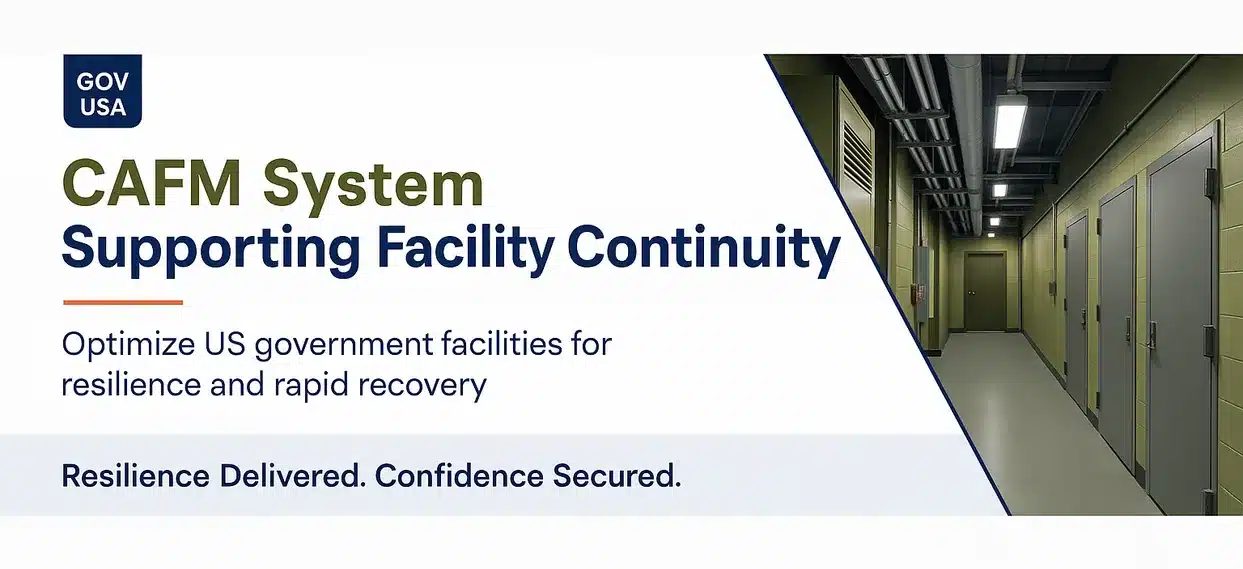
Facility continuity and disaster recovery are mission-critical for government facility managers in the USA. The nation’s public sector infrastructure faces increasing threats from natural disasters, cyberattacks, and system failures, all of which can disrupt essential services. In this environment, US government agencies are turning to advanced digital tools to ensure operational resilience. This article examines how a CAFM System is shaping the future of public sector facility management, enabling agencies to sustain operations and respond decisively when disruptions occur.
A CAFM System is a computer aided facility management software solution that helps US government facilities maintain operational continuity and respond effectively to disasters.
How does a CAFM System support facility continuity and disaster recovery for US government facilities?
A CAFM System centralises facility data, automates maintenance workflows, and streamlines disaster response for US government facilities. By enabling rapid access to asset records, space data, and emergency protocols, it helps facility managers minimise downtime and accelerate recovery after disruptive events.
Why Facility Continuity Is Critical for US Government Operations
Key Risks Facing Government Facilities in the USA
US government facilities are often at the frontline during emergencies—whether contending with hurricanes, wildfires, cyber incidents, or utility failures. Any interruption can have far-reaching impacts on public safety, service delivery, and national security. Facility continuity ensures that services such as emergency response centres, public health departments, and municipal offices remain available when citizens need them most.
Beyond operational risk, compliance requirements are a major driver. Federal guidelines from agencies such as FEMA and the Department of Homeland Security mandate robust continuity planning for all levels of government. Agencies must demonstrate their ability to maintain critical infrastructure, protect occupants, and restore normalcy swiftly following disruptive events. Without a digital backbone, manual processes can delay recovery, increase costs, and undermine public trust.
Core Capabilities of CAFM Systems for Government Disaster Recovery
Computer Aided Facility Management Software Features for Public Sector Needs
A CAFM System delivers a suite of features tailored for government facility management software requirements:
- Real-time asset tracking: Maintain a constantly updated inventory of physical assets, enabling rapid identification of what is impacted during a crisis.
- Preventive maintenance scheduling: Automate routine upkeep to reduce the risk of critical failures and extend asset lifecycles.
- Emergency documentation management: Store and retrieve digital copies of evacuation plans, shutdown procedures, and compliance records instantly.
- Mobile workforce coordination: Dispatch teams, issue work orders, and track task completion from anywhere, even if the primary site is compromised.
Integration with other government facility management software platforms—such as energy management or security systems—supports seamless business continuity planning. Automated alerts inform managers of events requiring action, while dashboards and reports provide the insights needed for effective CAFM-supported capital planning for municipal facilities. These capabilities help prioritise repairs, allocate resources efficiently, and justify budget requests based on real operational data.
Implementing CAFM for Facility Continuity: Best Practices for US Government Managers
Steps for Effective Disaster Recovery Planning with CAFM
Implementation success hinges on a structured approach:
- Conduct a facility audit: Use CAFM tools to catalogue all assets, utilities, and building systems. This baseline is essential for risk assessment and recovery planning.
- Develop digital emergency plans: Ensure all emergency protocols, contact lists, and response workflows are digitised and accessible via the CAFM dashboard.
- Train personnel: All relevant staff should be trained on the CAFM System for both day-to-day operations and disaster scenarios.
- Test and update regularly: Schedule drills using the CAFM platform to simulate incidents, uncover gaps, and keep continuity plans current.
Effective change management is crucial. Leadership should advocate for the system’s use, while IT teams must ensure integrations with existing government facility management software and compliance frameworks. Regular reviews of asset performance and emergency response data support continuous improvement and readiness.
Conclusion
For US government facility managers, a CAFM System is no longer optional—it is the digital backbone of effective facility continuity and disaster recovery. By leveraging computer aided facility management software, agencies can streamline emergency preparedness, enhance response speed, and support transparent capital planning for public sector facility management. As risks evolve, investing in robust CAFM solutions strengthens operational resilience and reinforces public confidence in government services.
Key Takeaways
- CAFM Systems enable US government facilities to maintain continuity by centralising asset and emergency management.
- A computer aided facility management platform delivers rapid disaster recovery through automation and real-time data access.
- This software supports compliance, preparedness, and effective capital planning for public sector facility management.
Transform your government facility’s approach to disaster readiness and operational continuity with a modern CAFM System. Schedule a demo to see how eFACiLiTY can help your agency build resilience.
FAQ
Q1. What is a CAFM System?
A CAFM System is computer aided facility management software that helps organisations, including US government facilities, manage buildings, assets, and maintenance, supporting operational continuity and disaster recovery.
Q2. How does a CAFM System improve disaster recovery for government facilities?
By centralising facility data and automating response workflows, a CAFM System enables government facility managers to quickly assess damage, coordinate repairs, and restore services, reducing downtime after disasters.
Q3. Can CAFM Systems help with capital planning for municipal facilities?
Yes, CAFM-supported capital planning for municipal facilities provides data-driven insights into asset lifecycles, maintenance costs, and infrastructure needs, supporting smarter investment decisions and long-term facility resilience.