Introduction
Managing a Nigerian banking property portfolio means coordinating branches, corporate offices, ATM support locations, critical equipment, maintenance teams and contractors across dispersed locations. Power reliability can increase dependence on generators and uninterruptible power supply (UPS) systems, while HVAC uptime, security-sensitive environments, inconsistent asset records and fragmented vendor reporting add operational pressure.
A computer-aided facility management system is software that centralises facility, asset, maintenance, space, vendor and service data, helping facility managers coordinate operations, improve asset visibility and make consistent decisions across Nigerian bank locations.
How can a computer-aided facility management system improve facility operations at Nigerian banks?
A computer-aided facility management system helps Nigerian bank facility managers centralise asset records, automate preventive maintenance, manage work orders and contractors, measure service performance and analyse facility costs. Across distributed branches and offices, it creates consistent workflows that support equipment uptime, operational control, compliance evidence, business continuity and better resource planning.
Why Nigerian banking portfolios need stronger facility management visibility
When branch asset registers, maintenance histories, contractor information and service requests are spread across spreadsheets, emails and paper files, central facility teams cannot easily establish an accurate portfolio view. This can lead to missed preventive maintenance, incomplete equipment histories, uncertain service-level agreement (SLA) performance, recurring faults and poor attribution of expenditure to individual branches or assets.
These challenges become more significant where generators and UPS equipment operate frequently, HVAC systems support banking operations and workplace conditions, and contractors must travel between geographically dispersed sites. Facility management software can connect each site, system and asset with planned maintenance, work orders, technician updates, escalation timestamps, costs and downtime histories.
Mobile work-order execution adds another layer of control. Field technicians and approved contractors can receive assignments, record findings, attach completion evidence and update job status without waiting to return to an office. Central teams consequently gain a more current view of maintenance activity across the Nigerian portfolio.
Computer-aided facility management data for management decisions
Inspection records, certificates, approval trails, contractor documents and auditable maintenance histories give management stronger evidence for asset risk, vendor and replacement decisions. Consistent records are particularly useful across a large branch network, where management needs to compare performance without relying on different reporting practices at each location.
Applicable Nigerian banking, workplace, safety, environmental, building and data requirements should be checked against current authoritative sources and translated into appropriate maintenance schedules, document controls, permissions and reporting workflows.
How a computer-aided facility management system connects assets and maintenance
A practical CAFM workflow starts when a branch reports a fault. The service request is linked to the correct location and, where possible, the relevant asset. It can then be prioritised, assigned to an internal technician or approved contractor, monitored against the applicable SLA and closed with evidence of completed work.
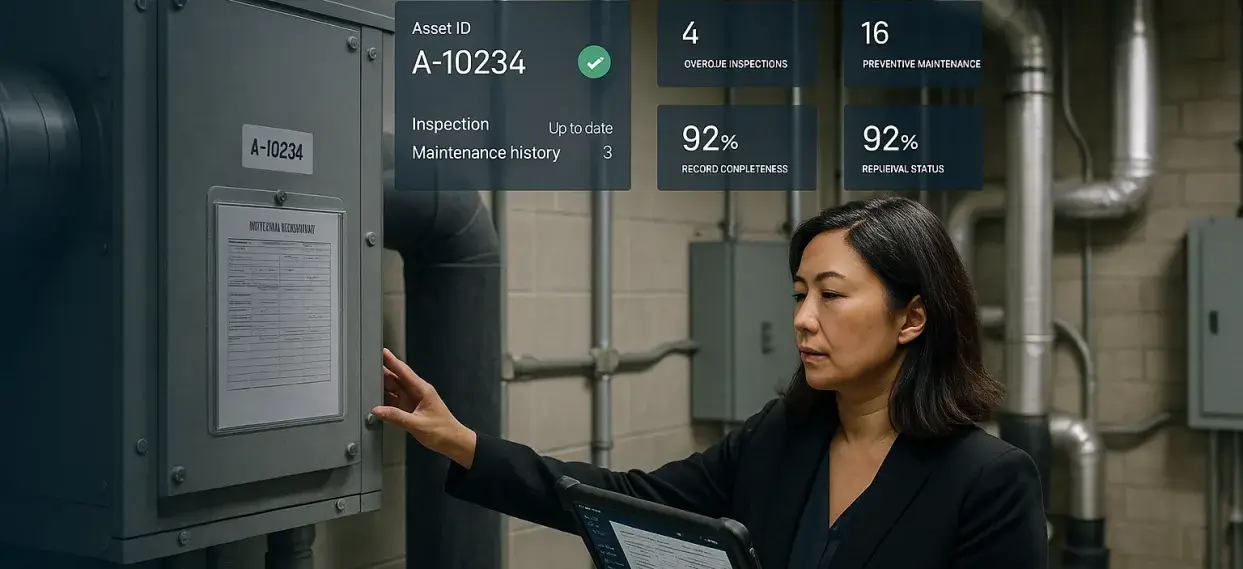
That information becomes part of the asset’s service history. The same control can be applied proactively through preventive maintenance for generators, UPS systems, HVAC, electrical installations, fire and life-safety equipment, plumbing systems and lifts where applicable.
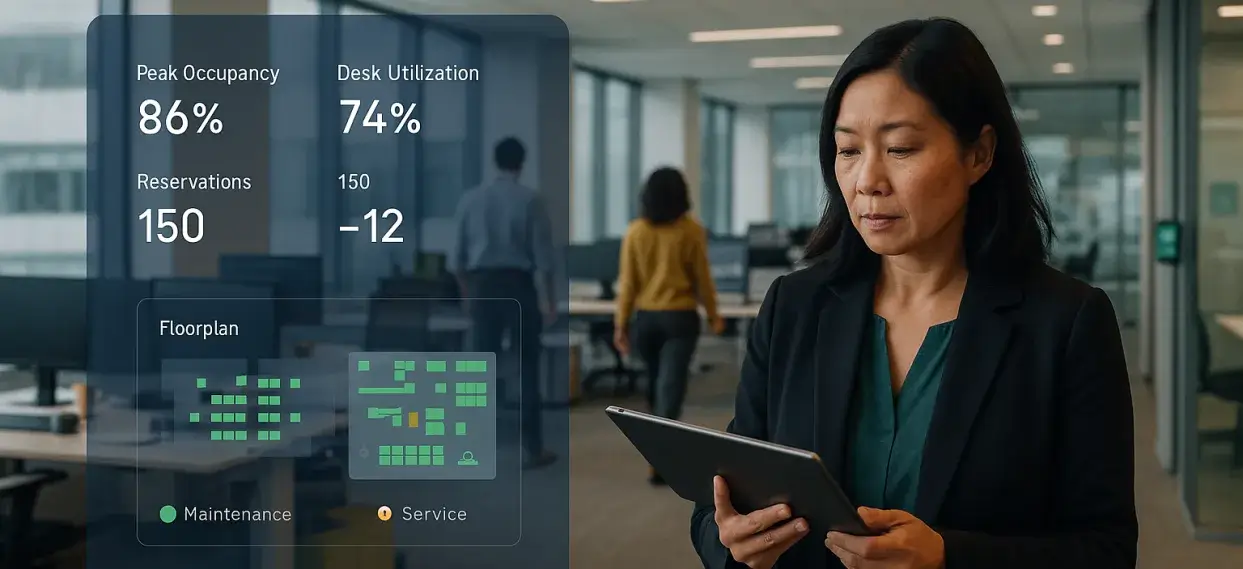
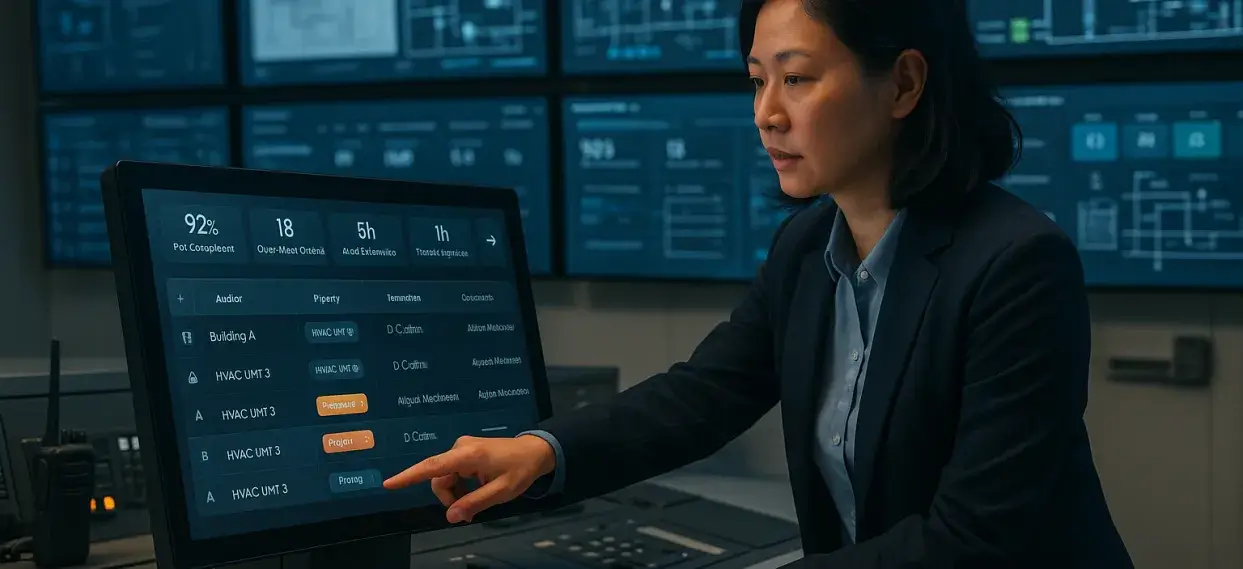
Dashboards can expose repeat failures, overdue maintenance, vendor response times, downtime, backlog and expenditure by branch, equipment type or asset. This allows facility managers to identify patterns that individual work orders may not reveal. For example, repeated generator repairs at one branch could support a replacement assessment rather than another reactive repair.
Where a bank also requires property, space, workplace-service and portfolio-planning functionality, an integrated workplace management system (IWMS) may provide wider scope. Terminology varies between CAFM, facility management platforms, integrated facility management software and workplace management systems, so buyers should evaluate the required workflows and controls rather than selecting software based on the category name alone.
CAFM integrations that prevent another facility management data silo
CAFM integrations can include finance and procurement platforms, authorised HR or directory data, identity controls, service channels, building systems, IoT sensors and management reporting tools. Each connection should have defined data ownership, access permissions and a clear operational purpose.
For banking data centres and other technology-support environments in Nigeria, integrations can provide additional operational context. Sensor readings or alarms may be associated with critical asset histories, maintenance actions and escalation workflows. This enables facilities teams to investigate equipment events alongside the work performed and the condition of related assets, while preserving appropriate security controls.
Implementing a computer-aided facility management system across Nigerian bank branches
Implementation should begin with reliable operational data rather than software configuration. A bank needs a dependable site hierarchy, validated registers for critical assets, consistent naming conventions and clear rules for asset criticality. Existing preventive-maintenance schedules and SLAs should also be reviewed before migration; transferring inaccurate information simply reproduces existing control problems.
A pilot should include a representative mix of Nigerian locations rather than only a head office or flagship branch. It should test work-order routing, mobile connectivity, contractor participation, escalation rules, permissions, reporting and adoption under realistic operating conditions.
After deployment, data ownership must remain explicit. Defined roles should govern who can create asset records, alter maintenance schedules, approve work, close jobs and maintain contractor information. Technology assessment should also cover cybersecurity, role-based access, hosting, backup and recovery, system availability, integration security and applicable Nigerian data-governance obligations.
Measuring CAFM value across the Nigerian banking portfolio
Banks should establish baseline metrics before rollout so that post-implementation performance can be compared meaningfully. Useful measures include preventive versus reactive maintenance, SLA compliance, mean time to repair, repeat failures, overdue work, equipment downtime, contractor performance, maintenance expenditure by site or asset and asset-data completeness.
Return on investment may come from avoided failures, improved asset life, more productive maintenance coordination, stronger contractor control, reduced manual administration and better capital-replacement decisions. For a Nigerian banking portfolio, the value should therefore be assessed through operational resilience and decision quality as well as direct maintenance savings.
Conclusion
For Nigerian bank facility managers, the objective is not another standalone database but consistent operational visibility across branches, assets, contractors and maintenance teams. A well-implemented computer-aided facility management system converts maintenance records into portfolio intelligence that can support uptime, governance, cost control and service consistency.
Successful adoption depends on reliable asset data, workflows designed around actual banking operations and clear ownership after deployment. A representative Nigerian pilot provides an opportunity to validate those controls before scaling across a wider branch portfolio.
Key Takeaways
- A computer-aided facility management system connects asset, maintenance, contractor, SLA and facility information to strengthen operational control across Nigerian banking portfolios.
- The platform combines preventive schedules, work orders, mobile execution and equipment histories to help facility teams reduce avoidable reactive maintenance.
- This approach creates more measurable value when reliable asset data, appropriate integrations, representative pilots and performance baselines support implementation.
eFACiLiTY can help banking facility teams explore how centralised asset and maintenance workflows could support a distributed Nigerian portfolio. Schedule a demo to discuss your requirements and deployment priorities.
FAQ
Q1. What is a computer-aided facility management system?
A computer-aided facility management system is software that centralises asset, maintenance, space, contractor, service and facility information. For Nigerian banks, it can help facility managers plan preventive maintenance, manage work orders, maintain equipment histories and improve operational visibility across geographically dispersed branches, offices and supporting facilities.
Q2. What should Nigerian banks look for when choosing facilities management software?
Nigerian banks should assess asset management, preventive maintenance, work-order automation, mobile access, contractor and SLA management, reporting, integrations, security and scalability. The software should also accommodate branch workflows, connectivity conditions, permission structures and portfolio reporting while supporting appropriate data governance, cybersecurity and business-continuity requirements.
Q3. How should a Nigerian bank implement CAFM across multiple branches?
A Nigerian bank should first validate its locations, critical assets, maintenance schedules, SLAs, users and contractors, then pilot CAFM across representative facilities. The pilot should measure workflow performance, mobile usability and data quality before wider deployment, allowing facility teams to correct configuration, governance and adoption issues before portfolio-wide scaling.