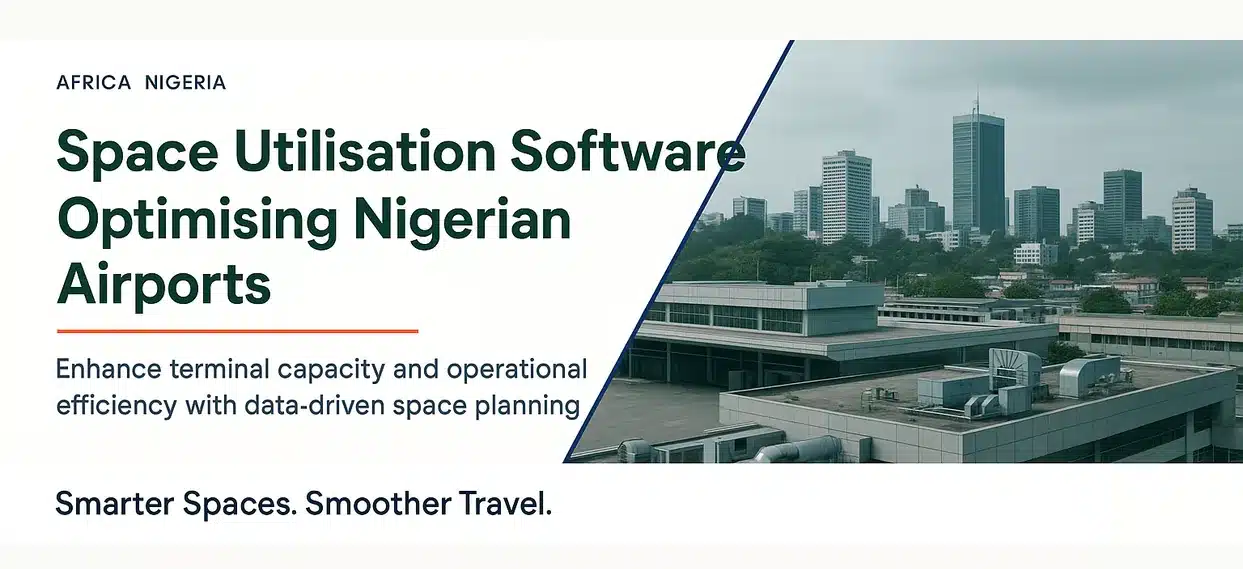
Nigerian airports are facing mounting pressure from increasing passenger numbers, which often leads to overcrowded terminals, inefficient layouts, and operational delays. Facility managers and space planners in Nigeria must find innovative ways to optimise existing infrastructure to support this growth—frequently without the option of expanding terminal footprints. For Nigeria’s aviation sector, effective space utilisation is now essential for maintaining passenger comfort, regulatory compliance, and operational resilience.
Space utilisation software is a digital solution that enables airport facility managers and planners to monitor, analyse, and optimise terminal space usage, enhancing capacity and operational efficiency for the Nigerian aviation sector.
How does space utilisation software improve airport terminal capacity planning?
Space utilisation software empowers data-driven decisions by providing real-time analytics on terminal occupancy, identifying underused spaces, and forecasting future needs. By optimising space allocation, Nigerian airports can minimise congestion, streamline passenger movement, and maximise terminal capacity, all without requiring physical expansion of existing terminal buildings.
The Challenge of Terminal Capacity in Nigerian Airports
Unique Operational Pressures in Nigerian Aviation Hubs
Nigerian airports, especially high-traffic hubs like Lagos and Abuja, encounter unique operational pressures. Passenger surges can occur unexpectedly, resulting in overcrowded security checkpoints, congested boarding gates, and bottlenecks at baggage claim areas. With terminal footprints constrained, accommodating rising passenger volumes remains a persistent challenge.
- Passenger surges cause unpredictable congestion at security, gates, and baggage claim.
- Inconsistent space assignments for airlines and service providers create inefficiencies.
- Compliance with local regulatory requirements adds complexity to space planning.
- Manual planning methods are often too static for the dynamic Nigerian airport environment.
How Space Utilisation Software Transforms Terminal Planning
Delivering Actionable Intelligence for Space Management
Space utilisation software captures and maps real-time occupancy and traffic patterns, enabling Nigerian airport facility managers to:
- Identify underused gates, crowded corridors, and congestion near amenities for targeted improvements.
- Adjust layouts, staffing, and resource allocation based on actual usage data.
- Integrate coworking space management principles for flexible use of lounges and waiting areas.
- Automate compliance reporting aligned with Nigerian and international safety standards.
- Digitise floor plans and assignments to model scenarios for both peak and long-term growth.
For example, if analytics reveal persistent congestion near departure gates, planners can redesign layouts or reassign airline check-in counters to enhance passenger flow. Flexible use of shared spaces, inspired by coworking management, enables airports to address business traveller needs or special events without costly renovations.
Implementing Space Utilisation Software: Key Considerations for Nigerian Airports
Addressing Local Challenges for Successful Deployment
To successfully deploy space utilisation software in Nigeria, airports must address several local realities, including:
- Infrastructure readiness: Solutions should support offline operation and robust data backup to manage variable power and internet connectivity.
- Pilot deployment: Starting with high-impact zones like security or boarding areas can demonstrate ROI quickly.
- Integration: Confirm seamless compatibility with existing facilities management platforms and legacy IT systems.
- Staff training: Equip teams to interpret dashboards and apply insights to daily decisions.
- Stakeholder engagement: Involve regulatory bodies, airlines, and service providers early for compliance and smooth adoption.
By considering these factors, Nigerian airports can fully realise the benefits of space utilisation software and ensure both immediate impact and long-term value.
Conclusion
Space utilisation software provides Nigerian airport facility managers with a strategic advantage in addressing terminal congestion and capacity challenges. By transforming real-time data into actionable insights, these solutions support smarter planning, operational agility, and scalable passenger growth. Investing in space utilisation technology is not merely a response to current pressures—it is a vital step towards cementing Nigeria’s position as a leading air travel hub in Africa.
Key Takeaways
- Space utilisation software empowers Nigerian airports to optimise terminal capacity by analysing real-time usage and highlighting underutilised areas for improved operational efficiency.
- The integration of coworking space management principles enables flexible, demand-driven allocation of lounges and waiting areas within airport terminals.
- Space utilisation tools support regulatory compliance, operational effectiveness, and scalable terminal planning across Nigeria’s aviation sector.
Explore how your airport can leverage space utilisation software to optimise terminal operations and elevate the passenger experience. Schedule a demo to see its impact firsthand.
FAQ
Q1. What is space utilisation software?
Space utilisation software is a digital platform that monitors, analyses, and optimises the use of physical spaces within airport terminals. It equips facility managers with real-time data to maximise capacity, improve passenger flows, and enhance overall operational efficiency.
Q2. How does space utilisation software support airport terminal capacity planning?
By providing real-time data on occupancy and usage trends, space utilisation software helps airport planners in Nigeria optimise layouts, prevent congestion, and allocate resources efficiently. This leads to improved terminal performance and a better passenger experience.
Q3. Can coworking space management software principles be applied to airport planning?
Yes, coworking space management software principles—such as flexible space allocation and dynamic scheduling—can be adapted to airport environments. This approach allows lounges and waiting areas to be reconfigured quickly to match changing passenger volumes and preferences.